

Egypt’s Real Estate Market Attracts Major Arab Investors
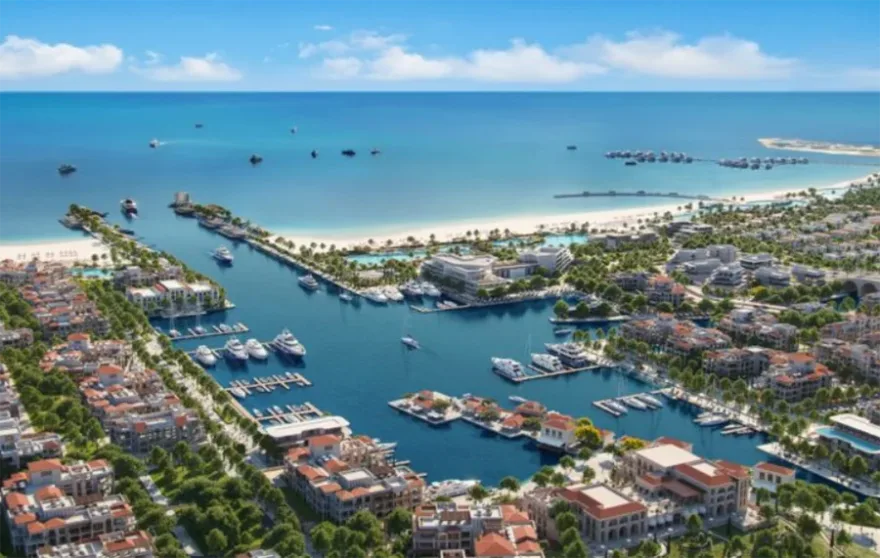
Companies from the UAE, Saudi Arabia and Qatar are expanding their presence along Egypt’s Red Sea coast. Major developers are moving beyond traditional hotel projects and building integrated resorts with residential districts, yacht marinas and commercial facilities. The main development area lies between Hurghada and Safaga.
Investment in Red Sea Resorts
In autumn 2026, Gulf companies stepped up investment in Egypt’s resort real estate, EnterpriseAM reports. Developer Emaar Misr signed new construction contracts, while Qatar’s Qatari Diar secured land for a tourism city. Saudi-owned MARAKEZ is moving into the Red Sea coastal area south of Hurghada.
Marassi Red Sea: The Largest Resort Project
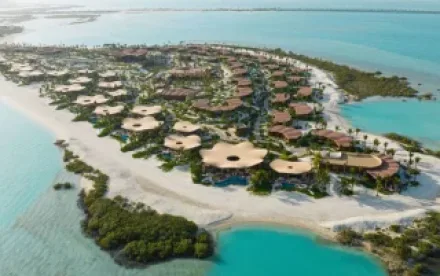
The largest project is Marassi Red Sea, a joint development by the UAE’s Emaar Misr and Saudi Arabia’s City Stars. Announced investment totals EGP 900 billion ($18.5 billion at the time the agreement was signed in September 2025). The 10.2 million sq m site will accommodate residential districts, 12 hotels with approximately 4,000 rooms and apartments, a yacht marina, retail and entertainment facilities.
In September 2026, Emaar Misr signed two contracts worth EGP 14 billion ($271 million). Rowad Modern Engineering will build 675 villas and townhouses, and Innovo Group will construct around 220 villas. Arabian Construction Company will build a further 32 buildings containing 750 apartments. The first homes are scheduled for handover in 2029.
The developer is focusing particularly on the premium segment. In November, it announced a partnership with Armani Hotels & Resorts. The Italian brand’s first complex in Egypt, comprising a hotel, serviced apartments and private residences, is scheduled to open in 2030.
Qatari Diar and MARAKEZ Projects
Qatar’s Qatari Diar is set to develop an even larger area between Hurghada and Safaga. In September, the company took possession of 29 million sq m of land originally allocated under an agreement signed in 2006. The project is expected to take 20 years, with the first phase scheduled to launch by the end of 2026. Construction costs have yet to be disclosed.
Alongside the creation of new tourism destinations, investors are expanding existing resorts. In August, MARAKEZ, owned by Saudi Arabia’s Alhokair family, signed a partnership agreement with Abu Soma Development. Their joint project, Shams Soma, will add more than 600 residential units and a hotel to Soma Bay. The development will cover 340,000 sq m.
Tourism and the Hotel Industry in Egypt
Supply and Demand
Red Sea resorts welcome visitors year-round, unlike Egypt’s Mediterranean coast. Between January and August 2026, around 3 million people from 50 countries arrived in Egypt through Hurghada Airport, up 3% from the same period in 2025. Jaz Hotel Group CEO Alaa Akel notes that visitor numbers peak in March, April, July, August, October and November.
Red Sea hotels recorded occupancy of around 85% in the first half of November, according to Rami Fayez, a board member of the Egyptian Hotel Association. Developers anticipate further growth in visitor numbers. Abu Soma Development plans to expand the room inventory at Soma Bay resort from 1,600 to 3,000 over the next three years, says company CEO Ibrahim El-Missiri.
Construction is accelerating across the country. By the end of September, Lodging Econometrics had identified 192 hotel real estate projects at various stages of development, up 47% over 12 months. The total room count in the pipeline rose by 42% to 40,661.
Investor Strategies
The length of the resort season shapes developers’ sources of revenue. Companies on the Mediterranean coast finance construction primarily through home sales, explains Hala Matar Choufany, president of HVS Middle East & Africa. Hotel operating revenue plays a significant role on the Red Sea coast. Seasonality is the main barrier to development on the northern coast for 75% of respondents to November’s survey of Egypt’s hotel market.
Investors are considering alternatives to traditional hotels. Branded residences and mixed-use developments are regarded as the most promising investment options by 32% of surveyed industry professionals, compared with 19% for hotel construction. Three-quarters of respondents expect beach holidays to be the main driver of tourism demand growth over the next five to ten years.
Some 97% of survey participants have a positive outlook for the industry over the next three to five years. Gulf countries are considered the most likely source of funding by 45% of industry professionals. Egypt’s North Coast ranks first among preferred investment destinations, followed by Greater Cairo and the Red Sea resorts.
Most Attractive Regions for Hotel Investment in Egypt
|
Region |
Share of respondents |
|
North Coast |
39% |
|
Greater Cairo and Giza |
35% |
|
Mainland Red Sea coast |
16% |
Source: HVS, November 2026.
Egypt’s Land Policy
The government hopes to attract Arab capital to reduce public debt. In November 2026, Presidential Decree No. 448 authorised the use of 112.1 million sq m of land between Ras Ghareb and Zaafarana for this purpose. The land had previously been allocated to the Ministry of Finance for the issuance of Islamic bonds (sukuk), Daily News Egypt writes.
Saudi Arabia and Kuwait could become investors. The ministry is exploring the possibility of converting part of these countries’ deposits at the Central Bank into real estate investment in Egypt, Al Manassa reports, citing a ministry representative. No agreements have been announced yet.
A similar mechanism has already been used to develop the Mediterranean coast. In 2024, Abu Dhabi investment fund ADQ struck a $35 billion deal to develop Ras El Hekma resort, including the conversion of $11 billion in deposits. In November 2025, Qatar’s Qatari Diar signed a $29.7 billion agreement to develop the Alam El Roum tourism complex.
In November, authorities suspended new land allocations for resort construction on the Red Sea coast and in South Sinai pending a review of development plans for these areas. Tamer Salah, strategic consultant at Elite Real Estate Development & Hospitality Ventures, believes that securing financing is no longer the main challenge for major Arab investors. Obtaining the necessary permits and finding qualified contractors and professional hotel operators are far more difficult.
How Egypt’s Real Estate Market Will Change
Currency fluctuations are the biggest concern for hospitality investors: 32% of respondents to the November HVS survey identified them as the main risk. Geopolitical uncertainty was cited by 29%. A further 13% pointed to difficulties raising equity, and 10% to the cost and availability of debt financing.
Hotels are less vulnerable to depreciation of the Egyptian pound, Tamer Salah explains. They earn revenue in foreign currencies and pay a substantial share of their expenses in local currency. Shaher Ali, managing director of Brick & Mortar, warns that residential property prices can rise in pounds while falling in US dollar terms.
International Investment analysts expect competition in the premium segment to intensify. Major Arab companies will expand the supply of residences with hotel services. Local developers will have to improve construction quality, finishes and property management. Large-scale coastal development could moderate price growth even if buyer demand increases.
Rental yields will depend heavily on how quickly resort infrastructure develops. If restaurants, shops and entertainment facilities open well after residential buildings are completed, apartment owners may face low occupancy. When choosing a property, investors need to consider the construction schedule, management fees, maintenance costs and the currency of future rental income. Reliable data on transaction prices and net rental yields across the coast remain insufficient for a quantitative forecast.
FAQ
Which countries invest in real estate on Egypt’s Red Sea coast?
Major participants include companies from the UAE, Saudi Arabia and Qatar.
Where is Marassi Red Sea being built?
In the Ras Soma area, south of Hurghada. Handover of the first phase is scheduled for 2029.
Where is Qatari Diar developing a new resort?
On a 29 million sq m site along the road between Hurghada and Safaga.
What are the risks of investing in Egypt’s resort real estate?
Currency fluctuations, construction timelines, the volume of future supply, maintenance costs and low rental occupancy.
Planning to buy property abroad?
Discuss the country, budget and goals with a consultant.