







 Vietnam Mortgage Surge Pushes Homes Out of Reach
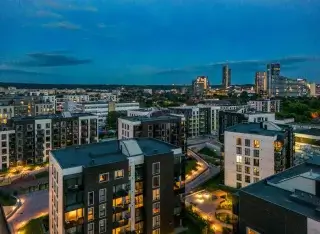 Lithuanian Apartment Prices Accelerate Across Major Cities
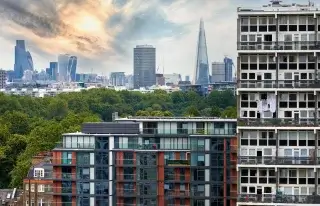 London Flats Lose Value Ahead of Leasehold Reform
 Construction of the Batumi–Sarpi Highway Begins in Georgia
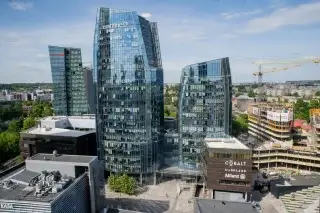 Baltic Property Investment Accelerates in 2026
 Hong Kong and Singapore Renew Their Expat Rivalry
Romanian Developers Put Costs First

Rising costs are reshaping Romania’s property market
Romania’s real estate market is entering 2026 in a phase of cautious stabilization, but developers are no longer treating labor shortages or expensive financing as the primary threat. According to Deloitte’s 2026 Real Estate Confidence Survey for Central Europe, construction costs were cited as the main concern by 27% of respondents, while plot acquisition ranked second at 25%. A year earlier, labor costs and labor availability were the dominant issue, accounting for 26% in 2025 versus 19% in 2026. Project financing, which had been a major concern two or three years ago, is now mentioned by only 6% of respondents, reflecting improved access to capital and more stable financial markets.
Romania real estate activity outlook for 2026
Market expectations remain restrained rather than bullish. Across Central Europe, 54% of respondents expect real estate activity to remain unchanged in 2026, while 35% foresee an improvement. Romania is more cautious than the regional average, with only 29% expecting activity to increase, compared with 67% in Poland and 38% in the Czech Republic. The same pattern appears in transaction expectations: the share of respondents expecting higher real estate transaction values in the near term fell below 50% across the region after being close to 60% a year earlier, while in Romania only 29% anticipate improvement, even though that figure is higher than in 2025.
Which real estate segments in Romania look most resilient
Residential remains the most competitive segment for the second consecutive year, although its lead has narrowed, with 22% of respondents naming it the top segment versus 36% a year earlier. Interest in build-to-rent and other residential-for-rent projects has strengthened sharply, doubling to 18% from 9% in 2025. Deloitte also highlights data centers as a rising segment, reaching 13% and matching industrial and retail in perceived competitiveness. Over the next five years, green energy infrastructure is expected to be the most dynamic asset class, cited by 66% of respondents regionally and by 81% of respondents in Romania. Data centers came next at 34%, followed by healthcare at 26%.
Taxes, permitting and infrastructure remain decisive for developers
Romania’s economic sentiment has become less negative than it was a year ago. Deloitte says 24% of respondents now expect the economic climate to improve, up from 14% in 2025, while the share with negative expectations dropped to 38% from 57%. Tax policy remains a distinct local concern. While 73% of respondents across the region expect tax conditions to stay stable, 71% of Romanian respondents expect a tightening of the tax regime. Deloitte Romania also points to permitting difficulties and frequently changing legislation as local obstacles, while improved road infrastructure is opening new investment opportunities across the country. CBRE adds that better connectivity along corridors such as A0 and A7 is already supporting new logistics nodes, and Romania’s full Schengen accession is expected to help expand third-party logistics and cross-border distribution models.
Offices, land and rents are shaping a new market balance
Alongside higher development costs, the market is showing signs of consolidation rather than overheating. CBRE expects office demand in 2026 to remain selective, with occupiers favoring modern, well-connected buildings and fit-out costs remaining a key decision driver. In the land market, activity strengthened in 2025, led mainly by retail and residential developers, while prices for well-located plots came under upward pressure because of zoning clarity, permitting certainty and infrastructure access. Separately, Cushman & Wakefield Echinox found that 56% of investors in Romania expect office rents to rise over the next 12 months, 39% expect stability and only 5% foresee a decline, suggesting continued pricing resilience in prime segments even as demand for new space stabilizes rather than expands.
As International Investment experts report, the March 2026 data suggest that Romania’s real estate market is not entering a contraction phase, but it is moving into a more selective development cycle. For developers, the core challenge is no longer simply whether demand exists, but whether projects can absorb higher construction budgets, secure land with clear development parameters and move through the permitting system without costly delays. In that environment, the most resilient opportunities are likely to be found in quality housing, infrastructure-backed locations, logistics, data centers and assets linked to the energy transition.
FAQ on Romania real estate in 2026
Why have construction costs become the main issue for Romanian developers?
Because Deloitte’s 2026 survey shows that 27% of respondents identified construction costs as their top concern, ahead of labor-related pressures. That marks a clear shift in market stress from staffing to project economics.
How difficult is land acquisition in Romania in 2026?
Land acquisition is the second-biggest issue in Deloitte’s survey, cited by 25% of respondents. The pressure is reinforced by permitting uncertainty, zoning clarity and infrastructure access, all of which affect the value and usability of plots.
Do market participants expect Romanian real estate activity to grow in 2026?
Mostly no. A majority across Central Europe, 54%, expect activity to stay flat, while only 29% of Romanian respondents expect growth. That points to stabilization rather than a broad-based acceleration.
Which Romanian real estate sectors look strongest now?
Residential, rental housing, data centers, industrial assets, retail parks and infrastructure-linked segments look the most resilient. Over a five-year horizon, green energy infrastructure stands out most clearly, with 81% of Romanian respondents identifying it as the most dynamic sector.
What is happening to office rents in Romania in 2026?
Early-2026 investor sentiment pointed to moderate upward pressure. Cushman & Wakefield Echinox found that 56% of respondents expect office rents to rise, 39% expect stability and 5% expect a decline.
How important is ESG for Romania’s property market in 2026?
ESG remains relevant but is no longer a dominant near-term concern. Only 6% of survey participants named ESG compliance as a main issue, although the market still expects a price premium of up to 15% for ESG-compliant assets.