







 Covivio Hotels Revenue Grows 4.7% as European Markets Split
 Lithuanian Apartment Prices Accelerate Across Major Cities
 Georgia's Tourism Revenue Hits Record High
 Norway's Sovereign Fund Commits €1.5bn to European Warehouses
 Market Rout of October 2026: Can Branded Hotels Protect Capital?
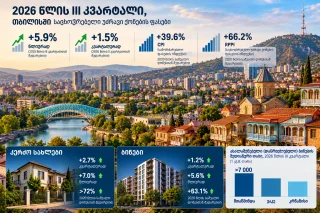 Residential Property Prices in Tbilisi Rise by 5.9% Year-on-Year
Serbia Building Permits Rise 8.6% in July
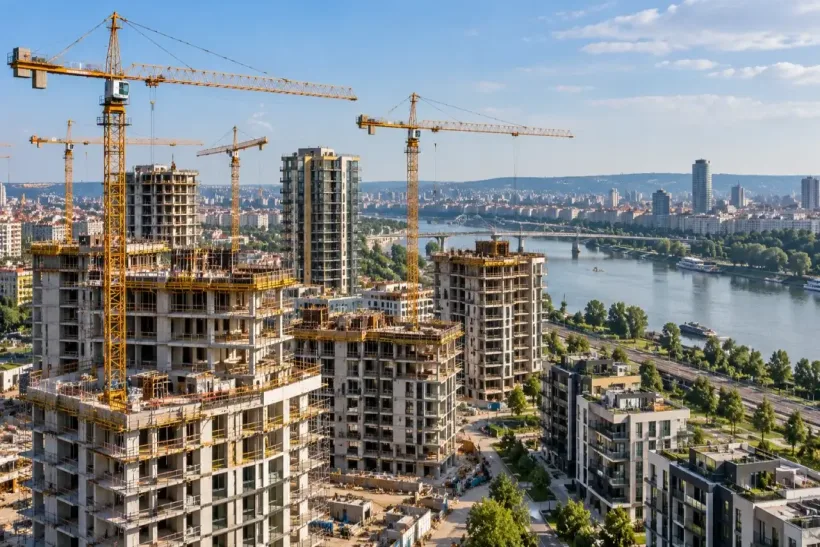
Serbia issued 2,751 building permits in July 2026, up 8.6% from a year earlier. The number of dwellings covered by the permits jumped 47.4%, their combined useful floor area increased 49.3%, and the estimated value of authorized construction work rose 58%.
The annual increase in permit numbers moderated from 11.3% in June. Buildings accounted for 83.6% of permits issued in July, while civil engineering projects represented the remaining 16.4%, according to data reported by TradingView.
Planned Housing Construction Jumps in Serbia
The Statistical Office of the Republic of Serbia reported that July permits covered 4,292 dwellings with an average useful floor area of 71 square meters. The number of planned dwellings increased 47.4% year on year and their combined useful floor area rose 49.3%. Residential properties accounted for 82% of permits for buildings and non-residential properties for 18%. Among civil engineering permits, 73.6% covered pipelines, communications and electricity lines. Of dwellings planned in new residential buildings, 10% are in single-dwelling properties with an average size of 136 square meters, while 88.7% are in buildings with three or more dwellings, averaging 62.8 square meters.
The estimated value of all work covered by July permits was 58% higher than a year earlier and 46.6% above June. For buildings alone, permit numbers increased 5.6% year on year, while authorized floor area rose 46.2% and estimated project value climbed 73.7%. Civil engineering permits increased 27% in number and 30.1% in estimated value.
In January through July, Serbia issued 7.9% more building permits than in the same period of 2025. The number of dwellings covered by permits increased 14.6%, their useful floor area rose 12.4%, and the estimated value of authorized work climbed 35.5%.
New construction accounted for 85.3% of the total estimated value of work covered by July permits. The figures refer to projects at the authorization stage and should not be treated as actual construction spending or completed supply.
Belgrade Takes 35.5% of New Construction Value
Beogradska oblast accounted for 35.5% of the estimated value of new construction covered by July permits. Zlatiborska oblast followed with 15.3%, Pirotska with 7.1%, Sremska with 5.7% and Južnobačka with 5.6%. Each of the other areas accounted for no more than 4.1%.
The concentration around the capital is also visible in construction already under way. In the second quarter of 2026, the value of construction work across Serbia rose 20.6% at current prices and 9% at constant prices. Work on buildings increased 32.4% in real terms, while civil engineering fell 7.1%. Belgrade was the only major region to record growth at constant prices, with a 51% increase. Construction value fell 2% in Vojvodina, 27.5% in Šumadija and Western Serbia and 32.3% in Southern and Eastern Serbia, according to Serbia's official construction statistics.
Construction Outpaces Serbia's Economic Growth
Serbia's real gross domestic product increased 3.8% year on year in the second quarter of 2026. On a seasonally adjusted basis, GDP rose 1.5% from the previous quarter.
Gross value added in construction increased 9.1% from a year earlier. The combined wholesale and retail trade, vehicle repair, transport, storage, accommodation and food-service sector grew 4.4%, while professional, scientific, technical, administrative and support services expanded 5.8%, Serbia's quarterly national accounts showed.
The July permit figures point in the same direction: the estimated value of projects entering the construction pipeline is rising considerably faster than the number of permits. The difference is particularly pronounced for buildings, where permit numbers increased 5.6% year on year but estimated value rose 73.7%.
Serbian Apartment Prices Continue to Rise
The larger construction pipeline has yet to translate into falling residential prices. The Republic Geodetic Authority's apartment price index rose 5.25% year on year in the second quarter of 2026 and 1.19% from the first quarter. Prices of newly built apartments increased 3.86% from a year earlier, while existing apartments gained 5.98%. Southern and Eastern Serbia recorded the strongest regional increase at 6.21%, followed by Belgrade at 5.65%, Vojvodina at 4.86%, and Šumadija and Western Serbia at 4.28%.
Apartment transaction numbers declined at the same time. There were 11,938 apartment sale contracts in the second quarter, 5.8% fewer than a year earlier, while their combined value increased 7.7% to €1.3 billion. In Belgrade, the value of apartment transactions rose 12.6% even as the number of contracts fell 2.5%.
Serbia's Property Market Reaches €2.2 Billion
The total value of Serbian real estate transactions reached approximately €2.2 billion in the second quarter of 2026, up 8.1% from a year earlier. The number of sale contracts declined 5.4% to 30,495. Of the total transaction value, €369.7 million came from the partially regulated market.
Apartments accounted for €1.3 billion, or 62% of total transaction value. Houses represented €175 million, construction land €156 million, commercial premises €119 million and agricultural land €77 million. Credit was used to finance 15% of property purchases, unchanged from the same quarter of 2025, according to the Republic Geodetic Authority.
The figures show rising property values and stronger construction activity alongside a decline in transaction numbers. Building permits, however, describe projects authorized for construction rather than homes already available to buyers. There can be a substantial lag between authorization, the start of work, completion and the release of apartments to the market.
As International Investment experts report, the July figures point to a larger future housing pipeline but do not in themselves indicate that prices are about to decline. The number of planned dwellings is rising much faster than the number of permits, while apartment prices continue to increase and transaction numbers are falling. The concentration of planned construction in Belgrade is also significant: national figures do not capture the differences in demand, supply and liquidity between individual Serbian markets.
FAQ
How many building permits did Serbia issue in July 2026?
Serbia issued 2,751 permits, 8.6% more than in July 2025.
How many dwellings are covered by the July permits?
The permits cover 4,292 dwellings, an increase of 47.4% from a year earlier.
What is the average size of the planned apartments?
The average useful floor area is 71 square meters. Dwellings in single-dwelling buildings average 136 square meters, compared with 62.8 square meters in buildings containing three or more dwellings.
Where is most new construction concentrated?
Beogradska oblast accounts for 35.5% of the estimated value of new construction authorized in July, followed by Zlatiborska, Pirotska, Sremska and Južnobačka oblasts.
How fast are apartment prices rising in Serbia?
Apartment prices increased 5.25% year on year in the second quarter of 2026. New-build prices rose 3.86%, while existing apartment prices increased 5.98%.
Are Serbian property transactions increasing?
No. The number of real estate sale contracts declined 5.4% year on year in the second quarter, while their total value increased 8.1% to around €2.2 billion.
Does permit growth immediately increase housing supply?
No. A permit authorizes construction but does not mean a property is already available. The timing of actual supply depends on the start of construction, project completion and delivery to buyers.