







 Covivio Hotels Revenue Grows 4.7% as European Markets Split
 Lithuanian Apartment Prices Accelerate Across Major Cities
 Georgia's Tourism Revenue Hits Record High
 Norway's Sovereign Fund Commits €1.5bn to European Warehouses
 Market Rout of October 2026: Can Branded Hotels Protect Capital?
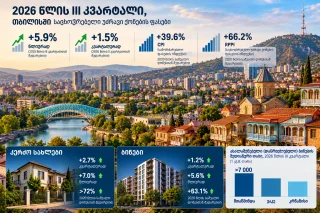 Residential Property Prices in Tbilisi Rise by 5.9% Year-on-Year
Serbia Housing Construction Accelerates in July

Serbia issued 2,751 building permits in July 2026, an 8.6% increase from a year earlier. The number of dwellings covered by the permits rose much faster, jumping 47.4% to 4,292, while the estimated value of authorized construction work increased 58%. Belgrade accounted for more than a third of the value of new construction.
Planned Housing Jumps Almost 50%
July's figures show that much of the expansion is concentrated in residential development. Buildings accounted for 83.6% of all permits, with civil engineering projects representing 16.4%. Of permits for buildings, 82% were for residential properties and 18% for non-residential construction. Pipelines, communications infrastructure and electricity lines accounted for 73.6% of civil engineering permits.
The permits covered 4,292 dwellings with an average useful floor area of 71 square meters. The number of planned homes increased 47.4% from July 2025 and their combined useful floor area rose 49.3%.
Multi-unit housing dominates the pipeline. Only 10% of dwellings in new residential buildings are planned in single-dwelling properties, where the average size is 136 square meters. Another 88.7% are planned in buildings containing three or more dwellings, with an average size of 62.8 square meters.
Project values are increasing substantially faster than permit numbers. The estimated value of work authorized in July rose 58% year on year and 46.6% from June. For buildings alone, the number of permits increased only 5.6%, while authorized floor area rose 46.2% and estimated construction value jumped 73.7%. Civil engineering permits increased 27% in number and 30.1% in value.
Serbia's Construction Pipeline Becomes More Expensive
In January through July 2026, the number of building permits increased 7.9% from the same period of 2025. The number of dwellings covered by permits rose 14.6%, their useful floor area increased 12.4%, and the estimated value of authorized work climbed 35.5%.
The gap between permit volumes and project values indicates that larger developments are moving through the authorization process. New construction accounted for 85.3% of the total estimated value of work covered by July permits.
A building permit does not, however, represent completed housing supply. Serbia's methodology includes both construction permits and approvals for certain categories of work. The data therefore provide an indication of future construction activity rather than homes already available to buyers.
July was also stronger than June in absolute terms. Serbia issued 2,673 permits in June, covering 3,873 dwellings. That means permit numbers increased by about 3% month on month in July, while the number of planned homes rose by almost 11%.
Belgrade Takes 35.5% of New Construction
Belgrade remains the main center of planned development, accounting for 35.5% of the estimated value of new construction authorized in July.
Zlatibor ranked second at 15.3%, followed by Pirot at 7.1%, Srem at 5.7% and South Backa at 5.6%. No other area accounted for more than 4.1%.
The concentration is also visible in construction already under way. In the second quarter of 2026, the value of construction work across Serbia increased 20.6% at current prices and 9% at constant prices. Work on buildings rose 32.4% in real terms, while civil engineering fell 7.1%.
Belgrade was the only major region to record growth in construction value at constant prices, with an increase of 51%. Vojvodina declined 2%, Sumadija and Western Serbia fell 27.5%, and Southern and Eastern Serbia dropped 32.3%.
Construction Outpaces Serbia's Economy
Serbia's real gross domestic product increased 3.8% year on year in the second quarter of 2026. Seasonally adjusted GDP rose 1.5% from the previous quarter.
Construction expanded considerably faster than the economy as a whole, with gross value added increasing 9.1%. The combined wholesale and retail trade, vehicle repair, transport, storage, accommodation and food-service sector grew 4.4%, while professional, scientific, technical, administrative and support services increased 5.8%.
The July permitting data extend the pattern already visible in the second quarter, with buildings driving much of the expansion while civil engineering remains considerably weaker.
Home Prices Rise as Transactions Decline
The expanding pipeline has yet to put downward pressure on apartment prices. Residential prices in Serbia increased 5.25% year on year in the second quarter of 2026 and 1.19% from the previous quarter.
New-build apartments gained 3.86% from a year earlier, while existing homes rose 5.98%. At the same time, the number of apartment sale contracts declined 5.8% to 11,938, while their combined value increased 7.7% to €1.3 billion.
In Belgrade, apartment transaction value rose 12.6% even as the number of contracts fell 2.5%. Across Serbia's entire property market, 30,495 sale contracts were recorded during the quarter, 5.4% fewer than a year earlier. Total transaction value increased 8.1% to approximately €2.2 billion, with apartments accounting for 62%. Credit financed 15% of all real estate purchases and around 34% of apartment transactions.
Apartment transactions in Belgrade were worth €742 million during the quarter. The highest-priced apartment sale was recorded in Savski Venac at €1.6 million, while the same municipality also registered the most expensive apartment price per square meter, at about €9,300.
Rising prices alongside falling transaction numbers show that the increase in future supply has not yet materially eased Serbia's housing market. Most of the homes covered by July permits still have to move through the construction process, meaning their effect on available inventory will depend on project starts and completion schedules.
As International Investment experts report, the increase in permits and particularly the sharp rise in planned dwellings point to a larger future housing pipeline, but it is too early to conclude that this will cool the market. Prices are still rising while transaction numbers decline, and construction activity remains heavily concentrated in Belgrade. For investors, national permit figures therefore matter less than delivery schedules, local inventory and the depth of demand in the specific district where a project is being developed.
FAQ
How many building permits did Serbia issue in July 2026?
Serbia issued 2,751 permits, up 8.6% from July 2025.
How many dwellings were authorized?
July permits covered 4,292 dwellings, 47.4% more than a year earlier.
What is the average size of the planned dwellings?
Average useful floor area is 71 square meters. Homes in single-dwelling buildings average 136 square meters, compared with 62.8 square meters in buildings containing three or more dwellings.
Where is most new construction concentrated?
Belgrade accounts for 35.5% of the estimated value of new construction covered by July permits.
How fast are apartment prices rising in Serbia?
Apartment prices increased 5.25% year on year in the second quarter of 2026. New-build prices rose 3.86%, while existing apartment prices increased 5.98%.
Are real estate transactions increasing?
No. The number of property sale contracts fell 5.4% year on year in the second quarter, while total transaction value increased 8.1% to about €2.2 billion.
Does permit growth immediately increase housing supply?
No. Permits indicate projects authorized for construction, but there can be a substantial gap between authorization, construction start and completion.