







 How Ukraine’s New-Build Housing Market Has Changed Over Four Years
 European Prime Rents Rise as Property Yields Turn Higher
 The Most Expensive Airlines in Europe in 2026
 Housing Prices in Italy Reach a Two-Year High
 Travellers Increasingly Choose Cooler Scandinavia
 Serbia Property Sales Decline as Transaction Value Rises
Singapore Home Sales Lose Momentum
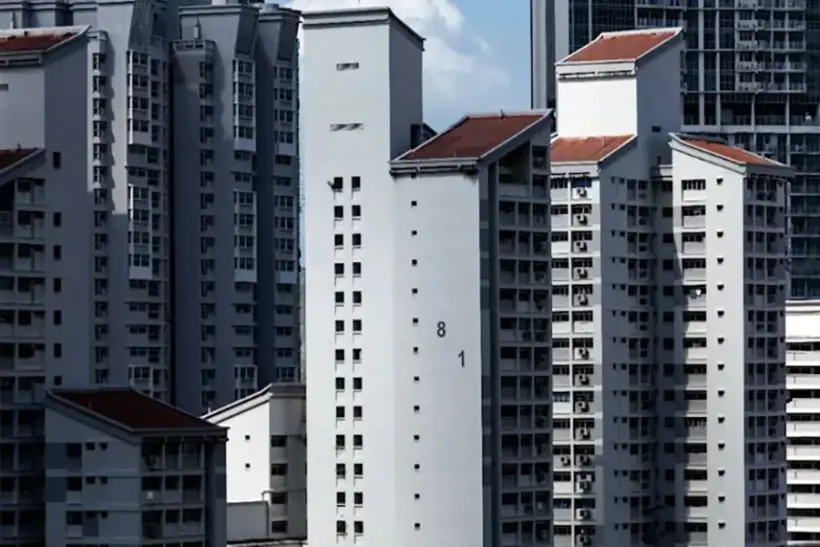
Singapore new home sales slow sharply
Singapore’s private housing market sent a clear cooling signal in mid-March as new-home sales fell sharply in February 2026 and developer shares came under pressure amid worsening global risk sentiment. According to Urban Redevelopment Authority data updated on March 16, the latest monthly figures showed that momentum faded quickly after a stronger January. The Straits Times reported that new private home sales dwindled to 246 units in February during the Chinese New Year lull.
That drop looks significant against January’s level. The Business Times had reported that developers sold 466 private homes in January, excluding executive condominiums. That means February sales fell by roughly 47% month on month. Even without a dramatic price correction, such a decline matters in Singapore because the pace of developer sales and the absorption of new launches are closely watched as core indicators of buyer confidence and residential market resilience.
Why the February slowdown stood out
The first explanation is seasonal. February in Singapore is often distorted by Chinese New Year, when some buyers and sellers temporarily step back from the market. But seasonality alone does not fully explain the nervous tone around the numbers. The weaker sales coincided with a renewed deterioration in the international backdrop, and it was that combination — seasonal softness plus a more fragile global mood — that made the market reaction more pronounced.
There is also a structural explanation. CBRE’s 2026 Singapore real estate outlook said residential demand should remain relatively firm thanks to lower interest rates, but sales volumes were likely to soften because of fewer launches and more cautious buyer behavior. In other words, the market entered 2026 not in crisis, but in a more delicate balance where any external shock could quickly reduce willingness to commit to large purchases.
War fears added to buyer and investor caution
Singapore is one of Asia’s most globally exposed property markets, so rising military risk in the Middle East can feed quickly into both equity sentiment and housing demand expectations. In the Bloomberg report you linked, the weakness in home sales and developer shares was tied to war fears. That framing is consistent with the broader market context: CBRE separately warned that while investment appetite in Singapore property is supported by easier financing conditions, downside risks in 2026 remain elevated because of an uncertain geopolitical environment.
That matters because housing in Singapore is often seen not just as a consumption decision but as an investment allocation. When geopolitical anxiety rises, some buyers simply wait, even if domestic fundamentals still appear sound. That is why even a limited drop in monthly sales can quickly become a broader signal for developer shares, services linked to new launches and the outlook for future project pipelines.
Developer shares faced added pressure
Alongside weaker sales, Singapore’s listed property developers faced pressure as investors moved away from risk-sensitive assets. This is a sensitive moment for the sector because some major names were already exposed to stock-market volatility. City Developments, for example, remains in investor focus after corporate turbulence over the past year, and Yahoo Finance showed its shares trading lower on March 16. While individual stock moves reflect company-specific factors as well as macro sentiment, the broader deterioration in risk appetite added pressure to the listed developer space.
That does not mean the market is structurally broken. It suggests instead that both housing sales and developer equities are reacting to a more cautious investor mindset at a time when geopolitics has abruptly returned to the center of market thinking. In Singapore, where property is closely tied to confidence, financing conditions and international capital flows, even a short external shock can quickly affect transactions.
What this means for Singapore property in 2026
The February data do not by themselves imply a full-year downturn. Rather, they show how sensitive the sector is to a combination of a weaker launch calendar, seasonal pauses and external instability. The broader 2026 outlook still does not look outright bearish: Singapore Business Review, citing market estimates, said private home prices could still rise by 2.5% to 4.5% this year, although at a slower pace than before. That means prices may remain supported even if monthly sales turn more uneven.
But that is also where the new risk lies. If geopolitical tensions persist and buyers remain cautious, developers may need to work harder to sustain demand through pricing strategy, marketing and launch timing. For Singapore, that does not point to collapse, but to a more fragile phase in which monthly sales and developer share performance are likely to become much more sensitive to the global news cycle than they were just a few months ago.
As experts at International Investment note, the February decline in Singapore’s new-home sales does not point to a breakdown in the city-state’s property model, but to a growing sensitivity to external shocks. If geopolitical tensions ease, demand could stabilize quickly, but March 2026 has already shown that even one of Asia’s most resilient property markets is not immune to a sudden pause in transactions when global risks start to dominate local drivers.