











Slovakia Draws Second-Home Buyers
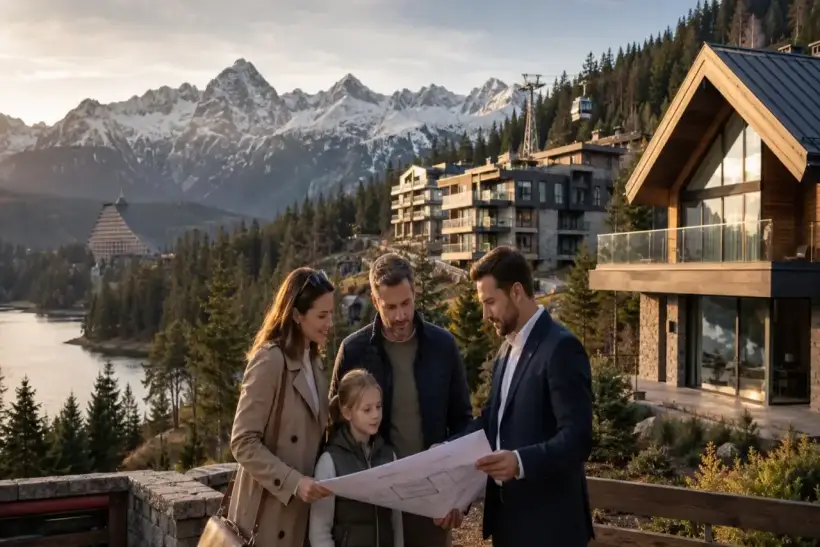
Slovakia’s second-home market is moving out of a narrow niche as mountain chalets, cottages, resort apartments and lake properties become investment assets supported by tourism growth, cheaper pricing than neighboring markets and limited supply of quality homes. But returns remain selective: Bratislava is more expensive and stable, while the Tatras, Liptov and regional cities require careful checks on seasonality, rental management and land status.
Second homes remain a niche in an ownership-heavy country
Slovakia stands out in the European Union for its very high homeownership rate. Eurostat says 93% of Slovakia’s population lived in owner-occupied housing in 2024, compared with an EU average of 68%; only Romania was higher, at 94%. That ownership structure keeps the rental market relatively small and makes second homes a less mature segment than in countries with long-established vacation-property markets.
Cyril Jarnias’s analysis describes Slovak second homes as a growing but still limited market, covering chalets, cottages, country houses, mountain apartments and lake properties. The segment is supported by tourism, short-term rental platforms, remote work and demand for real assets as a hedge against financial volatility.
Prices have accelerated again after the correction
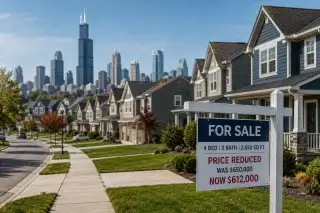
Slovak housing has moved back into growth after a correction. The Statistical Office of the Slovak Republic reported that residential property prices rose 11.3% year on year in the second quarter of 2025; existing dwellings gained 11.4%, while new dwellings rose 10.5%. In long-term terms, homes sold for more than twice their 2010 average price, with existing-dwelling prices up 119%.
Global Property Guide, citing National Bank of Slovakia data, said the nationwide average home price reached €2,777 per square meter in the second quarter of 2025, up 12.79% year on year. Bratislava remained the most expensive region at €3,549 per square meter, while Košice and Prešov posted the fastest growth rates, at 20.17% and 19.80%.
Demand is spreading beyond Bratislava
Bratislava remains the most liquid urban market. It has higher wages, stronger corporate demand, more foreign professionals and steadier long-term rental demand. But its high entry price compresses yields and pushes investors to regional centers and tourist areas.
For second homes, the main locations are the High Tatras, Low Tatras, Liptov, the area around Liptovská Mara, Donovaly, Štrbské Pleso, Tatranská Lomnica, Poprad and selected spa towns. These markets do not behave like ordinary permanent-residence markets. They combine personal use, seasonal rental income and a bet on tourism growth.
Tourism is the main driver of resort property
The second-home market is being supported by the recovery in tourism. CEIC Data shows that foreign arrivals in Slovak accommodation establishments rose to 2.421 million in 2025 from 2.165 million in 2024. The figure is close to the pre-pandemic high of 2.475 million recorded in 2019.
That matters most for mountain and nature destinations. In the Tatras, Liptov and spa areas, an owner can use a property for part of the year and rent it to tourists for the rest. But that model requires professional management: cleaning, guest handling, maintenance, marketing, seasonal pricing and compliance with local rules.
The highest yields are not in the most expensive areas
Returns in Slovakia depend not only on tourism potential but also on purchase price. Global Property Guide estimates average gross yields in Bratislava at around 3.85%, with district and apartment-type yields ranging from about 2.73% to 5.29%. Košice averaged 4.78%, Banská Bystrica 4.60%, Nitra 5.70% and Žilina 4.12%. These are gross figures, before tax, repairs, management, vacancy and agency fees; net yields are usually 1.5 to 2 percentage points lower.
For second homes, that distinction is critical. A resort apartment may perform well during peak months but sit empty in the shoulder season. A well-located chalet can generate strong winter and summer revenue, but it may also require high spending on heating, repairs, furnishing, insurance and management. Advertised yields that ignore costs almost always overstate the real investment case.
Mountain chalets and cottages face supply pressure
A Slovak second home is often marketed as a lower-cost alternative to Austria, Czechia or the Alps, but quality assets in the best locations are no longer cheap. Mountain land, infrastructure and new permits are limited, while demand is concentrated around a small number of well-known resorts.
That produces a double effect. Scarcity supports capital values, but buyers can overpay for assets with weak liquidity if they are too far from ski lifts, lakes, thermal facilities, railway stations or year-round tourist infrastructure.
Foreigners can buy homes, but land needs checks
Slovakia remains a relatively open market for foreign buyers. The official public-services portal says foreign nationals can buy and sell immovable property through registration of ownership rights in the Real Estate Cadastre; for EU citizens, the basic documents include the transfer contract, the ownership-registration application and proof of payment of the administrative fee.
Legal practice still distinguishes apartments, houses and land. DLA Piper notes that foreign individuals and foreign legal entities are generally allowed to acquire real estate in Slovakia, including agricultural and forest land, but specific exceptions apply, including agricultural-land rules, reciprocity principles and culturally protected property.
The cadastre is central to transaction security
For second-home buyers, legal due diligence is especially important. A property may be registered as a residential house, recreational building, cottage, agricultural structure or plot with usage restrictions. That affects reconstruction rights, mortgage availability, insurance, taxation and resale value.
Buyers need to check access roads, utilities, water, sewage, easements, plot boundaries, building permits and the actual condition of the property. An old cottage in a scenic village may look cheaper than an apartment in a resort complex, but it can require major renovation, permits and ongoing maintenance.
Short-term rentals are changing demand
Short-term rental platforms are making second homes more investable. Buyers now calculate not only personal use but also seasonal occupancy, average daily rates, platform commissions, cleaning, taxes and property-management costs. That supports demand for compact apartments near tourist infrastructure and chalets designed for families or groups.
But short-term rentals can also attract local regulation. Across European tourist markets, municipalities have moved to restrict nightly rentals where they reduce housing availability for residents. Slovakia faces less pressure than the largest resort countries for now, but investors should not assume today’s rules will remain unchanged.
The second home is also a lifestyle asset
The segment is supported not only by tourism but also by changing buyer behavior. Remote work allows longer stays outside the capital, while families and older buyers seek nature, quiet and a better living environment. For them, a second home is a hybrid asset: holiday base, future retirement option, capital protection and part-time rental property.
That changes quality requirements. Demand is rising for energy-efficient homes, reliable heating, internet access, parking, nearby health care, shops and year-round services. A property with poor engineering or high operating costs can underperform even if it has a good view and a low asking price.
Market risks are tied to seasonality and entry price
The main risk in Slovakia’s second-home market is not a lack of demand but its concentration. Buyers want the same locations: the Tatras, Liptov, Bratislava, Košice, spa towns and resort areas. That pushes quality-asset prices higher faster than rental income.
Seasonality is another risk. A property that rents well in winter near a ski area may have weak spring occupancy. A summer lake location may depend on weather, transport and domestic tourism. Costs are the third risk: heating, repairs, management, local taxes, insurance and maintenance of older houses can absorb a large share of revenue.
Slovakia joins Europe’s second-home map
Slovakia is not yet a mass second-home market like France, Spain, Italy or Austria. That is precisely why some investors see it as attractive: prices are lower, tourism is growing and euro membership reduces currency risk for euro-area buyers.
But it is no longer a hidden cheap opportunity without competition. Prices are rising at double-digit rates, the best regions are becoming more expensive and yields require strict underwriting. As International Investment experts report, the main risk for investors is that a Slovak second home is easy to sell as a story of nature, tourism and European underpricing, while real returns depend on more prosaic factors: cadastre checks, seasonal occupancy, management costs, asset quality and entry price. If those are assessed conservatively, Slovakia can become a strong niche market; if the purchase depends only on expectations of fast price growth, the investor risks owning a beautiful but illiquid asset.
FAQ on Slovakia’s second-home market
Why is Slovakia attractive for second-home buyers
Slovakia combines eurozone membership, tourism growth, mountain and lake destinations, lower prices than Austria and parts of Czechia, and rising demand for short-term rentals. That makes it appealing to buyers seeking both leisure use and investment income.
Where are the best places to buy a second home in Slovakia
The main destinations are the High Tatras, Low Tatras, Liptov, Poprad, Donovaly, Štrbské Pleso, Tatranská Lomnica, Bratislava, Košice and selected spa towns. The right location depends on whether the buyer wants personal use, seasonal rentals, long-term rentals or capital appreciation.
What yields can investors expect in Slovakia
Urban gross yields often range from about 3.8% to 5.7%, depending on the city and apartment type. Resort assets may generate higher income in peak seasons, but net returns depend on occupancy, management, taxes, repairs and vacancy.
Can foreigners buy property in Slovakia
Foreigners can generally buy apartments, houses and commercial property. Land, especially agricultural land, may be subject to specific rules and restrictions, so legal due diligence is necessary before purchase.
Why is the cadastre important
Ownership rights in Slovakia are secured through registration in the Real Estate Cadastre. Buyers should verify ownership, encumbrances, plot boundaries, permitted use, easements, permits and possible title defects.
What are the main risks of buying a second home in Slovakia
The main risks are rental seasonality, prices rising faster than income, operating costs, older buildings, land-status issues, limited liquidity in remote locations and possible future regulation of short-term rentals.