







 Russian and Belarusian Owners List More Latvian Property
 Georgian Law Enforcement Busts Scammers Posing as Real Estate Brokers
 World’s Largest Economies in 2026: GDP and Purchasing Power Rankings
 Turkish Airlines Cancel Flights to Moscow
 Escalation in the Middle East: New US and Iranian Strikes
 Hong Kong Property Rebounds as Momentum Slows
Croatia Hits Housing Affordability Limit
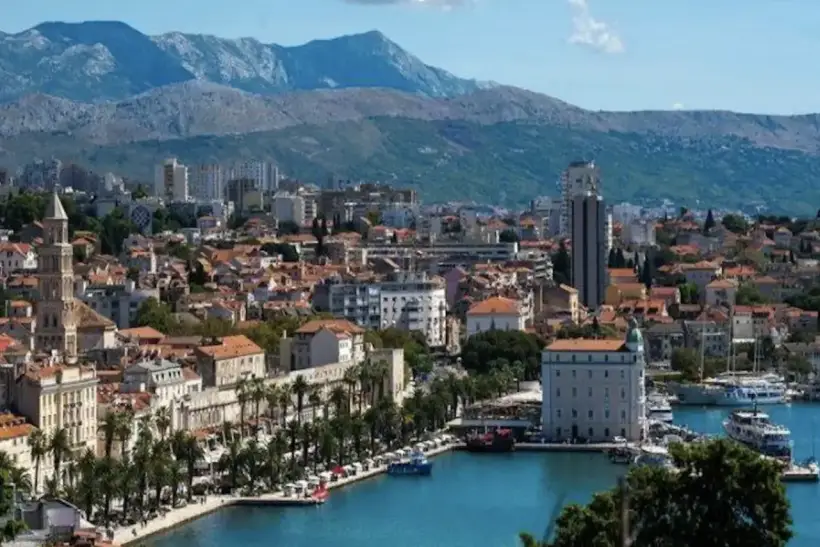
Croatian President Zoran Milanović said property prices have moved beyond affordability and public tolerance, as wage growth fails to keep pace with housing costs and the market remains under pressure from tourism, limited supply, foreign buyers and a thin long-term rental sector.
Milanović turns housing into a national issue
Croatian President Zoran Milanović used the opening of the 20th Days of the Croatian Chamber of Civil Engineers in Opatija on June 11 to deliver one of the sharpest recent warnings on the country’s property market. He said Croatia remains attractive for investment, but real estate prices have become extremely high and have gradually exceeded what citizens can consider acceptable and financially possible.
Croatia Week reported that Milanović linked the problem to the fact that nominal wage and income growth cannot keep up with housing costs. That is an important point: the issue is no longer only about expensive apartments in tourist zones, but about a structural gap between asset prices and the purchasing power of local households.
The statement was made at a professional construction-sector event, not a party rally. That gives it additional political weight. Housing in Croatia has become not only an investment market, but also a question of social stability, demographics, labor mobility and confidence in the economic model after the country joined the euro area and the Schengen zone.
House prices keep outpacing incomes
Croatia’s housing market continued to rise sharply at the end of 2025. According to the Croatian Bureau of Statistics, dwelling prices increased by 3.4% in the fourth quarter from the previous quarter and by 16.1% from a year earlier. Newly built dwellings rose 14.7% year-on-year, while existing dwellings increased 16.4%.
The increase was broad-based across regions. Prices rose 14.9% in Zagreb, 14.5% on the Adriatic coast and 23.3% in other regions. The last figure is especially important: overheating is no longer limited to the capital and seaside destinations. It is spreading to areas that were previously considered more affordable.
A house price index measures changes in actual transaction prices for flats and houses. In Croatia, it is calculated using transaction data delivered by the Tax Administration of the Ministry of Finance. That makes it more reliable than asking-price data, where sellers often include room for negotiation.
Buyers can afford only a few square meters a year
Croatia’s Ministry of Physical Planning, Construction and State Assets previously said citizens can afford only 1.8 to 3.9 square meters of housing annually, depending on the region and income level. This measure shows how much housing space a person or household can buy with available annual income relative to market prices.
That arithmetic explains the political force of Milanović’s statement. If an average buyer can save enough for only a few square meters per year, buying an apartment without inheritance, family support, asset sales or long-term credit becomes increasingly unrealistic. The problem is especially difficult for young families and public-sector workers.
Croatia’s high home-ownership rate has historically softened social pressure. Many families live in homes they own or inherited. But for new buyers, that model is weakening. The entry price has become too high, while the rental market remains narrow and expensive in the most sought-after cities.
The Adriatic and Zagreb remain pressure points
The most strained markets are Zagreb, the coast and island municipalities. In the capital, demand is supported by jobs, universities, health care, the public sector and internal migration. On the Adriatic, prices are driven by tourism, short-term rentals, scarce land and foreign buyers.
The European Commission’s housing annex on Croatia said the market is characterized by high home ownership, a small long-term rental sector and the absence of a developed social housing system. That reduces population mobility and increases shortages for people who do not already own property.
The Commission estimated a supply gap of about 230,000 homes, while a significant share of dwellings is not used for permanent residence. This is a typical paradox in tourist economies: there is housing stock on paper, but part of it is used for seasonal rentals, kept as second homes or located in areas without stable jobs and services.
Short-term rentals squeeze the long-term market
One of the main affordability factors is the structure of rental supply. In coastal cities and on islands, short-term tourist rentals often generate more income for owners than long-term leases to local residents. As a result, apartments leave the regular market, while families, service workers, teachers, doctors and young professionals face a shortage of housing at affordable rents.
A short-term rental means letting a home to tourists for days or weeks. For the owner, it may be more profitable than a permanent lease, especially during the summer season. For the city, however, it reduces the supply of homes for residents and pushes rents higher.
Croatia has already started changing the rules. New measures regulate tourist rentals, while the government links housing policy to a property tax, long-term rent stabilization and efforts to bring vacant homes back into residential use. But such reforms usually take time, because owners adjust slowly to taxes and restrictions, while international demand for the Adriatic remains strong.
EU membership brought costs as well as benefits
Milanović also linked part of the price pressure to the consequences of Croatia’s European Union membership. He said EU participation should be assessed pragmatically through the balance of benefits and costs, not as an ideological project. That framing matters for the domestic debate: Croatia gained access to European markets, funds, free movement and investment, but also became more open to external demand for a limited housing stock.
After Croatia joined the euro area in 2023, currency risk for buyers from other eurozone countries declined. For foreign investors, Croatian property became easier to understand: transactions are in euros, the country is in the European Union, and the coastline remains one of the region’s most recognizable tourism assets. For local buyers, this means competition with capital that is often stronger than the wage economy.
Still, price growth cannot be explained by EU membership alone. The drivers also include scarce coastal land, a high share of tourist housing, construction-cost increases, labor shortages in building, household savings and limited domestic investment alternatives. European integration has amplified liquidity and made Croatian assets more accessible to external capital.
Construction is both part of the solution and the problem
Milanović spoke to civil engineers and emphasized construction as an indicator of national development. The argument cuts both ways. Croatia needs more quality housing, infrastructure and sustainable urban projects. But new construction alone does not guarantee affordability if much of the supply goes into premium units, tourist properties or second homes.
The construction sector faces high land, labor and material costs. A shortage of skilled workers raises project costs and delays delivery. In such conditions, developers often prefer more expensive projects because they provide better margins.
For the state, the policy challenge is delicate. Excessive regulation could slow supply. Leaving the market untouched could worsen affordability for residents. The key question is not only how much to build, but what to build, where, for whom and under what limits on future use.
State policy is trying to catch up
Croatia has adopted its first comprehensive national housing policy plan through 2030. It is designed to increase the supply of affordable and sustainable housing, develop the rental sector and strengthen the role of the state in addressing housing needs. Measures include support for first-time buyers under 45, affordable rental programs for vacant properties and subsidized housing construction.
The European Commission noted that the plan is accompanied by measures for 2025-2027, including a target of 3,450 new affordable housing units by 2027 and wider coverage of local housing programs. Against a supply gap of about 230,000 homes, this is only an initial scale, but it marks a shift from isolated subsidies toward more systematic policy.
The main risk is repeating the mistake of demand-side stimulus. If the state simply gives buyers more money without increasing supply, part of the support may feed into higher prices. A more durable effect would come from measures that expand long-term rentals, activate vacant homes, accelerate affordable construction and limit the displacement of permanent residents from tourist zones.
Non-resident buyers deepen the regional divide
Foreign buyers remain an important part of the Croatian market, especially on the coast and islands. For local municipalities, this brings taxes, renovations of older housing stock, demand for services and infrastructure investment. But for residents earning Croatian wages, external capital often means additional price pressure.
The regional divide is widening. In tourist areas, property prices are set not only by local salaries but also by rental yields, European savings, diaspora demand and second-home buyers. In continental regions, housing may be cheaper, but incomes are lower and job opportunities are fewer, limiting real mobility.
This creates a distorted affordability map: where jobs and services are available, housing is expensive; where housing is cheaper, economic opportunities are weaker. For long-term development, this is dangerous because young professionals and families may delay having children, move abroad or remain in parental homes longer than planned.
The market may cool without becoming cheap
Some signs point to slowing demand. The European Commission noted that purchases of flats and houses have been declining since 2022, including by non-residents. That could restrain further price growth. But lower activity does not necessarily mean falling prices. When quality supply is scarce, sellers can hold prices for longer, especially if they are not dependent on mortgage financing.
Croatia’s market is also shaped by relatively low household debt and a high home-ownership rate. That reduces the risk of a sharp mortgage-driven crash, but it also makes the market less sensitive to weaker demand. Owners are often not forced to sell quickly, so adjustment may come through fewer transactions rather than a steep price decline.
For buyers, this means waiting for a broad price collapse may not work. A more likely scenario is segmentation: prime coastal locations and liquid Zagreb districts hold prices, overpriced secondary properties take longer to sell, and less popular regions see wider gaps between asking prices and actual transaction values.
Housing affordability is now a political risk
Milanović’s statement shows that Croatian real estate has moved beyond a sectoral debate. It is now an issue for the presidency, government, municipalities, builders, banks, tourism companies and European institutions. The longer house prices rise faster than incomes, the greater the risk of public dissatisfaction.
For the government, the problem is difficult because real estate supports construction, tourism, banking and household wealth. A sharp price fall would hurt owners and developers. But continued growth without affordability undermines the social base of the economy.
Croatia needs a balance between investment appeal and residents’ access to housing. That means more precise regulation of short-term rentals, taxes on unused properties, faster permitting for affordable construction, development of municipal and rental housing, and protection of urban neighborhoods from becoming seasonal assets.
As experts at International Investment report, Milanović’s statement matters not because the president has suddenly noticed expensive property, but because political power has effectively acknowledged the limits of a model in which housing is treated at once as an investment asset, a tourism tool and a basic social need. The critical conclusion is that Croatia remains attractive for capital, but for local residents that success increasingly becomes a housing-access problem; unless the state expands long-term rentals and affordable supply, further price growth will deepen the social divide rather than broaden wealth.