







 Australia’s Spring Auctions Rise but Remain Well Below 2025
 Number of Foreigners Holding Turkish Residence Permits Exceeds 1.27 Million
 Demand from Russian Tourists for Holidays in Georgia Rises by 20–25%
 Montenegro Property Buying Costs in 2026
 Four in Ten Companies Would Not Choose Slovakia
 Gulf Countries Prepare Unified Tourist Visa
Swiss Inflation Accelerates on Energy Prices
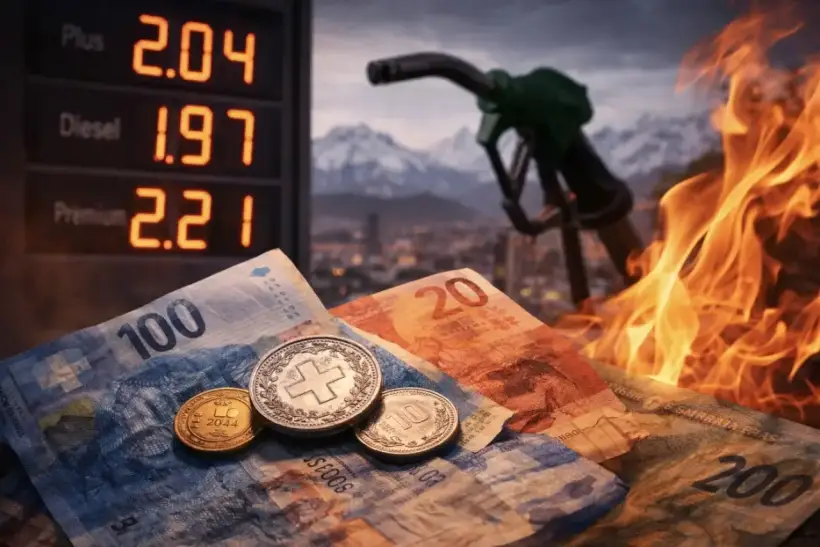
Swiss inflation climbs to the fastest pace in about a year
Swiss inflation accelerated in March 2026 after months of near-zero price growth, with higher energy costs emerging as the main driver amid the Iran war and the jump in global oil prices. Bloomberg reported that consumer-price growth reached its fastest pace in roughly a year, abruptly changing the tone of debate around the Swiss National Bank’s next moves. The SNB had already warned on March 19 that inflation was likely to rise more strongly in coming quarters because of higher energy prices caused by the escalation in the Middle East.
The SNB had already flagged energy as the main inflation risk
At its March policy meeting, the Swiss National Bank kept its policy rate unchanged at 0% and said explicitly that its short-term inflation forecast was higher than in December because of rising energy prices. The central bank noted that inflation had already edged up from 0.0% in November to 0.1% in February, with a stronger increase likely in the coming quarters because of the Middle East conflict. At the same time, the SNB said the stronger Swiss franc was helping to damp medium-term price pressure, keeping inflation within the range consistent with price stability for now.
Switzerland shifts away from deflation concerns
Only weeks earlier, the policy conversation in Switzerland looked very different. Bloomberg had reported that SNB President Martin Schlegel saw the possibility of negative inflation readings in some months of 2026, while annual inflation in February stood at just 0.1%. That backdrop has now shifted as the Iran-related energy shock pushed consumer prices higher and made the earlier discussion of near-zero inflation far less relevant in the short run.
The strong franc still acts as a buffer for Switzerland
Switzerland’s inflation shock differs from the euro area’s because part of it is being offset by currency strength. Bloomberg previously reported that the Iran war pushed investors into haven assets, sending the franc close to its strongest levels in more than a decade against both the euro and the dollar. That cushions imported inflation for Swiss consumers, but it also puts more pressure on exporters’ margins and competitiveness. Switzerland is therefore facing a combination of imported energy inflation and renewed currency strain on business.
The SNB still sees inflation within the stability range
Despite the March acceleration, the SNB has not signaled an abrupt policy shift. As of March 19, it projected average inflation of 0.5% in 2026, 0.5% in 2027 and 0.6% in 2028, based on the assumption that the policy rate remains at 0% over the whole forecast horizon. The central bank also said it expects Swiss GDP growth of around 1% in 2026 and around 1.5% in 2027. That suggests policymakers still see the current move primarily as an externally driven energy shock rather than the start of a sustained domestic inflation cycle.
The Iran war is already reshaping Europe’s inflation picture
Swiss inflation data fit into a broader European pattern. Bloomberg has reported that the Iran war is lifting inflation across parts of Europe and raising concerns about a weaker-growth, higher-prices mix. Germany, for example, also saw inflation accelerate in March to the fastest pace in more than a year as energy costs rose. That matters for Switzerland because its economy remains deeply tied to European trade and industry, meaning fresh oil-price jumps or renewed supply disruptions could quickly alter the SNB outlook again.
The Swiss National Bank faces a more difficult balancing act
For the SNB, the result is a more complicated policy trade-off. Inflation is now moving faster than seemed likely only a few weeks ago, yet the bank continues to emphasize the unusually high level of uncertainty, the risk of weaker global growth and the restraining effect of a strong franc on medium-term inflation. For now, the official stance remains cautious: rates are at zero, and policy will be adjusted only if necessary to safeguard price stability over the medium term.
As International Investment experts report, the acceleration of Swiss inflation shows how quickly even one of Europe’s most stable economies can shift from discussions about negative inflation to concerns about an imported price shock. For investors and households, the key question is no longer just the March increase itself, but whether oil and logistics pressures remain strong enough to force the SNB away from its ultra-soft stance sooner than markets had expected.
FAQ
Why did Swiss inflation accelerate in March 2026?
The main reason was higher energy prices after the escalation of the conflict in the Middle East. The SNB explicitly linked its higher short-term inflation forecast to rising energy prices.
Did the SNB raise interest rates because of inflation?
No. On March 19, 2026, the Swiss National Bank kept its policy rate unchanged at 0%.
Was deflation still a concern in Switzerland earlier this year?
Yes. Bloomberg reported in early 2026 that SNB President Martin Schlegel saw the possibility of negative inflation readings in some months, while February inflation was only 0.1% year on year.
How does the strong Swiss franc affect inflation?
It helps contain imported price pressure, but it also makes conditions harder for exporters. The SNB explicitly said the stronger franc lowers medium-term inflation.
What matters most now for the Swiss market?
The crucial issue is whether the energy shock remains temporary. If oil prices and geopolitical tension stay elevated, expectations for the SNB’s policy path could shift quickly.