







read also
 Vietnam Mortgage Surge Pushes Homes Out of Reach
 Lithuanian Apartment Prices Accelerate Across Major Cities
 London Flats Lose Value Ahead of Leasehold Reform
 Construction of the Batumi–Sarpi Highway Begins in Georgia
 Baltic Property Investment Accelerates in 2026
 Hong Kong and Singapore Renew Their Expat Rivalry
Tourism & hospitality / News / Analytics / Reviews / United Arab Emirates / Tourism UAE / Egypt / Tourism Egypt 03.12.2025
How Terrorism Is Reshaping Middle East Tourism in 2025: Risk, Resilience and Shifting Demand
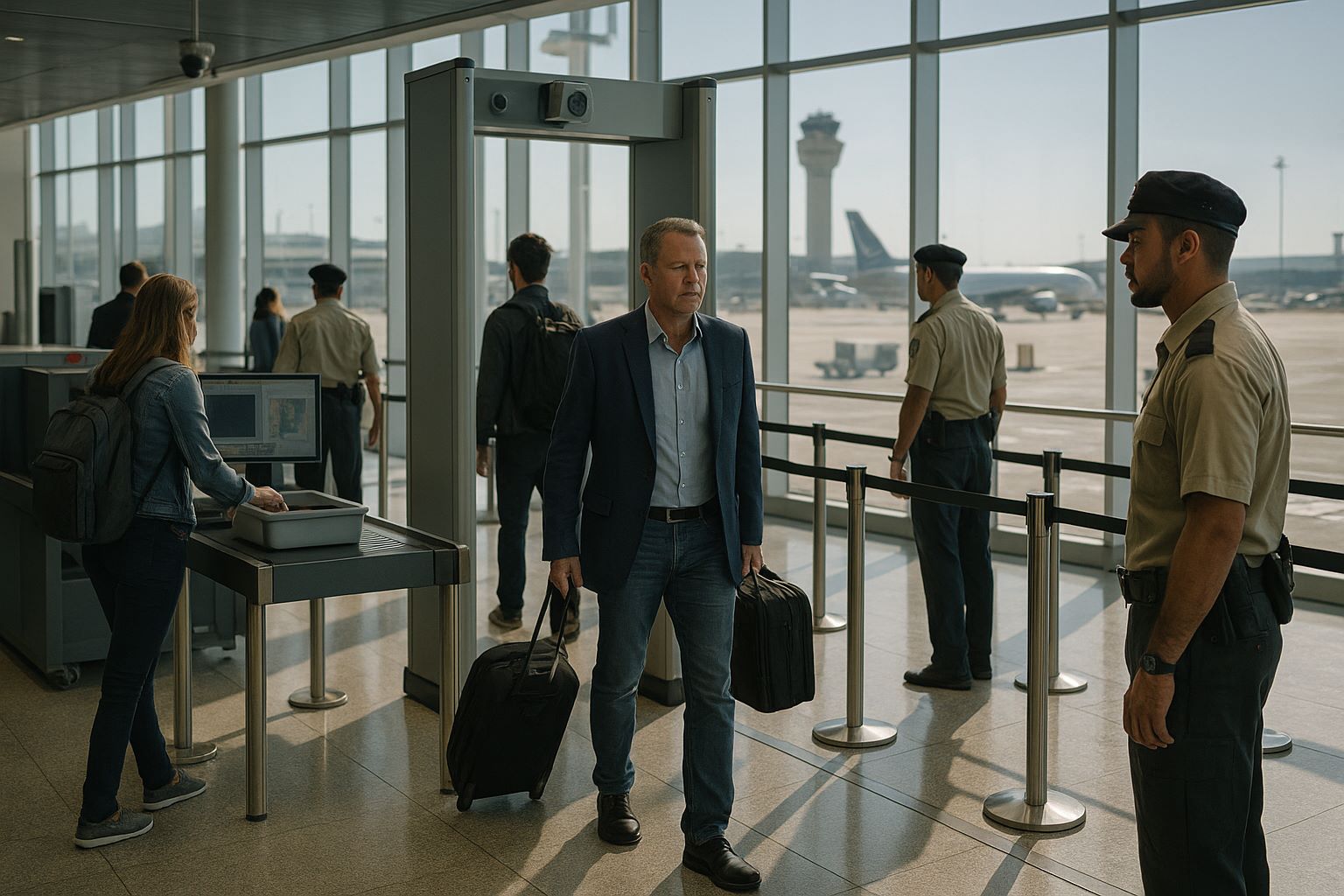
Tourism in the Middle East has always been built on a fragile balance between ancient heritage, ambitious mega-projects and persistent geopolitical risks. In 2025, the region continues to attract millions of visitors, and countries such as the UAE, Saudi Arabia, Qatar, Oman, Jordan and Bahrain maintain strong reputations for safety and hospitality. Yet terrorism and related threats remain one of the most powerful forces shaping travel sentiment. Incidents in Iraq, Syria, Yemen, Lebanon, the Sinai Peninsula or the Red Sea corridor often trigger market reactions far beyond their immediate geography, because many travellers still view the Middle East as a single risk cluster rather than a mosaic of very different destinations.
As a result, even secure countries must constantly invest in safety, manage risk communication and rebuild confidence whenever regional tensions flare.
Shockwaves in arrivals: how incidents hit demand
Data patterns monitored by UN Tourism and WTTC show that terror-related events almost always produce sharp short-term drops in tourist arrivals. Travellers postpone or cancel trips, tour operators reconfigure itineraries and airlines cut or consolidate capacity. The impact rarely stays confined to the country where the incident occurred: any major attack in a sensitive corridor tends to depress demand across the wider Middle East as consumers adjust their risk perceptions and insurers tighten conditions.
Travel advisories issued by the U.S. State Department, the UK Foreign Office, EU institutions and Australia’s DFAT amplify this effect. Once a destination is reclassified to “Reconsider Travel” or “Do Not Travel”, many travellers and corporate travel managers immediately look for safer alternatives, even if on-the-ground security in neighbouring countries remains robust.
Reputation damage that outlasts the physical threat
Tourism economics research consistently finds that perception recovers more slowly than reality. Even after security improves, many travellers continue to associate a destination with risk. For countries that have experienced repeated instability — including Lebanon, Syria, Iraq, Yemen and parts of Egypt such as Sinai — this translates into long and uneven recovery cycles.
By contrast, more stable neighbours often absorb diverted demand. The UAE, Qatar, Oman and Saudi Arabia have all benefited from travellers consolidating their plans around one or two perceived “safe havens” rather than spreading trips across multiple destinations. Dubai and Doha in particular have demonstrated how consistent safety messaging, transparent communication and high-profile events can counterbalance region-wide fears.
The rising cost of security across the tourism value chain
Terrorism forces governments, airports and private operators to treat security as a central line item rather than a marginal cost. According to WTTC assessments and aviation safety data, many Middle Eastern countries now operate some of the most advanced aviation and hospitality security systems in the world. That translates into significant investment in border and airport screening, smart surveillance, visible policing at major attractions, reinforced hotel and resort security, cruise terminal protection and regular emergency training.
For major Gulf hubs, these costs are integrated into long-term business models. For smaller hospitality players and local operators, however, the rising cost of security compresses margins and raises the bar for new entrants.
Closed airspace, cancelled flights and re-routed corridors
Terror-related risks also reshape the physical map of travel. ICAO and IATA safety notices show that the Middle East is one of the most dynamic regions globally in terms of airspace adjustments during times of heightened tension. Restrictions over parts of the Red Sea, the Levant, Iraqi airspace or the Eastern Mediterranean can force airlines to cancel routes, add extra flying time or divert traffic to alternative hubs.
Each closure or rerouting episode affects not only passenger flows but also cargo supply chains and cruise patterns. In this context, reliable hubs such as Dubai, Abu Dhabi, Doha and Riyadh strengthen their role as anchor points in an otherwise volatile geography.
Investor confidence and the “two-speed” tourism market
From an investment perspective, terrorism is a key risk variable in underwriting hospitality projects. Capital-intensive developments — new hotels, integrated resorts, theme parks, cruise ports, MICE centres and cultural attractions — require long planning horizons and stable demand. Frequent security shocks and slow recovery of perception make some markets significantly less attractive for international capital.
Over time this has contributed to what many observers describe as a “two-speed” Middle East tourism market. Gulf countries with strong internal security frameworks and predictable governance — notably the UAE, Qatar, Saudi Arabia and Oman — attract a growing share of tourism-focused foreign direct investment. Conflict-affected or politically fragmented states find it far harder to secure funding and are often left relying on local capital or concessional finance.
Local communities on the frontline of tourism collapse
Beyond macro indicators, terrorism-induced tourism declines hit local communities hardest. Small restaurants, family-run guesthouses, souvenir shops, local tour guides, transport operators and heritage site custodians depend on visitor spending for their livelihoods. UN and World Bank analyses have drawn links between prolonged tourism downturns, rising unemployment and social fragility — factors that, in turn, can feed into further instability and undermine long-term resilience.
In this sense, terrorism’s impact on tourism is not only economic but also social, eroding the very networks that help anchor communities in legitimate economic activity.
Religious tourism: concentrated risk, structured resilience
The Middle East is home to some of the world’s most important religious sites, from Mecca and Medina in Saudi Arabia to Jerusalem and Bethlehem, Karbala and Najaf in Iraq, the Baptism Site in Jordan and historic monasteries in Lebanon. These destinations attract millions of pilgrims every year and have their own distinct risk profiles. Terror threats can influence visa quotas, route security, crowd-management protocols and event timelines.
At the same time, religious tourism has been a laboratory for advanced security frameworks. Saudi Arabia’s investment in the safety and management of Hajj and Umrah is a prominent example of how large-scale pilgrim flows can be kept stable even amid broader regional volatility.
The shift toward “safe-zone” tourism
A growing share of travellers, tour operators and corporate buyers now prioritise destinations with strong infrastructure, visible policing, modern surveillance systems and rapid crisis-response capabilities. This behaviour is driving increasing demand for destinations widely perceived as safe zones, including Dubai and Abu Dhabi in the UAE, Doha in Qatar, Riyadh, AlUla and NEOM projects in Saudi Arabia, Muscat and Salalah in Oman and Manama in Bahrain.
These hubs are not only attracting more visitors but also becoming testbeds for new security technologies, digital identity systems and crowd-management solutions. In doing so they help define an emerging benchmark: a model that combines openness to visitors with rigorous safety standards.
Tourism boards under pressure and the role of global coordination
Tourism ministries and national tourism boards across the Middle East operate under intense pressure to maintain global confidence. They must communicate quickly and clearly after any incident, coordinate with airlines and embassies, address the impact of foreign travel advisories, promote alternative regions within their borders and launch targeted recovery campaigns once the immediate shock passes.
Many countries actively engage with UN Tourism, UN counter-terrorism bodies, Interpol and IATA to strengthen capacity and align with best practices. Where coordination and transparency are strong, trust tends to return faster — even in a region frequently in the international spotlight.
Experts at International Investment argue that terrorism will remain one of the defining variables for Middle East tourism, but it does not negate the region’s long-term potential:
“The Middle East sits at the intersection of vulnerability and resilience. Terror incidents can erase demand in the short term, yet the region also hosts some of the world’s most advanced security systems and fastest-growing hospitality projects. For investors and operators, the challenge is not to avoid the region, but to price risk correctly, select jurisdictions carefully and build strategies around the triad of ‘security, infrastructure and communication’. With that foundation, the Middle East can turn risk management into a competitive advantage and continue its rise as a global tourism powerhouse.”
Tags: Middle East, tourism, terrorism, security, investment, UAE, Saudi Arabia, Qatar, Oman, travel risk