







read also
 Vietnam Mortgage Surge Pushes Homes Out of Reach
 Lithuanian Apartment Prices Accelerate Across Major Cities
 London Flats Lose Value Ahead of Leasehold Reform
 Construction of the Batumi–Sarpi Highway Begins in Georgia
 Baltic Property Investment Accelerates in 2026
 Hong Kong and Singapore Renew Their Expat Rivalry
Storm Goretti Disrupts Air Travel Across Northwest Europe
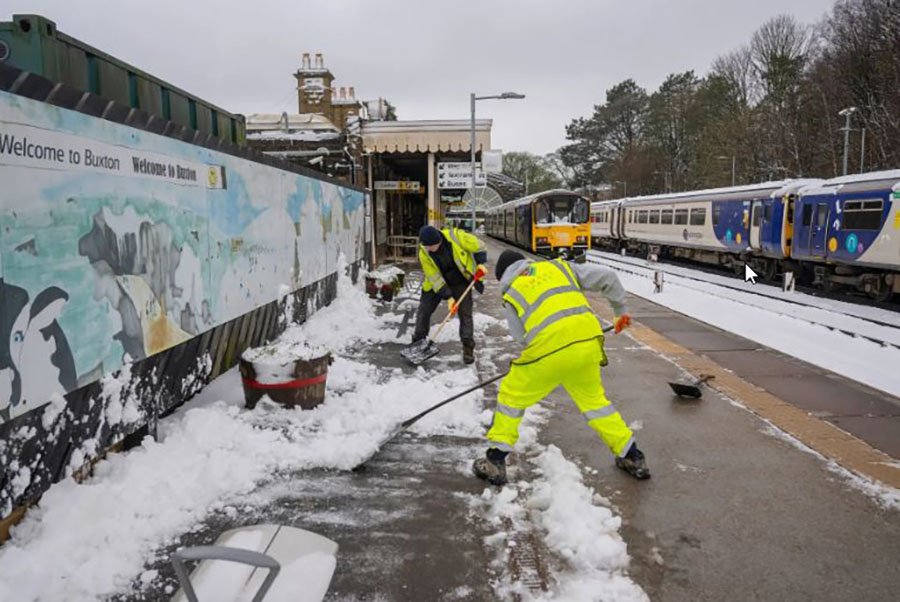
Photo: Bloomberg
Storm Goretti has caused widespread disruption across Northwest Europe, grounding flights and severely affecting aviation and business travel in Belgium, France and the Netherlands. Brussels Airport was among the hardest hit hubs, with more than 120 flights cancelled or delayed by mid-morning on 7 January as ground handlers struggled with freezing fog, snow and limited de-icing capacity.
Brussels Airport and Europe-wide disruption
Operational bottlenecks at Brussels Airport quickly rippled across Europe’s tightly integrated aviation network. Amsterdam Schiphol cancelled around 700 flights and set up temporary sleeping areas for stranded passengers, while Paris Charles de Gaulle and Orly dropped a combined 140 flights. Eurostar reduced its timetable, and Brussels Airlines cancelled 18 intra-European rotations, warning that crew-duty limits could trigger further cancellations.
Impact on business travel and supply chains
The disruption extended well beyond leisure traffic. Consultants, sales teams and corporate travellers returning from the holiday break saw meetings cancelled, while pharmaceutical exporters in Wallonia were forced to reroute temperature-sensitive shipments through Liège.
Freight forwarders reported refrigerated truck queues stretching over eight kilometres at the French–Belgian border, prompting emergency cold-chain prioritisation for perishable goods.
Exceptional weather rules and passenger rights
Under Belgian contingency rules introduced after the winter chaos of 2022, airlines may waive minimum service obligations during officially declared exceptional weather events. This allows carriers to cancel flights without paying standard EU 261 compensation, provided they still offer rebooking or refunds and accommodation where overnight stays are required.
Mobility managers are therefore advised to pre-authorise corporate credit cards for emergency lodging and to build at least 24 hours of buffer time into critical staff itineraries.
Immigration and visa implications
Severe weather also creates hidden immigration risks. Third-country nationals diverted to Brussels may exceed Belgium’s 48-hour visa-free transit limit due to unplanned layovers. Belgium’s Foreigners Office confirmed that short-stay Schengen “Type C” visas may be issued airside in genuine hardship cases, but only during business hours.
Employers are encouraged to keep electronic copies of employees’ residence permits and to brief travellers on nearby Belgian consulates if onward travel is rerouted outside Schengen.
Recovery outlook and contingency planning
Brussels Airport confirmed it has 900 tonnes of de-icing glycol in reserve and expects to clear the backlog within 48 hours if temperatures rise as forecast. In the meantime, global mobility teams are being urged to consider rail alternatives via Cologne or Luxembourg, or to reroute flights through Madrid, which remained largely unaffected.
As reported by International Investment experts, Storm Goretti highlights how extreme weather events increasingly intersect with immigration compliance and corporate mobility planning. In Europe’s major transport hubs, resilience now depends as much on legal preparedness as on operational flexibility.