







read also




Tbilisi Airport to Be Modernized: Investments to Reach $150 Million
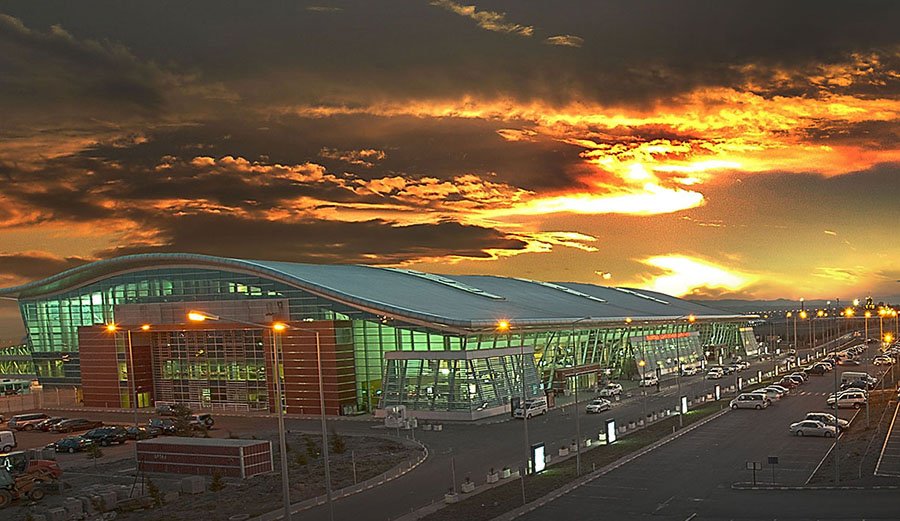
Photo: Tbilisi airport
Prime Minister of Georgia Irakli Kobakhidze presented the expansion project of Tbilisi International Airport, which will be implemented in cooperation with the French group Groupe ADP. The volume of investments will amount to $150 million, with funds allocated to increasing the terminal’s capacity and improving passenger services. The project is being launched against the backdrop of record growth in tourism and passenger traffic in Georgia in 2025.
The head of government noted that Tbilisi Airport is one of the country’s key strategic infrastructure facilities and plays an important role in the development of the economy and the tourism sector. The significance of the expansion is particularly evident in light of the record indicators recorded in 2025: Georgia registered 5.5 million tourist visits, while passenger traffic across the country’s three international airports reached 8.5 million.
By December 14, 2025, Tbilisi and Batumi airports handled more than 6.34 million passengers, with both terminals reaching historic highs. Passenger traffic at Tbilisi Airport exceeded the 5 million mark for the first time, while Batumi crossed the 1 million threshold in October. These results became one of the key milestones for Georgia’s aviation industry.
In the capital, traffic increased by 13% year on year and by 45% compared to the pre-crisis level; in Adjara, growth amounted to 30% and 96%, respectively. TAV Georgia described these figures as unprecedented. According to data for 2025, flights at these terminals are operated by 61 airlines across 67 destinations.
During the year, eight new carriers entered the Georgian market, including Air Serbia, British Airways, EasyJet, Edelweiss, Transavia France, Vision Air, Fly Khiva, and Air Samarkand. The expansion of the route network and the arrival of new players strengthened the country’s international connectivity and created additional potential for further passenger traffic growth.
“Rapid development has allowed new airlines to enter the market, open new routes, significantly improve Georgia’s transport links with leading global aviation hubs, and further strengthen our country’s role in both the regional and global aviation space,” Irakli Kobakhidze emphasized.
The Prime Minister also drew attention to устойчивые макроeconomic trends, noting that Georgia holds leading positions in Europe in terms of growth rates. Over the past five years, the average economic growth rate amounted to 9.3%, while the nominal size of the economy increased from $16 billion to $37.5 billion.
By the end of 2025, the country’s economic output reached approximately 104 billion lari. GDP per capita exceeded $10,000, while in purchasing power parity terms it surpassed $30,000. Public debt declined to 34% of GDP from more than 60% in 2020, and international reserves exceeded $6 billion.
For 2026, real economic growth is projected at 5%, with a medium-term rate of 5.3% and nominal GDP estimated at 114.1 billion lari. Inflation is expected at 3.3%, the budget deficit at 2.5% of GDP, and public debt at 33.5%. According to representatives of the parliamentary budget committee, these parameters allow Georgia to rank among Europe’s leaders in terms of fiscal sustainability while maintaining strong economic momentum.
The World Bank has raised its forecast for Georgia’s GDP growth in 2026 to 5.5% — a record for the South Caucasus, where overall economic growth is expected to slow to 3.3% in 2026 and 3.1% in 2027. Armenia is projected to grow by 4.9%, while Azerbaijan’s growth is expected at 1.8% amid risks of declining hydrocarbon production and possible pressure from global oil prices. Georgia also appears resilient compared with other countries: Kazakhstan is expected to grow by 4.5%, Turkey by 3.7%, Ukraine by 2%, and Russia by only 0.8%.
Analysts at International Investment note that the combination of high economic growth rates, moderate inflation, and declining debt burden forms a stable macroeconomic position for Georgia. Against this backdrop, the country remains attractive to foreign investors, including in infrastructure and tourism projects, where rising passenger traffic and the development of air connectivity act as key demand drivers. The expansion of Tbilisi International Airport is seen as one element of this strategy, providing long-term support for investment activity and further integrating Georgia into regional and global transport flows.
Подсказки: Tbilisi, Georgia, airports, aviation, tourism, infrastructure, investment, Groupe ADP, TAV Georgia