







read also
 Vietnam Mortgage Surge Pushes Homes Out of Reach
 Lithuanian Apartment Prices Accelerate Across Major Cities
 London Flats Lose Value Ahead of Leasehold Reform
 Construction of the Batumi–Sarpi Highway Begins in Georgia
 Baltic Property Investment Accelerates in 2026
 Hong Kong and Singapore Renew Their Expat Rivalry
Landslide on Java: 25 Dead and 80 Missing
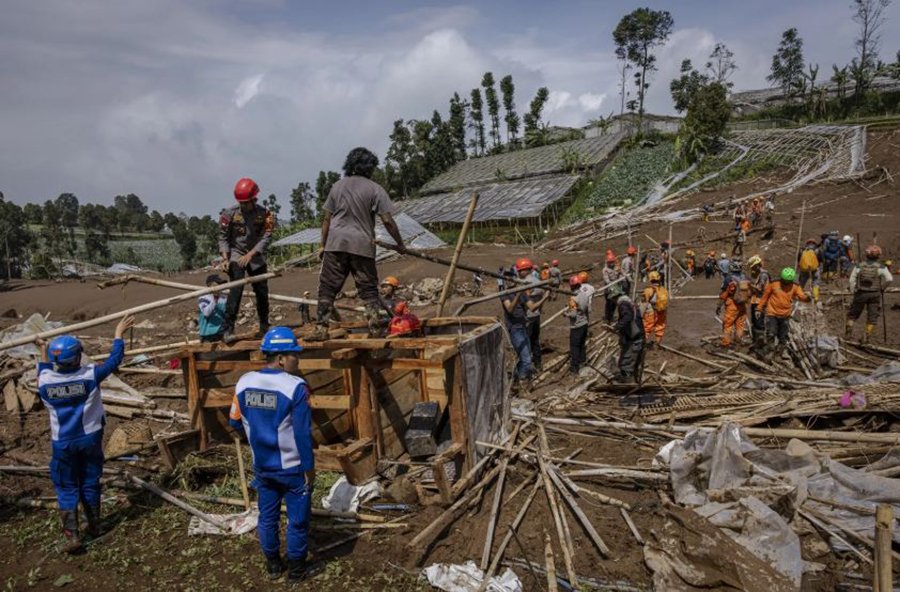
Photo: Bloomberg
Indonesia is facing yet another climate disaster. In West Java province, a landslide triggered by days of heavy rain has killed at least 25 people, with another 80 still missing, Bloomberg reports. Search and rescue operations have been suspended due to ongoing rainfall and the risk of further landslides. Experts say the tragedy is linked not only to weather conditions, but also to violations in land use.
Destroyed villages
In the village of Pasir Langu, around 34 houses were buried under masses of soil, ABC reports. More than two dozen residents were killed after a landslide struck the slopes of Mount Burangrang in West Java province. Ade Dian Permana, head of the local search and rescue office, said that some homes were buried almost up to roof level.
The use of heavy machinery at the disaster site is impossible due to unstable ground on the slope. Local authorities admit that the real scale of the tragedy may be higher than official figures, as access to the affected area remains limited.
Extreme weather has also hit the capital region. In Jakarta, authorities recommended a shift to remote and flexible work due to continued heavy rain and widespread flooding. According to local media, more than 1,600 people have been evacuated from different parts of the city.
Response from authorities and environmentalists
On January 25, Indonesian Vice President Gibran Rakabuming Raka visited the affected area and pledged to take measures to prevent similar tragedies in the future. He urged local authorities in West Bandung district to address the issue of construction in high-risk zones and to reconsider land-use practices in disaster-prone areas.
Environmental activists, in turn, say the landslide should not be viewed solely as a natural disaster caused by heavy rain. In their view, the tragedy is the result of years of environmental degradation due to uncontrolled development and violations of spatial planning rules.
Wahyudin Iwang, a representative of Walhi West Java, stressed that the landslide reflects a systemic neglect of spatial planning regulations in northern Bandung. He noted that the highland area should serve as a key water catchment and environmental buffer for the Bandung Basin — one of the most densely populated regions in the country.
The Sumatra tragedy
The incident in West Java became another episode in a chain of extreme weather events in Southeast Asia’s largest economy. In late 2025, Cyclone Senyar hit the northern part of the island of Sumatra. In some areas, up to four meters of rainfall fell within a single day, leading to a sharp rise in river levels, flooding, and landslides. More than 1,000 people were killed, and over one million were evacuated or left homeless. Authorities reported the destruction of around 100 bridges, power outages, and the complete disruption of transport links to dozens of settlements.
The most severe situation at that time was recorded in the districts of Aceh Tamiang, Pidie Jaya, and Langsa. In some settlements, water levels reached the second floors of buildings, and hospitals and schools were completely cut off. In many areas, people went weeks without clean water, medical care, or sufficient food.
Forecasts and Outlook
The national meteorological agency warns that this year’s monsoon season is accompanied by unusually intense rainfall and will last at least until the end of January. This means a high risk of new floods and landslides across Java, affecting both rural highland areas and the country’s largest urban agglomerations.
According to analysts at International Investment, developments in Indonesia increasingly point to a shift from isolated climate-related incidents to a systemic crisis of territorial governance. Experts note that without strict control over construction, the restoration of natural protective zones, and a revision of infrastructure policies, even “ordinary” monsoon rains will continue to turn into large-scale humanitarian disasters.