







read also
 Australia’s Spring Auctions Rise but Remain Well Below 2025
 Number of Foreigners Holding Turkish Residence Permits Exceeds 1.27 Million
 Demand from Russian Tourists for Holidays in Georgia Rises by 20–25%
 Montenegro Property Buying Costs in 2026
 Four in Ten Companies Would Not Choose Slovakia
 Gulf Countries Prepare Unified Tourist Visa
Tourism & hospitality / Turkey / Sinagpur / Japan / Tourism Turkey / Tourism Singapur / Tourism Japan / Thailand / Tourism Thailand 24.01.2026
Asia Faces Widespread Flight Disruptions Across Major Hubs
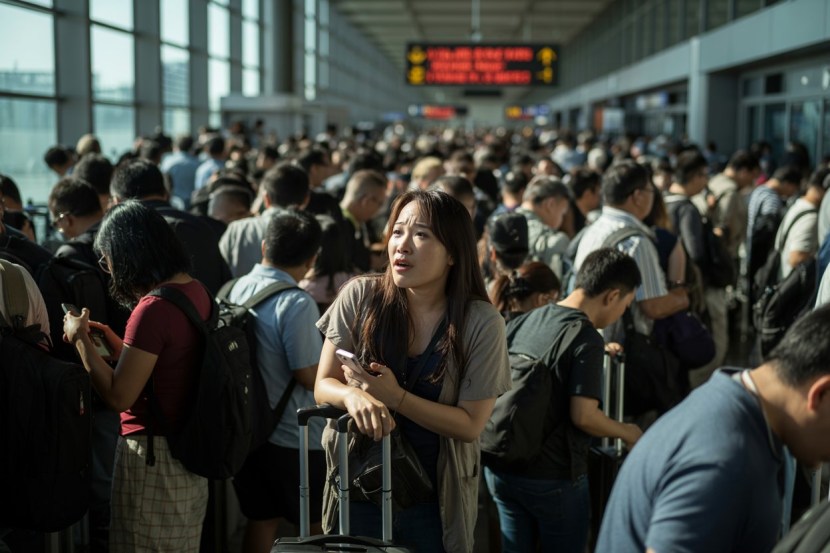
On January 23, 2026, thousands of passengers were stranded across Asia as airlines recorded an extraordinary surge in operational disruptions. In just one day, Asian airports logged 3,341 flight delays and 90 cancellations, highlighting a system-wide strain rather than an isolated incident.
Both low-cost and full-service carriers were affected, underlining the breadth of the disruption. Airlines including AirAsia, IndiGo, Air India, Japan Airlines, All Nippon Airways, Batik Air, Pegasus Airlines, Singapore Airlines, Scoot and Garuda Indonesia all reported significant schedule breakdowns.
Major airports under pressure
Jakarta Soekarno–Hatta emerged as the most disrupted airport, registering 555 delays and 9 cancellations in a single day. Severe congestion was also reported at Delhi Indira Gandhi, Mumbai Chhatrapati Shivaji, Kuala Lumpur International, Tokyo Haneda, Bangkok Suvarnabhumi, Manila International and Singapore Changi.
In terms of cancellations, Tokyo Haneda and Istanbul Sabiha Gökçen stood out, reinforcing the transcontinental reach of the disruption across East Asia, Southeast Asia, South Asia and Turkey.
Airlines struggle to maintain schedules
IndiGo recorded the highest number of delays among individual carriers, with more than 340 delayed flights. Air India followed with over 200 delays, while AirAsia group airlines collectively exceeded 450 delays across the region. Pegasus Airlines posted one of the highest cancellation figures, and Batik Air faced concentrated disruption in Jakarta.
Japan’s flag carriers, Japan Airlines and ANA, also reported widespread delays, particularly on routes operating through Tokyo.
Why the disruption appears systemic
What sets this event apart is its geographic and operational breadth. The simultaneous impact on multiple countries, airport hubs and airline business models suggests a convergence of factors rather than a single trigger. High traffic volumes, tightly packed winter schedules, localized weather constraints and ongoing staffing pressures continue to test the resilience of the aviation sector.
In an interconnected global network, even minor disruptions can cascade rapidly across regions, amplifying delays and cancellations far beyond their original source.
Implications for passengers
For travellers, January 23 served as a stark reminder of the fragility of air travel during peak operational stress. Missed connections, extended airport stays and uncertainty affected both domestic and international passengers, particularly those transiting through Asia’s largest hubs.
The broader picture
These events reflect a broader challenge facing global aviation. While passenger volumes have largely recovered since 2023, infrastructure capacity and operational flexibility have not always kept pace. As demand continues to grow, the risk of system-wide disruptions remains elevated.
As International Investment experts note, Asia’s expanding role as a global aviation crossroads will require sustained investment in infrastructure, staffing and risk management. Without such measures, large-scale disruption days like this may become increasingly common rather than exceptional.