







read also





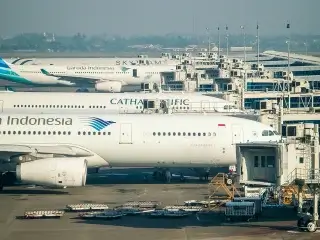
Gulf Airspace Enters Crisis Mode

Photo: Travel and tour world
In late January 2026, the Middle East entered one of its most severe aviation disruption phases in recent years. The United Arab Emirates aligned with Saudi Arabia and Qatar in enforcing heightened aviation safety measures as regional tensions escalated rapidly. Flight suspensions to Israel, Iran, and Bahrain triggered widespread cancellations, airspace avoidance, and rerouting that rippled across global air networks spanning Europe, Asia, and North America.
Drivers behind the airspace shutdown
The crisis was primarily driven by escalating military tensions between the United States and Iran, compounded by deteriorating internal security conditions within Iranian territory. Civil aviation authorities classified the region as a high-risk conflict environment, citing an elevated probability of civil aircraft misidentification by air defense systems. As a result, airlines moved from routine monitoring to full-scale avoidance of affected airspace.
Regulatory mandates reshape airline decisions
Airlines were compelled to act under binding regulatory directives. The European Union Aviation Safety Agency issued mandatory guidance prohibiting EU carriers from entering Iranian airspace. The U.S. Federal Aviation Administration extended its ban on U.S.-registered aircraft operating within the Tehran Flight Information Region through 2027. Several European states issued national NOTAMs ordering aircraft to bypass Iran regardless of airline nationality.
Collapse of normal Middle East flight patterns
Within days, standard Middle Eastern flight patterns effectively collapsed. Airlines suspended regional services and rerouted long-haul flights onto longer trajectories, increasing flight times and operational complexity. Some airports introduced daylight-only operations and reduced overnight crew presence. Major hubs including Dubai, Doha, Riyadh, and Manama remained open but experienced noticeable gaps in scheduled services.
Operational and passenger impact
Avoiding Iranian and neighboring airspace forced traffic into narrower corridors over the Eastern Mediterranean, Central Asia, and the Arabian Peninsula, creating congestion and delays. Extended flight times raised fuel costs and triggered cancellations linked to crew duty limits. For passengers, the disruption translated into widespread itinerary breakdowns, missed connections, and prolonged uncertainty over travel plans.
Compounding pressure from North America
The aviation crisis coincided with a severe winter storm in the United States, which caused extensive flight cancellations on the U.S. East Coast. Middle Eastern carriers operating transatlantic routes were forced to cancel or delay services due to destination weather, further straining aircraft and crew positioning and reducing recovery options for disrupted passengers.
Strategic implications for global aviation
The Middle East serves as a critical bridge linking Europe, Asia, and Africa, making its airspace strategically indispensable. Disruptions in the region immediately affect long-haul connectivity, cargo supply chains, and fleet utilization worldwide. Aviation planners now classify Middle Eastern airspace as strategically unstable, requiring continuous reassessment and dynamic risk management.
Conclusion
The coordinated move by the UAE, Saudi Arabia, and Qatar to enforce heightened aviation safety measures underscores the gravity of the current geopolitical environment. Regulatory restrictions, military escalation, and security risks have combined to create one of the most complex aviation disruptions of the decade.
As reported by International Investment experts, the crisis highlights how rapidly geopolitical developments can reshape global aviation flows, reinforcing a long-term shift toward route diversification and resilience-driven planning as safety considerations increasingly outweigh operational efficiency.
Подсказки: aviation, Middle East, UAE, Saudi Arabia, Qatar, Iran, Israel, airspace disruption, geopolitics