







 Vietnam Mortgage Surge Pushes Homes Out of Reach
 Lithuanian Apartment Prices Accelerate Across Major Cities
 London Flats Lose Value Ahead of Leasehold Reform
 Construction of the Batumi–Sarpi Highway Begins in Georgia
 Baltic Property Investment Accelerates in 2026
 Hong Kong and Singapore Renew Their Expat Rivalry
Asia Faces Widespread Flight Disruptions
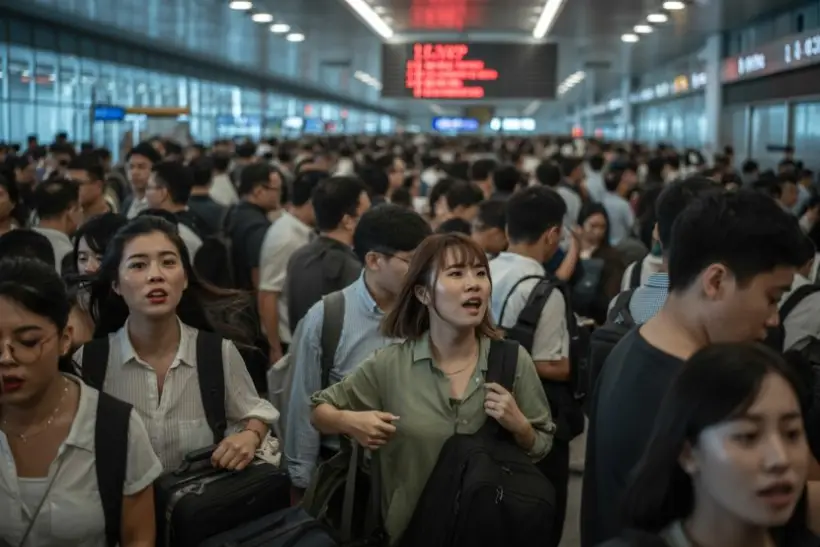
Thousands stranded as delays overwhelm regional aviation
On February 10, 2026, Asia’s aviation network experienced one of its most severe disruption days of the year. Across Japan, Thailand, Vietnam, Singapore, India, Indonesia and Hong Kong, airlines recorded a total of 3,993 flight delays and 78 cancellations, leaving thousands of passengers stranded and schedules severely disrupted.
The scale of the disruption reflected Asia’s growing dependence on high-density air travel, where congestion at major hubs rapidly cascades across domestic and international networks.
Major Asian hubs under extreme congestion pressure
Ho Chi Minh City’s Tan Son Nhat International Airport emerged as the most delay-affected hub, logging 552 delayed flights without cancellations. Tokyo Haneda followed closely with 521 delays and one cancellation, significantly affecting All Nippon Airways and Japan Airlines operations.
Delhi Indira Gandhi International Airport recorded 548 delays and three cancellations, making it India’s most disrupted airport of the day. Bangkok Suvarnabhumi reported 396 delays and two cancellations, while Singapore Changi, Hong Kong International and Jakarta Soekarno-Hatta also experienced sustained congestion throughout the day.
Airlines most affected across Asia
By volume, Vietnam Airlines, VietJet Air, All Nippon Airways, Japan Airlines and IndiGo accounted for the largest number of delayed flights. IndiGo alone recorded more than 230 delays, underscoring the strain on India’s fast-growing aviation market.
Cancellations were heavily concentrated in Japan’s regional aviation network, where Japan Air Commuter and other smaller operators suspended multiple island routes. In Indonesia, Batik Air stood out with ten cancellations at Jakarta, compounding disruption for regional connections.
Global carriers such as Singapore Airlines, Emirates, Thai Airways and Cathay Pacific avoided mass cancellations but still faced persistent delays across their Asian networks.
Structural causes behind the disruption wave
Industry analysts point to a convergence of factors including airspace congestion, weather constraints, seasonal demand peaks and infrastructure bottlenecks. Unlike shutdown-driven crises, the current pattern remains delay-dominated, with airlines opting to hold departures rather than cancel flights outright.
A notable divergence emerged between mega-hubs and regional airports. While major cities absorbed pressure through delays, smaller Japanese airports resorted to cancellations, amplifying passenger impact despite lower traffic volumes.
Broader impact on passengers and economies
Thousands of travelers across Asia missed connections, lost hotel bookings and faced extended waiting times. Business travelers encountered disrupted schedules, while tourism-dependent economies faced additional strain on hospitality and transport services.
For Asia’s aviation-driven economies, the disruption has renewed debate over capacity expansion, air traffic modernization and the long-term sustainability of current growth models.
As experts at International Investment report, Asia’s delay-heavy disruption highlights a widening gap between passenger growth and infrastructure readiness. For investors, the situation underscores long-term opportunities in airport expansion, digital air traffic management and regional aviation development as critical pillars for future resilience.