







 Vietnam Mortgage Surge Pushes Homes Out of Reach
 Lithuanian Apartment Prices Accelerate Across Major Cities
 London Flats Lose Value Ahead of Leasehold Reform
 Construction of the Batumi–Sarpi Highway Begins in Georgia
 Baltic Property Investment Accelerates in 2026
 Hong Kong and Singapore Renew Their Expat Rivalry
SAS Cancels 71 Flights Across Europe
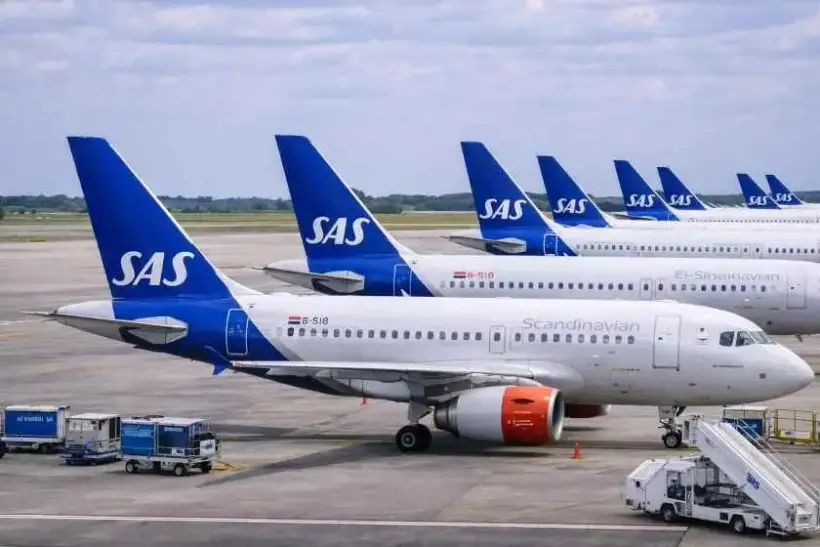
On February 16, 2026, Scandinavian Airlines (SAS) canceled 71 flights across major European and transatlantic routes, disrupting travel plans for hundreds of passengers. The affected network includes key hubs such as Oslo, Copenhagen, Amsterdam, London, Frankfurt, Stockholm, and Berlin, as well as long-haul services between the United States and Denmark.
Travelers have faced rebooking queues, limited seat availability, and extended waiting times at airports already operating near peak capacity. Both leisure and business passengers have been impacted as schedules unraveled across interconnected European routes.
List of Affected SAS Routes
Canceled services include SAS827 from Oslo to Amsterdam, SAS553 and SAS549 from Copenhagen to Amsterdam, SAS828 and SAS822 from Amsterdam to Oslo, and SAS803 from Oslo to London Heathrow with the return SAS804 from London to Oslo. Flights between Copenhagen and Frankfurt, Stockholm and Berlin, and several domestic Norwegian routes such as Oslo–Bodø and Oslo–Bergen were also suspended.
Long-haul cancellations drew particular attention, including SAS936 from San Francisco to Copenhagen and SAS944 from Chicago to Copenhagen. These transatlantic routes are central to SAS’s North Atlantic operations and provide onward connections throughout Scandinavia and continental Europe, amplifying the operational ripple effect.
Possible Causes Behind the Disruptions
SAS has not issued a detailed technical explanation for the cancellations. Industry analysts suggest a combination of operational challenges, crew availability constraints, airport congestion, and potential weather-related factors.
European aviation continues to operate under high demand conditions. As passenger volumes rebound and business travel intensifies, network resilience remains under pressure. In such an environment, localized disruptions can quickly cascade across multiple destinations.
Impact on Tourism and Business Travel
The cancellations have directly affected tourism flows into Scandinavia and major European capitals. Travelers heading to Oslo, Copenhagen, Amsterdam, and London reported postponed tours, missed meetings, and rescheduled events.
Copenhagen Airport and Amsterdam Schiphol, both major transfer hubs, experienced additional strain due to the rebooking surge. Hospitality providers and tour operators in affected cities have also seen short-term booking adjustments. Business routes to London and Frankfurt, critical financial centers, were particularly sensitive to schedule interruptions.
Passenger Guidance and Next Steps
Passengers are advised to monitor flight status updates through official SAS channels and seek immediate rebooking assistance when necessary. Alternative airlines or rail options within Europe may offer temporary solutions depending on seat availability.
Travel insurance policies should also be reviewed to determine coverage for accommodation costs and additional transportation expenses arising from flight cancellations.
Outlook for European Aviation
The SAS cancellations once again highlight the operational fragility of tightly scheduled airline networks during periods of elevated demand. Limited spare capacity and crew constraints increase the likelihood that individual disruptions may expand across multiple markets.
Airlines are expected to further strengthen operational planning and contingency strategies to reduce the scale of future disruptions.
As International Investment experts report, repeated large-scale cancellations reinforce a growing shift toward flexible booking models and diversified routing strategies, which are becoming standard risk-management tools in European air travel.