







 Vietnam Mortgage Surge Pushes Homes Out of Reach
 Lithuanian Apartment Prices Accelerate Across Major Cities
 London Flats Lose Value Ahead of Leasehold Reform
 Construction of the Batumi–Sarpi Highway Begins in Georgia
 Baltic Property Investment Accelerates in 2026
 Hong Kong and Singapore Renew Their Expat Rivalry
Dubai and Sharjah Hotels Evict Tourists and Raise Prices
UAE Hotel Industry Violates Government Directives
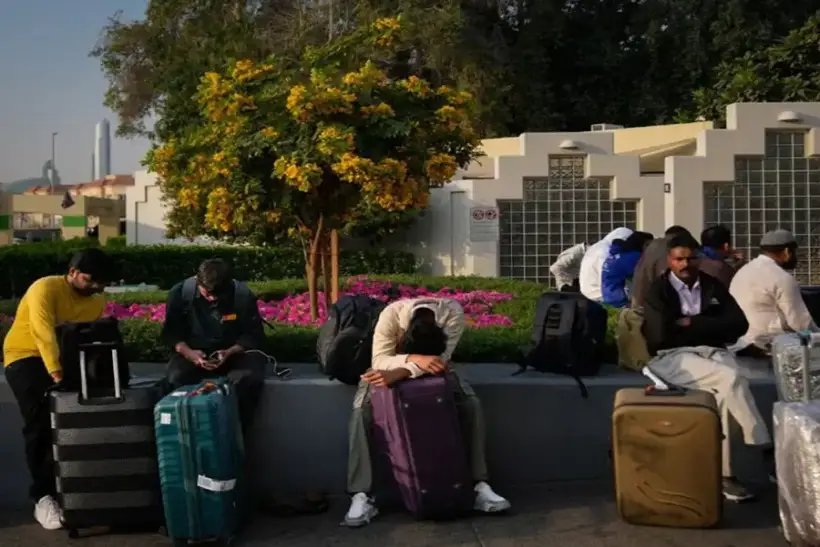
Disruptions in air traffic in the Middle East have caused mass flight delays and disrupted the plans of thousands of tourists in the UAE. The authorities have urged hotels to extend the stay of guests who cannot leave the country on time. However, tourists and tour operators report that hotels often ignore these recommendations, evicting guests or raising prices.
Emirates Promise to Cover Tourist Expenses
The UAE authorities announced that they intend to cover hotel and meal expenses for tourists who cannot leave the country on time due to flight cancellations and delays. They will also assist with rebooking flights. These large-scale support measures will affect about 20,200 people, according to The National.
The Abu Dhabi Department of Culture and Tourism sent an official notice to hotels nationwide, instructing them to extend tourists’ stays and cover their expenses for additional nights, reports Newsweek. The document states that these measures apply to guests in difficult situations for reasons beyond their control, and invoices for extended stays should be sent to the department for reimbursement.
The authorities of Ras Al Khaimah have stated that they are ready to cover accommodation costs for up to three nights. Tourists must personally contact the emirate’s tourism office and confirm the lack of funds to pay for the hotel.
In Dubai, hotels also received instructions to allow tourists to remain in their rooms under the conditions of their original booking — without raising rates or imposing penalties. However, there is no information yet about similar compensation measures in this emirate, and in practice, tourists continue to face evictions at the end of the paid period.
Reality: Tourists in the UAE Are Left Without Assistance
Evictions from Emirati Hotels
The promises of the authorities and the actual situation for tourists in Dubai and Sharjah hotels have diverged drastically. ARTUR MURADYAN, Vice President of the Russian Tour Operators Association (ATOR), confirmed that hotels refuse to extend stays for free, even though the authorities had previously promised to cover all costs for affected passengers. Tour operators have to independently search for alternative arrangements for clients and pay for extensions. In some cases, complaints to the tour operator Al Khalidiah Tourism helped secure extended accommodation. Independent travelers solve the problem on their own — searching for available rooms in fully booked hotels and often facing refusals due to lack of space.
In Dubai, tourists report cases of being relocated from hotels despite official government directives. Guests at hotels on Sheikh Zayed Road and in the Jumeirah Beach area said they were moved to smaller rooms with limited services that did not match the conditions of their original booking.
The Russian Tour Operators Association recorded specific cases in hotels such as Hilton Dubai Jumeirah, Marriott Downtown, and Ramada Plaza, where tourists were denied extensions of their stays under existing bookings. Guests had to independently find alternative accommodation and pay for it, despite government orders to extend rooms for free.
Hotel Prices in the UAE Surge
Tourists report a sharp increase in prices. In one case, the cost of two nights rose from 46,000 to 62,000 rubles ($595–802) within minutes. A Chinese traveler named Xue, who was in Dubai with his family, noted that on the first day of the forced stop, their hotel cost 1,300 yuan per night ($188), and after the crisis began, the price rose to 2,000 ($289).
Greek tourist Yannis Stafurakis said that the hotel demanded additional payment for accommodation and meals from him and his fellow countrymen despite force majeure circumstances. Some Greeks had already paid for extensions, and now they are being charged for additional nights. Even with proof of the inability to depart, hotel administrations sometimes demanded payment for extra nights at inflated rates and approved extensions only day by day.
Accommodation Conditions and Safety
The situation is worsened by the absence of equipped protective shelters in hotels. Passengers on the Aeroflot Dubai–Krasnodar flight spent the night on the concrete floor of an underground parking lot of a three-star hotel, where staff distributed mattresses and water. People lay on the floor, listening to explosions, without any information from airlines or hotel management.
At Atlantis The Palm, guests also had to descend to shelters. Traveler Yulia said that people were evacuated to the hotel dining room because being in the parking area under a huge aquarium was unsafe. She confirmed that the hotel is not evicting anyone yet but is not providing free accommodation — the government directive at the hotel does not work. Journalist Ilya Sagliani added that travelers who booked tours independently have to extend their stay entirely at their own expense.
“Rely on Yourself”: Consulate Advice
Tour operators cannot pay en masse for further accommodation of their clients. The Russian Consulate General in Dubai warned that airlines and tour companies will cite force majeure and will not pay for accommodation themselves. In this regard, the consulate issued instructions for Russian tourists in difficult situations.
Diplomats advise travelers to realistically assess their financial capabilities and budget at least a week ahead. If a tourist is staying in a five-star hotel, it is recommended to consider moving to a more budget-friendly option. If funds are lacking, they should contact the reception, explain the situation regarding canceled flights and force majeure, and request a free extension, agreeing to reduced conditions. If the hotel insists on eviction and no money is available, the consulate asks to immediately email [email protected] with a brief description of the situation. Diplomats will search for hotels and volunteers willing to accommodate people with post-payment or for free but warn: “Prepare for Spartan conditions.”
Paths to Escape: How Tourists Leave the UAE
In Dubai, tourists have divided into three groups, according to local lawyer Irina Khiver: some rush to the Oman border hoping for private jets; others continue ordinary life — “swimming in the sea and strolling at sunset”; the third strictly follow official recommendations to remain in shelters.
Flights from Oman and Riyadh: Ticket Prices Triple
Most tourists remain in Dubai hotels or on cruise liners along the coast, but many try to leave the country via alternative routes. The main route is a four-hour drive by car to Oman, from where flights are still operating, or a ten-hour trip to Riyadh.
Demand for private planes has soared, and prices have multiplied. JetVip broker from Muscat reports that a flight to Istanbul on the smallest available plane now costs about €85,000 — roughly three times the usual fare. Seats on a private charter to Moscow are sold for €20,000 per person. Some companies cannot provide a plane due to difficulties relocating aircraft to the region and insurer requirements.
Thousands of Tourists Trapped on Cruise Liners
Travelers on cruise liners are in an even more difficult situation. At least six large ships with thousands of passengers are anchored off the coast or in ports. People are not allowed ashore, and on some ships, such as Mein Schiff 4 in Abu Dhabi, tourists were asked not to go out on balconies. Passengers witnessed explosions in the port and smoke plumes over the city. On the MSC Euribia in Dubai, cabin keys were reissued until March 6, indicating that disembarking would not be possible in the near future.
Failure of Tourist Support
International Investment analysts note that the crisis of evacuating tourists from the UAE revealed a systemic problem: government declarations of traveler support are not backed by effective enforcement mechanisms. In practice, the UAE has a situation of legal and administrative diversity, with decisions made at the level of each emirate and even individual hotels.
In Abu Dhabi and Ras Al Khaimah, where transparent compensation schemes were launched (invoices are sent to the department, and tourists can personally request help), the problem is addressed systematically. In Dubai and Sharjah, despite formal government recommendations, the hotel industry acted as a market player maximizing profit from scarcity: hotels denied extensions, raised prices, and relocated guests to lower-quality rooms.
This difference in approaches shows that the “advisory” nature of directives without financial responsibility from the state does not work in a crisis. Hotels oriented toward commercial gain prefer to risk reputation but earn excessive profits from tourists in a hopeless position.
For tourists, this crisis became a financial stress test: most had to urgently find funds to extend their stay at inflated rates, facing a lack of information and support. Independent travelers were the most vulnerable, while tour operators at least attempted to solve issues for their clients.
The situation highlights the importance for travelers to have a financial “safety cushion” in case of force majeure and to carefully study not only official government statements but also the real application practices in a particular emirate or even a specific hotel. In the long term, such experience could lead to stricter hotel requirements and the creation of mandatory, not advisory, standards for supporting tourists in emergencies.