











Explosions in Dubai and Oman: Escalation in the Middle East
Drone and missile attacks hit several Gulf countries again
Tensions in the Middle East reached a new peak on March 13, 2026. A wave of attacks using drones and missiles affected multiple Gulf states. The most notable incidents occurred in the UAE and Oman, resulting in damage and casualties. Air defense systems in Saudi Arabia, Iraq, and Turkey were also put on high alert.
Dubai: Drone debris falls on financial district
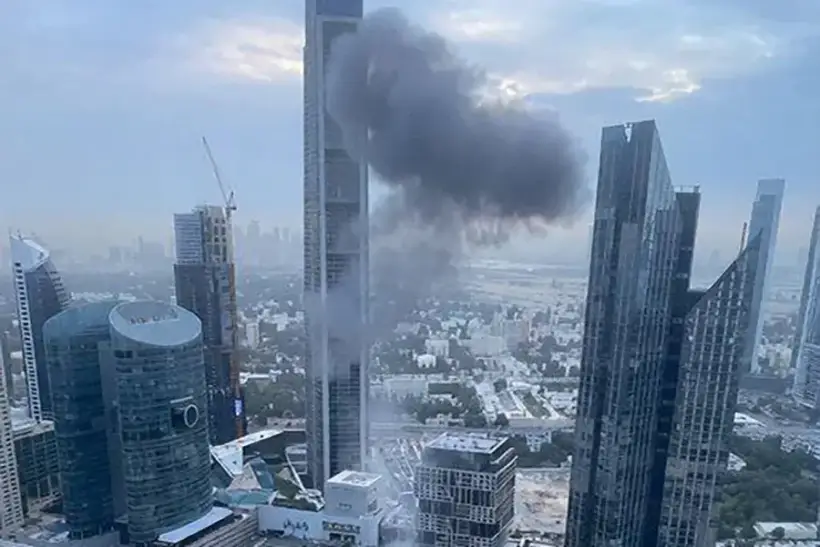
Explosions were reported near Dubai International Financial Centre (DIFC) on the morning of March 13. According to UAE authorities, the air defense system intercepted a flying target, but debris fell on the facade of a building. No injuries were reported, and material damage is considered minor. Smoke columns were visible over DIFC, and witnesses described chaotic movement of people and traffic in the business district. Temporary evacuations were carried out in offices of several international banks located in the debris zone.
Iranian news agency Nour News, affiliated with the Islamic Revolutionary Guard Corps, reported that the attack targeted the financial center directly. The UAE Ministry of Defense stated that since February 28, when the current phase of escalation began, the country’s air defenses have destroyed 1,540 drones, 278 ballistic missiles, and 15 cruise missiles.
Oman: Fatalities in the Sohar province
In Oman’s Sohar province, an important industrial hub, drone crashes were recorded. The first drone fell in the Al-Awahi industrial zone, killing two foreign workers and injuring several others. Another drone crashed in an open area without consequences.
A source in Oman’s security service told Khaleej Times that debris from the first drone caused a fire at an industrial facility, which was quickly extinguished. The origin of the drones is under investigation.
Last week, Oman reported intercepting Iranian missiles and drones over its territory, but in this case, the source of the threat has not been officially confirmed.
Saudi Arabia: Drone attack in the east
Saudi Arabia’s air defense forces repelled a drone attack on the morning of March 13. Official sources reported that drones targeting key oil refineries and coalition military bases in the Eastern Province were intercepted.
A Saudi Ministry of Defense representative confirmed that two drones were destroyed in Al-Kharj province and another two in the eastern region. Earlier in the morning, a drone approaching the Diplomatic Quarter in Riyadh was also shot down.
Iraq: Italian contingent withdrawal
In Erbil, Iraq, attacks on international coalition positions continue. Italy announced an accelerated withdrawal of its military contingent. Defense Minister Guido Crosetto explained that 141 personnel will be relocated through Turkey due to the impossibility of safe direct air travel.
According to ANSA, a missile strike on a base in Erbil did not affect Italian personnel, but the withdrawal decision had been made earlier due to deteriorating security conditions.
Turkey: Alert at Incirlik Air Base
Air raid sirens sounded at the US Incirlik Air Base in southern Turkey. Turkish media reported explosions in the area, but NATO command has not issued official statements.
Incirlik hosts US tactical nuclear warheads. Previously, NATO air defenses intercepted ballistic missiles launched from Iran toward the Turkish border.
Region on fire
The escalation on March 13, 2026, confirms the trend of the conflict spreading. Rear areas and economic centers are no longer safe. Gulf countries’ air defenses are operating at maximum capacity. Since February 28, over 1,500 drones and around 300 missiles have been intercepted over the UAE alone.
International Investment analysts note that Iran’s change in military doctrine following the death of former Supreme Leader Ali Khamenei on February 28 led to a strategy of mass strikes against countries supporting the US military presence and cooperating with Israel. Debris falling on civilian targets undermines confidence in the absolute security of these areas.
Investors and businesses are choosing safer destinations, including Georgia, where the situation remains calm: the economy is rapidly growing, tourist flow is increasing, and real estate investment returns are higher than in many other countries worldwide.