







 Vietnam Mortgage Surge Pushes Homes Out of Reach
 Lithuanian Apartment Prices Accelerate Across Major Cities
 London Flats Lose Value Ahead of Leasehold Reform
 Construction of the Batumi–Sarpi Highway Begins in Georgia
 Baltic Property Investment Accelerates in 2026
 Hong Kong and Singapore Renew Their Expat Rivalry
Passengers on Belgrade flight unable to reach St. Petersburg for two days
Фонтанка
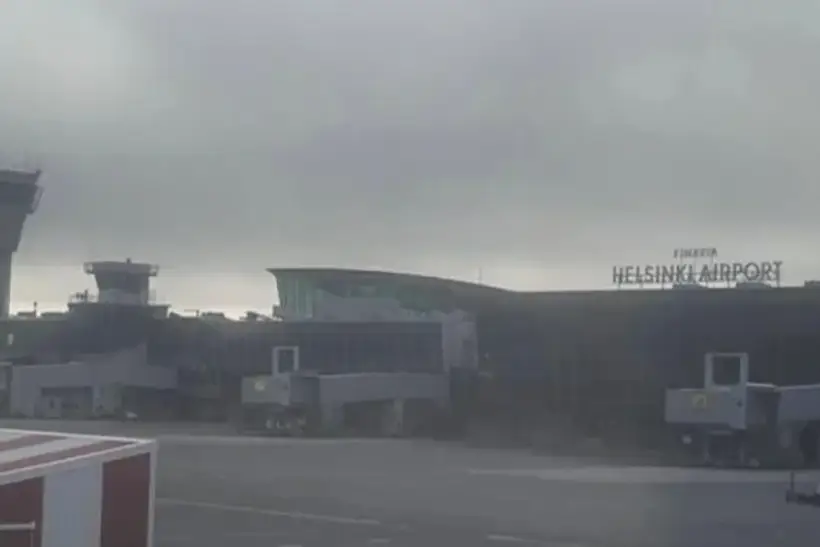
Plane with Russian passengers makes another emergency landing in Helsinki
Passengers on the Belgrade–St. Petersburg flight have been unable to return home since March 26. The Air Serbia aircraft was turned around twice due to airspace closures. It was then routed toward Russia via Finland, but during takeoff in Helsinki the plane spun 180 degrees on the runway, Fontanka reported.
Operation “Carpet”: drones over St. Petersburg
The story of flight JU 4124 began on March 26. The aircraft departed from Belgrade late in the evening and reached St. Petersburg but was unable to land. It made several approach attempts, circling four times, before being forced to return to Serbia because the airspace over Pulkovo Airport was closed due to drone activity. Passengers were accommodated in a hotel and promised a new departure the following day.
On March 27, the situation repeated. The aircraft once again headed toward St. Petersburg, but the “Carpet” emergency regime was declared at the airport. This time, instead of returning to Serbia, the crew opted to divert to one of the nearest alternate airports.
Incident in Helsinki
The captain decided to make an emergency landing in Helsinki to refuel and wait for the airspace to reopen. However, the process proved complicated. According to passengers, three fuel service providers refused to refuel the aircraft. The reasons were not disclosed, but the prolonged wait heightened tension onboard.
Once refueling was finally arranged, another incident occurred.
During takeoff, the aircraft abruptly braked and, as witnesses described, “turned 180 degrees right on the runway.” The flight was subsequently cancelled. The crew informed passengers of technical issues, reportedly involving the engine and landing gear. The aircraft was towed off the runway to a parking stand at Helsinki-Vantaa Airport for inspection and repairs. No injuries were reported.
Pulkovo reopens
Delovoy Peterburg reported that an air alert in the Leningrad region on the morning of March 28 once again disrupted flight schedules. Eight aircraft were diverted to alternate airports due to restrictions on arrivals and departures at Pulkovo Airport. Flights to Belgrade and Moscow were cancelled, while departures to Sharm el-Sheikh, Istanbul, Murmansk, Samara, Ivanovo, Kazan, Baku, Sochi, Magnitogorsk and Urgench were delayed.
Airspace over Pulkovo reopened at 06:44, and the airport resumed normal operations. However, for passengers of the Air Serbia flight, the situation remained unchanged, with no clear information on departure times or дальнейшие arrangements.
It is worth noting that on March 25, a flight from Hurghada to St. Petersburg was also diverted to Helsinki due to the same “Carpet” restrictions at Pulkovo. Passengers remained onboard for four hours before being transferred to a terminal. The total delay reached 20 hours.
Conclusion
Analysts at International Investment note that the Belgrade–St. Petersburg incident reflects a combination of systemic challenges facing Russia’s aviation sector.
The primary factor is the recurring closure of airspace due to drone-related security concerns. Such restrictions lead to temporary shutdowns of airport operations and disrupt flight schedules.
A second issue is the limited capacity to reroute traffic efficiently. The number of available alternative routes and airports has decreased, increasing pressure on specific hubs and prolonging decision-making in irregular situations. This complicates ground handling and extends delays.
The third factor is the rise in operational risks for airlines. Forced route changes, additional landings, and extended time in the air and on the ground disrupt schedules, increase costs, and in some cases contribute to technical incidents.
Together, these factors are having a direct impact on related industries. In tourism, destinations with unstable air connections become less attractive. In the business sector, travel costs and time expenditures increase. For passengers, this results in longer journeys and reduced reliability. If the situation persists, further redistribution of passenger flows, reduced flight frequencies, and rising ticket prices can be expected.