







 How Ukraine’s New-Build Housing Market Has Changed Over Four Years
 European Prime Rents Rise as Property Yields Turn Higher
 The Most Expensive Airlines in Europe in 2026
 Housing Prices in Italy Reach a Two-Year High
 Travellers Increasingly Choose Cooler Scandinavia
 Serbia Property Sales Decline as Transaction Value Rises
TikTok Warns Russians in the UAE About Responsibility for Videos of Military Actions
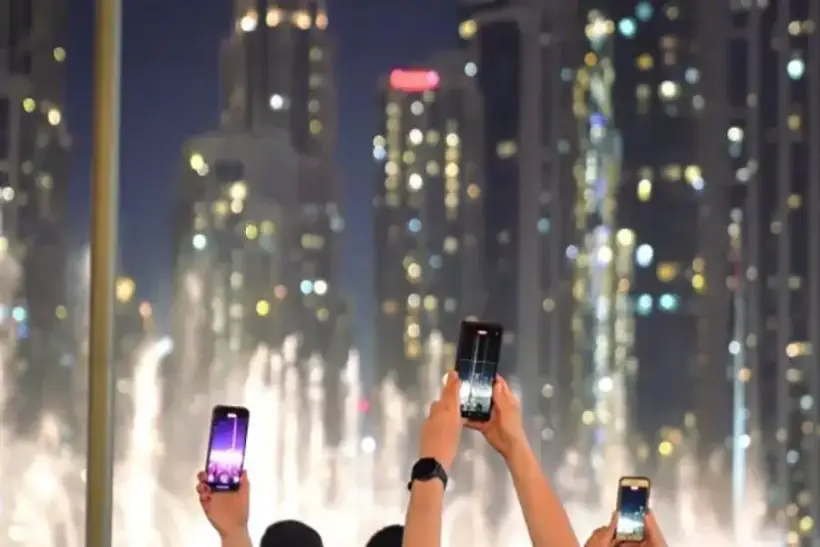
Фото: Alekszhar / Shutterstock
TikTok users in the UAE, including Russians, have started receiving notifications about possible criminal liability for posting or reposting videos of military actions, reports RBC. The app displays a warning that recording, sharing, publishing, or reposting such information is strictly prohibited. Violations can lead to criminal penalties, including fines or imprisonment.
Detentions for Filming and Posting in the UAE
The most active measures against filming Iranian drones and missiles are being taken in Abu Dhabi, where by March 20, 109 people of different nationalities had already been detained. In Dubai, more than 20 foreigners were arrested. Authorities believe that videos and photos could “arouse public opinion.” Cases are being handled under UAE cybercrime legislation. Charges are being brought for spreading information that affects public safety.
Abu Dhabi law enforcement describes such publications as unverified content that violates current laws and interferes with official procedures. Violations are suppressed through monitoring of social networks, which effectively means total online control.
Recommendations from Diplomats in Dubai
The Russian Consulate in Dubai previously advised switching to cat videos. “We draw the attention of Russian citizens and visitors to the UAE to the requirements of local legislation. According to UAE law enforcement, recording and sharing online videos related to missile attacks, the operation of air defense systems, and similar incidents may be considered a violation of the law,” the diplomats’ statement said.
People can be held accountable for posting videos on social media, sending clips through messengers, as well as for reposts and other types of distribution of such materials. “According to current UAE legislation, such actions can be classified as a cybercrime related to spreading information capable of causing panic,” the consulate explained.
Penalties for Violations in the UAE
Violating UAE laws carries heavy fines — from 20,000 to 200,000 dirhams (approximately $5,500–54,500), imprisonment for up to two years, and possible deportation.
“Optimists (adventurers), of course, may see this as an opportunity to get free accommodation with three meals a day, as well as a personal ‘evacuation flight’ out of turn. However, we strongly do not recommend testing this scenario in practice,” the diplomatic mission warned Russians.
The executive director of the human rights organization Detained in Dubai, Radhi Stirling, noted that anyone interacting with such content in the UAE, including likes and comments, could also be held accountable.
UAE Policy During the Middle East Conflict
UAE authorities have significantly tightened control over social media posts. In the first days of the conflict, such posts were numerous, but then most of the content disappeared. A key moment came with official warnings: on March 6, UAE Attorney General Hamad Saif Al-Shamsi stated that photographing, publishing, or sharing images and videos from missile impact sites and debris is prohibited, as is distributing inaccurate digital information, because such materials can cause panic and pose a threat to public safety.
At the same time, authorities and official media insist that the public should rely only on state-verified information. According to the official version, the sounds over the territory are associated with the interception of incoming missiles and drones, and the main danger to people comes from falling debris after the air defense systems’ operation. Any user publications that contradict the official version of events are considered a legal violation.
Foreigners in the UAE: Impact of Military Actions
Strikes have affected hotels, commercial and financial centers, and airports in the Emirates. The conflict has already prompted many expatriates and tourists to leave, and international banks have shifted employees to remote work. At the same time, UAE authorities aim to maintain the country’s image as safe.
The sensitivity of the situation is heightened by the demographic structure: the expatriate population exceeds that of citizens, and the total population is around 11.29 million. The economy heavily depends on the trust of foreign specialists, investors, tourists, and tenants, so any deterioration in the perception of security directly affects the real estate market, rentals, hotel occupancy, and international traffic.
Experts at International Investment note that the current crisis tests the resilience of a model in which international capital, tourism, and the real estate market rely on a sense of complete security. The stricter the state control over the public narrative, the more important it is for investors to distinguish between the official image and the actual level of risks.