







 How Ukraine’s New-Build Housing Market Has Changed Over Four Years
 European Prime Rents Rise as Property Yields Turn Higher
 The Most Expensive Airlines in Europe in 2026
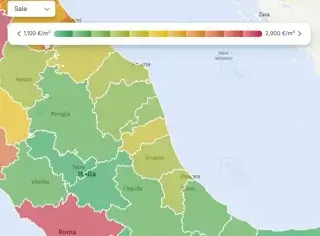 Housing Prices in Italy Reach a Two-Year High
 Travellers Increasingly Choose Cooler Scandinavia
 Serbia Property Sales Decline as Transaction Value Rises
Philippine carriers cut more Middle East flights

PAL and Cebu Pacific deepen restrictions as war drags on
Philippine airlines are expanding restrictions on Middle East services as the war continues to disrupt regional airspace and drive fuel costs sharply higher. Philippine Airlines has officially announced the temporary suspension of its Manila–Riyadh service through April 8, 2026, saying the decision was taken because of security conditions affecting parts of the Middle East and the resulting operational uncertainty in regional air corridors and airport operations.
At the same time, Cebu Pacific has confirmed temporary network adjustments tied to the Middle East crisis. On its official advisory page, the carrier says it is implementing flight changes in response to the evolving situation and will continue to review its network as conditions change. GMA News, citing the airline’s own statement, reported that Cebu Pacific is suspending routes and reducing frequencies on some international services from April 2026 because the armed conflict in the Middle East has pushed up global fuel prices.
Safety risks and jet-fuel costs are hitting Philippine aviation at once
The current disruption is unusual because it combines two shocks. One is direct operational risk tied to sensitive Middle East airspace. The other is the surge in jet-fuel costs, which is already forcing both carriers and regulators in the Philippines into an adaptation mode. Bloomberg reported in late March that Asia’s aviation crisis could intensify and spread because the Iran war has sent jet-fuel prices sharply higher, with some costs having doubled since the start of the year.
That matters especially for the Philippines. Bloomberg previously reported that President Ferdinand Marcos Jr. declared a one-year national energy emergency, warning that the war in Iran was disrupting global oil supply and exposing the Philippines to shortages and rising domestic fuel costs. The report noted that the country depends heavily on imported crude, much of it linked to the Middle East, making Philippine aviation particularly vulnerable within Southeast Asia.
Philippine Airlines had already suspended key Gulf routes
The latest Riyadh suspension is not PAL’s first cut in recent weeks. Philippine and regional reports citing the airline’s official advisories had already said Manila–Doha and Manila–Dubai services were suspended through April 30, 2026. PAL’s travel-advisory page also shows a series of schedule changes linked to evolving conditions affecting global aviation.
That suggests the restrictions are broadening as operating conditions worsen and costs rise. What initially looked like flight-by-flight safety management is increasingly turning into a wider network defence strategy. This is particularly sensitive because Gulf routes are central to labour mobility, family travel and transit connections for large Filipino communities working in the region.
Cebu Pacific is cutting beyond the Middle East itself
For Cebu Pacific, the impact is already wider than Middle East routes alone. GMA News reported that the low-cost carrier is suspending and trimming several international services because of higher fuel costs linked to the conflict. Other coverage of the same advisory said the changes extend for months and include frequency reductions, not just isolated cancellations, suggesting the airline is actively reallocating capacity to adapt to a very different fuel-cost environment.
That makes economic sense for a low-cost carrier. When fuel prices surge and route uncertainty remains high, it becomes harder to preserve the same international frequencies without reassessing profitability. In that sense, the Middle East war is acting not only as a regional safety issue, but also as a global shock to airline network economics.
Philippine regulators are already raising fuel surcharges and cutting fees
The pressure is also visible in regulatory action. The Civil Aeronautics Board has officially issued an advisory on interim passenger and cargo fuel surcharges for domestic and international flights covering April 1–15, 2026. At the same time, the Philippine Information Agency reported that the Department of Transportation ordered cuts to passenger service charges and navigation fees at CAAP-operated airports to partly ease fare pressure as jet-fuel costs surged.
In effect, the government is acknowledging that part of the cost shock will flow through to travelers. Philippine media also reported that CAB moved the allowed airline fuel surcharge higher for April because of the continuing Middle East conflict. For passengers, that means the crisis is not only about cancellations and rebookings, but also about higher fares even on routes that remain operational.
Why this matters so much to the Philippines
Middle East air links matter to the Philippines far beyond tourism. These routes serve large volumes of migrant workers, family travel and transit traffic tied to overseas Filipino communities in Gulf states. Suspensions affecting Riyadh, Doha and Dubai therefore touch not just airline schedules but a much broader mobility network for Filipinos living and working abroad. That is why even temporary suspensions quickly become socially and politically sensitive. This conclusion follows from the importance of the affected PAL routes and the role of Gulf destinations in Philippine long-haul traffic.
As International Investment experts note, the Philippine airline response shows that the Middle East war has already moved from being a distant geopolitical story to becoming a direct transport and consumer risk for Asia. If the conflict and fuel shock persist, the Philippine aviation market is likely to face not only further suspensions on sensitive routes, but also a broader wave of higher fares, schedule adjustments and reduced international capacity.
FAQ on Philippine Middle East flights
Which Philippine Airlines flights are officially suspended now
PAL has officially announced the temporary suspension of Manila–Riyadh flights through April 8, 2026. Earlier reports citing the airline also said Manila–Doha and Manila–Dubai services were suspended through April 30.
Why is Cebu Pacific cutting international flights
Because the Middle East conflict is affecting global fuel prices, and the airline has officially announced network adjustments and international schedule changes in response.
What is happening to airfares in the Philippines
CAB introduced a higher interim fuel surcharge for flights for April 1–15, 2026, while the government moved to cut some airport and navigation fees to soften fare pressure.
Is this mainly a safety issue or a cost issue
It is both. PAL explicitly cites safety and operational uncertainty in Middle East airspace, while Cebu Pacific and Philippine authorities are focusing on the jump in jet-fuel costs.
Could more routes be affected
Yes. Bloomberg reported that Asia’s aviation crisis could spread as jet-fuel prices rise, and the airlines themselves say they will continue reviewing their networks as conditions evolve.