













EU fully launches EES 2026
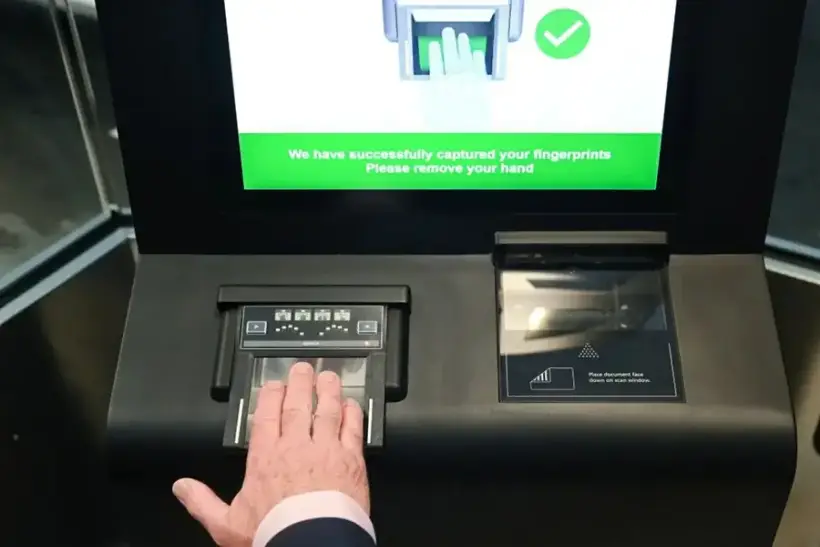
Digital border control replaces passport stamps
From 10 April 2026, the Entry/Exit System (EES) has become fully operational across all Schengen countries. This marks the final transition to a fully digital system for recording crossings of the EU’s external borders. Traditional passport stamps for short-stay non-EU travellers have been replaced by electronic records.
How travel to the Schengen Area is now recorded
The new system automatically registers the entry and exit of non-EU nationals. At the border, passport data is recorded along with biometric information — facial images and fingerprints.
All information is stored for three years in a central digital database, allowing authorities to track travel history without relying on physical passport stamps.
The system applies to short stays of up to 90 days within any 180-day period. This limit is the same across all countries using EES, regardless of the point of entry into the Schengen Area.
Where the EES system operates and who it applies to
The Entry/Exit System (EES) operates in 29 Schengen countries and several associated states. It is not yet applied in Ireland and Cyprus, where traditional passport stamping remains in place.
EES applies to non-EU nationals, as well as individuals who are not citizens of Iceland, Liechtenstein, Norway, or Switzerland. Most travellers will encounter the system upon arrival at European airports.
In the United Kingdom, EES operates in Dover, Folkestone, and London St Pancras, where juxtaposed border controls with France are located. However, due to technical issues, the system for road traffic has not yet been implemented at the Port of Dover or on LeShuttle services in Folkestone, and passport stamps continue to be used there until full deployment.
Why the EES system was introduced
The full launch of EES represents a key milestone in modernising the EU border management system. The European Commission emphasises that digital entry and exit records allow more accurate monitoring of compliance with stay rules, detection of overstays, and prevention of document fraud.
Commissioner for Home Affairs and Migration Magnus Brunner noted that the system makes external border management more efficient and helps combat irregular migration and document-related fraud.
Another objective is to speed up and simplify border crossing procedures. In the long term, automation and pre-collected traveller data are expected to reduce processing times.
Results from the early stages of EES implementation
The phased rollout began in October 2025. It was gradually introduced across 29 countries and became the standard at Schengen external borders by 10 April 2026.
During this period, more than 52 million border crossings were recorded. Over 27,000 people were refused entry. More than 700 travellers were identified as posing a potential security risk to EU and Schengen countries.
The rollout has also faced operational challenges. In some airports, such as Geneva, queues of up to four hours were reported at border control. In late 2025, Lisbon Airport temporarily suspended EES checks for three months for the same reason.
French company Aéroports de Paris, which operates Orly and Charles de Gaulle airports, has called for temporary suspension of checks during peak travel periods.
Representatives of the Airports Council International (ACI) and airline industry groups have warned that peak periods such as Easter and the summer season may lead to significant delays. They have also urged the European Commission and EU member states to allow partial or full temporary suspension of the system in case of overload, in order to prevent major disruptions.
What this means for travellers
The biggest changes will be felt at border control. Initially, processing may take longer while airports and border authorities adapt to the new system. Over time, the process is expected to become more familiar and faster due to automation and previously stored data.
For repeat travellers, data will already be stored in the system, eliminating the need for re-entry of information and simplifying border checks.
It is important to note that the system strictly enforces the length of stay. The number of days spent in the Schengen Area is now calculated automatically, making the 90/180-day rule fully digital. Attempts to bypass restrictions by entering through different countries are no longer effective, as all data is unified in a single system.
The system is designed for biometric passports. The European Commission notes that non-chip passports may still be accepted in some cases, but in practice this may result in longer processing times. Some EU countries have also announced restrictions on older 5-year Russian passports, which should be taken into account when planning travel.
FAQ on the Entry/Exit System (EES)
What is the EES?
The EES is an EU digital system that records entry and exit of non-EU nationals on short stays in the Schengen Area.
When did the system become operational?
It became fully operational on 10 April 2026 across all Schengen countries.
Are passport stamps still used?
No. Passport stamps have been replaced by electronic border records.
What data does the system collect?
Passport data, facial images, and fingerprints.
Who is subject to the EES?
Non-EU nationals, as well as people who are not citizens of Iceland, Liechtenstein, Norway, or Switzerland.
Who is exempt?
EU citizens, Schengen nationals, and certain long-term residents.
How long can you stay in the Schengen Area?
Up to 90 days in any 180-day period.
Can the system be bypassed via another country?
No. All entries and exits are recorded in a unified Schengen-wide database.
Will border checks become faster?
Initially they may take longer, but are expected to become faster over time.
What happens to traveller data?
Data is stored in a digital system and used for border control and security purposes.
Does the system operate in all EU countries?
No. It applies to Schengen countries but not Ireland or Cyprus.
Is a biometric passport required?
The system is designed for biometric passports. Non-chip passports may still be accepted, but processing may take longer.