













Norovirus outbreak on cruise ship in Bordeaux: 1,700 people isolated
Información
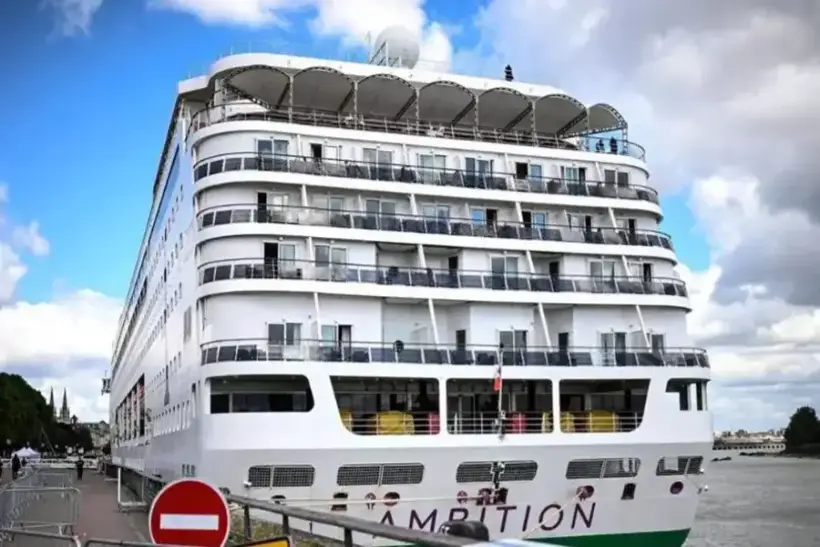
On board the cruise ship Ambition, docked in the port of Bordeaux in southwestern France, around 1,700 people have been isolated following an outbreak of viral gastroenteritis. Dozens of passengers and crew members developed symptoms of intestinal infection, and one passenger died during the voyage, according to Información.
Dangerous voyage: what happened
The Ambition arrived in Bordeaux from the Shetland Islands. Before entering the French port, the ship had stopped in Belfast, Liverpool, and Brest. It was scheduled to reach the coast of Galicia by 16 May, with calls in Ferrol, Gijón, and Bilbao. However, the spread of the infection and worsening sanitary conditions forced the captain to interrupt the journey. All passengers and more than 500 crew members were temporarily isolated on board while specialists worked to identify the source of the outbreak.
Infection possibly linked to Liverpool boarding
Cruise operator Ambassador Cruise Line stated that the increase in cases began after new passengers boarded in Liverpool on 9 May. Following this, enhanced sanitation measures were immediately introduced on board, including intensified cleaning and disinfection of public areas and the use of hand sanitiser.
By the evening of 12 May, around 50 passengers were showing symptoms consistent with acute gastroenteritis. The following day, the number of cases rose to approximately 80, including crew members. A medical team was deployed on board under the supervision of the maritime medical coordination service and by order of the maritime prefect.
Passenger death on board
The situation drew additional attention after the death of a 90-year-old British passenger on 11 May. Although symptoms appeared 24 hours before his death, French authorities stated that no link to the virus has been established. The Regional Health Agency of Nouvelle-Aquitaine said the cause of death was natural, and cardiac arrest can result from multiple factors.
Diagnosis: viral gastroenteritis
Initial tests did not confirm norovirus, but French authorities ordered further investigations due to strong indications of this infection. Biological samples were taken from 80 passengers from Ireland and the United Kingdom who showed symptoms of acute intestinal illness. It was ultimately confirmed that the outbreak was caused by norovirus — a highly contagious viral gastroenteritis pathogen transmitted through contaminated environments and person-to-person contact. No severe cases were reported at the time of publication.
What is known about norovirus
Norovirus is considered one of the most contagious causes of gastroenteritis. It causes severe vomiting, watery diarrhoea, nausea, and abdominal pain. Symptoms typically appear 12–48 hours after infection. In some cases, mild fever, headache, and muscle aches may also occur.
The illness usually lasts one to three days. In confined environments such as cruise ships, the virus spreads particularly quickly through contaminated surfaces, people, or food.
Authorities rule out link to hantavirus
Health authorities stressed that the outbreak on the Ambition is not related to hantavirus, which was previously detected on another cruise ship.
Hantavirus outbreak on MV Hondius
The World Health Organization reported issues on the MV Hondius on 2 May. Around 170 passengers and crew were on board. As of 13 May, 11 cases had been recorded, including three deaths. Eight infections were laboratory-confirmed as Andes hantavirus, two were considered probable, and one patient in the United States is undergoing retesting due to conflicting results. All cases involved passengers on the ship.
Origin in South America
It is believed that the initial infection may have occurred in South America, where the virus circulates in parts of Argentina and Chile. Genetic analysis showed nearly identical viral sequences among cases, suggesting a common source. The ship arrived in the Canary Islands on 10 May, after which evacuation began: most passengers and a significant part of the crew have already returned to their home countries via special non-scheduled flights. The risk is assessed as low for the general public and moderate for those who were on board.
What is hantavirus
The Andes variant of hantavirus is a rare form of infection that can, in some cases, be transmitted from person to person through prolonged close contact. It can cause severe damage to the lungs and cardiovascular system, with mortality rates in hantavirus cardiopulmonary syndrome reaching 40–50%, especially among elderly people and those with chronic conditions. Further cases remain possible, as the incubation period lasts one to six weeks, and high-risk contacts are advised to follow a 42-day quarantine period.
Impact on the tourism sector
Analysts at International Investment note that two incidents on cruise ships in a short period — the norovirus outbreak on the Ambition and hantavirus cases on the MV Hondius — have once again raised questions about the safety of cruise travel, traditionally perceived as a comfortable and tightly controlled form of leisure. Cruise ships are marketed as highly serviced and safe environments, yet their very nature — thousands of people in confined spaces, shared areas, restaurants, ventilation systems, and prolonged close contact — makes them particularly vulnerable to the spread of infections.
The situation also highlights another issue: even with high sanitary standards, risks cannot be fully eliminated. The Ambition case involves norovirus, a well-known and highly contagious infection that regularly occurs on ships and in hotels. The MV Hondius case is more concerning, as it involves a rare hantavirus strain potentially capable of human-to-human transmission. What connects both incidents is the timing: infections spread after boarding, while the international nature of cruises turns a local outbreak into a cross-border event, with passengers dispersing across multiple countries before investigations are completed.
For the industry, this is likely to prompt a reassessment of biosecurity protocols — from passenger health monitoring and boarding procedures to isolation and outbreak response systems. For travellers, it serves as a reminder that cruising, like any large-scale form of tourism, carries not only comfort and convenience but also risks that become more visible when dealing with emerging or rapidly spreading infections.
FAQ: Viral outbreaks on cruise ships
What happened on the Ambition cruise ship in Bordeaux?
A norovirus outbreak was detected on board. Symptoms of intestinal infection were found in around 80 people out of 1,700 passengers and crew members.
Were there any fatalities?
A 90-year-old British passenger died during the voyage, but French authorities have not confirmed any link between the death and norovirus.
How does norovirus spread and how dangerous is it?
It spreads through contaminated surfaces, food, and person-to-person contact. It usually causes a short illness lasting 1–3 days. The main risk comes from its high transmissibility rather than the severity of the disease.
Is the Bordeaux case linked to hantavirus?
No, health authorities have confirmed that the outbreak on the Ambition is not related to hantavirus.
What is known about the MV Hondius case?
On another cruise ship, the WHO reported a hantavirus outbreak. A total of 11 cases were recorded, including three deaths. The first case likely occurred before boarding, in South America, after which the infection spread on board.
How dangerous is hantavirus?
Hantavirus can cause severe lung damage and respiratory failure, with a high fatality rate in severe cases. The risk to the general public is low, but higher for those who had close contact with infected individuals, which is why monitoring and quarantine are required.
Why do such cases attract particular attention?
Cruise ships bring large numbers of people together in a confined space, which facilitates the spread of infections. An additional risk factor is the international nature of cruises: passengers quickly disperse to different countries, making contact tracing and outbreak control more difficult.