













Wildfire halts train services between Madrid and Barcelona
Cadena SER
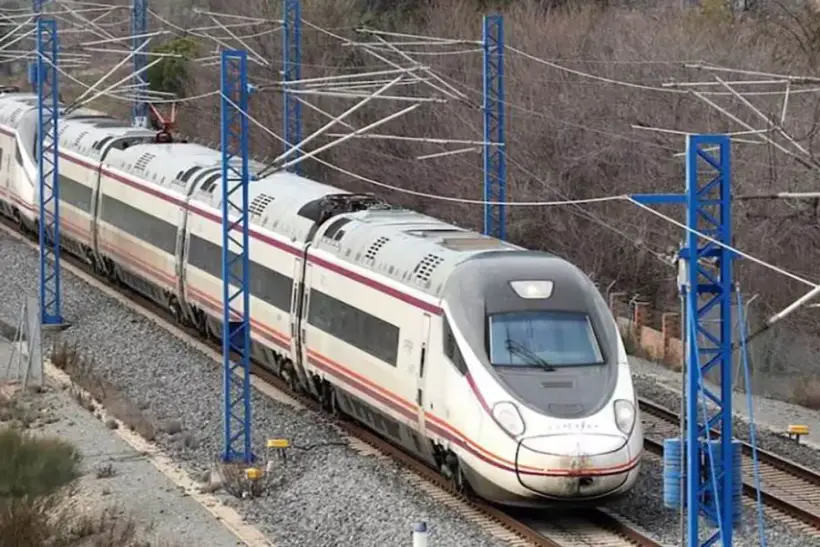
A wildfire in the Albi area disrupted high-speed train services between Lleida and Barcelona on 18 June. Twelve fire units and aerial resources were deployed to tackle the blaze, according to Cadena SER. Difficult wildfire conditions are also being reported in other parts of Spain.
Wildfires affecting forests and farmland across Spain
The fire started near a railway line and a highway — in the section between the towns of Les Borges Blanques and L’Espluga de Francolí. As a result, Civil Protection authorities declared an emergency situation, and train services between Lleida and Barcelona were suspended around 10:30 a.m.
On 17 June, firefighters also tackled a blaze in agricultural vegetation in Talavera (Segarra). Around 90% of crops were affected across an area of 60 hectares. For three hours, several towns — including Palerols, Sant Antolí i Vilanova, Briançó and Els Hostalets in the municipalities of Talavera and Ribera d’Ondara — were isolated.
On 14 June, a wildfire in Cervià de les Garrigues (Lleida) affected around 9 hectares of agricultural and forest vegetation. Thirty emergency units, including aircraft and helicopters, were involved in firefighting efforts. Operations were complicated by high temperatures and a southerly wind. Eight people were evacuated and traffic on two roads was halted.
Severe wildfire season in 2025
One of the most severe wildfire seasons in Spain in the past decade was 2025. According to the European Forest Fire Information System (EFFIS), around 382,000 hectares burned in the country between January and August. This figure is close to the worst levels since 1994, when more than 437,000 hectares were destroyed.
The greatest damage was recorded in the northwest and west of the country — Galicia, Asturias, Castilla y León, and Extremadura. These regions are characterized by extensive forest areas and low population density, which complicates emergency response and fire containment.
Experts attributed the scale of the fires to a combination of factors, including a dry spring, prolonged heatwaves, and moisture deficits in soil and vegetation. The decline of traditional rural practices and reduced forest management, including livestock grazing that previously helped reduce dry biomass, also contributed.
Although the total number of large wildfires remained comparable to previous years, their intensity and speed of spread increased significantly. Many of the most destructive incidents occurred in August, when fires in some cases spread across tens of thousands of hectares in a short period.
Heatwave outlook in Spain
The national meteorological service warned that temperatures in Spain will begin rising from 20 June, with a sharper increase expected in the north and northwest, particularly in Galicia and along the Cantabrian coast.
In inland valleys, temperatures may exceed 36–38°C, reaching up to 40°C in eastern areas. In the Ebro Valley and major river basins, temperatures of 38–40°C are expected, with a possible local peak of up to 42°C on 22 June, which could mark the height of the heatwave in many regions.
Due to dry conditions, wildfire risk is increasing. Last summer, Spain and Portugal experienced a 16-day heatwave, the most severe on record, which contributed to devastating wildfires, Reuters reports. Scientists note that extreme weather events are becoming more frequent due to human-induced climate change.
What this means for tourism and business
Analysts at International Investment note that the series of fires in Catalonia and disruptions to transport infrastructure show that climate risks in Spain are no longer limited to seasonal natural hazards and are increasingly affecting the economy. Even localized fires can disrupt key transport corridors, including high-speed rail links between major cities, which is critical for tourism flows and business mobility.
For the tourism sector, this means growing unpredictability during the summer season. Train delays, road closures, and temporary restrictions in certain areas affect travel logistics, especially in high-demand regions. Against the backdrop of rising temperatures and wildfire risks, insurance coverage, flexible pricing, and alternative transport options are becoming increasingly important.
For businesses, infrastructure resilience is a key concern. Transport disruptions affect not only tourism but also supply chains, business travel, and regional labor markets. Companies operating in climate-sensitive areas are increasingly required to account for downtime risks, adjust schedules, and strengthen business continuity plans.
Rising climate volatility adds further pressure. Repeated heatwaves and increasing wildfire frequency create a long-term environment of uncertainty, influencing investment decisions, insurance costs, and the attractiveness of certain regions during peak summer months.