







read also
 How Ukraine’s New-Build Housing Market Has Changed Over Four Years
 European Prime Rents Rise as Property Yields Turn Higher
 The Most Expensive Airlines in Europe in 2026
 Housing Prices in Italy Reach a Two-Year High
 Travellers Increasingly Choose Cooler Scandinavia
 Serbia Property Sales Decline as Transaction Value Rises
Noctourism: How Heat and Overcrowded Attractions Are Pushing Travelers to Embrace the Night
How Heat and Overcrowded Attractions Are Pushing Tourists to Embrace a Nocturnal Lifestyle
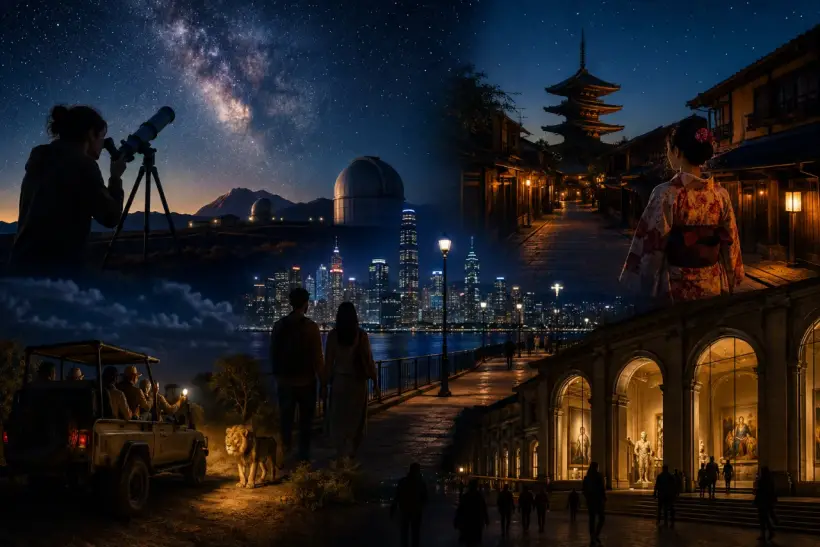
Travelers around the world are increasingly shifting their activities from daytime to nighttime hours – a trend known as noctourism that is emerging as one of the defining travel trends of 2026.
The trend spans a range of formats, from stargazing and night safaris to evening city tours and extended museum hours. According to market research firm FMI, this segment of the travel industry could more than double over the next decade, reaching an estimated $18 million by 2035.
Experts point to climate as the main driver behind the shift. According to a survey by Booking.com, 61% of travelers said they choose nighttime activities specifically to avoid daytime heat. At the same time, noctourism is addressing another industry challenge – overtourism: at night, iconic attractions are noticeably less crowded than during peak daytime hours.
National Geographic offers a vivid example of this shift in habits: during a trip to Japan last August, many tourists struggled with daytime temperatures of 40°C (104°F) and shifted their walks through Kyoto's geisha district to the evening, once the city had cooled down and the main tour groups had dispersed.
Alongside heat-driven noctourism, interest in astrotourism is also on the rise – trips centered on stargazing, the Northern Lights and lunar eclipses. Key destinations for this type of travel include:
- the Atacama Desert in northern Chile, considered one of the driest places on Earth with some of the clearest skies for observation;
- New Zealand's Aoraki Mackenzie reserve on the South Island;
- the U.S. state of Utah, home to the largest number of certified Dark Sky Parks in the world — 26 sites with officially confirmed low levels of light pollution.
The travel industry is adapting to this new demand: hotels, museums and tour operators are expanding their evening and nighttime programs, turning them into standalone offerings rather than add-ons to daytime itineraries.
Analysts at International Investment link the segment's continued growth not only to climate change but also to a broader shift among travelers toward less crowded, more personalized forms of leisure – a trend that has been gaining momentum across the tourism industry in recent years.