







 How Ukraine’s New-Build Housing Market Has Changed Over Four Years
 European Prime Rents Rise as Property Yields Turn Higher
 The Most Expensive Airlines in Europe in 2026
 Housing Prices in Italy Reach a Two-Year High
 Travellers Increasingly Choose Cooler Scandinavia
 Serbia Property Sales Decline as Transaction Value Rises
EU Discusses Full Ban on Tourist Visas for Russians
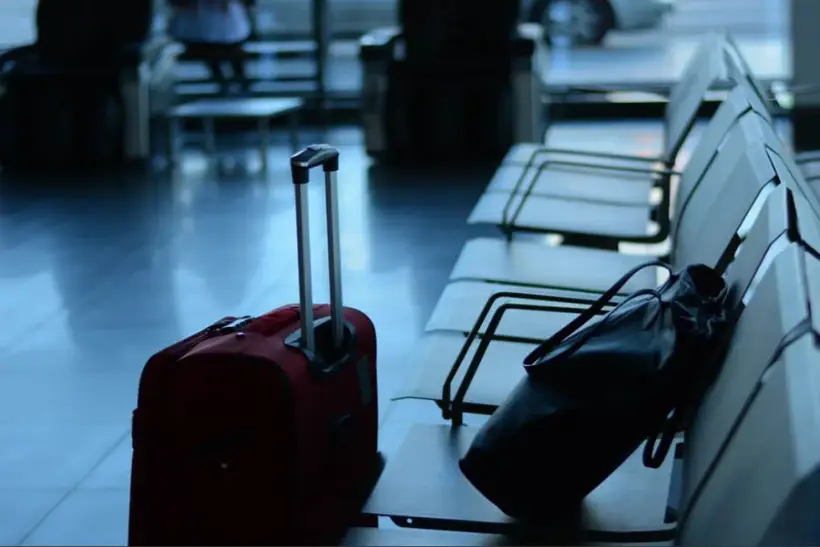
In Brussels, the possibility of a complete suspension of tourist visa issuance to Russian citizens is being discussed, Izvestia reports. The initiative is part of a broader debate on tightening EU policy. The issue has already caused disagreements within Europe, affecting not only legal restrictions but also the economic interests of individual member states.
EU Visa Policy Tightening
The European Commission has previously proposed restricting entry into the EU for all individuals who have served in the Russian armed forces since February 2022. European Commission President Ursula von der Leyen noted that such measures could potentially affect millions of people. A proposal to ban tourist visas for Russians has also been put forward by the CDU/CSU faction in the European Parliament.
Disagreements persist within the EU, as visa policy falls under the competence of member states, while the European Commission can only coordinate rules and issue recommendations. Italy and France fear that such an approach could effectively lead to a full closure of entry for all Russian citizens. The United Kingdom supports tightening measures and is cooperating with European partners on risk control related to former Russian combatants.Countries That Have Already Introduced Restrictions
Countries That Have Already Introduced Restrictions
In early June, Denmark, Latvia, Lithuania, the Netherlands, Poland, Estonia, Finland, the Czech Republic, and Sweden, as well as Iceland and Norway, called on the European Commission to tighten entry rules for Russians into the Schengen Area ahead of the summer travel season. These countries, along with Belgium, already stopped issuing tourist Schengen visas to Russian citizens in 2022. However, other visa types remain available, such as family reunification visas.
Estonia has already banned entry for 2,000 former combatants. The country cooperates with Ukrainian security services to identify such individuals. Taro called on other states to take coordinated action and support similar measures at the EU level.
The Schengen Area includes all EU countries except Ireland and Cyprus, as well as Iceland, Liechtenstein, Norway, and Switzerland. Visa policy remains under national jurisdiction, while the European Commission can only coordinate rules and issue recommendations.
The Commission has actively used these powers: in 2022 it tightened Schengen visa rules for Russians, including raising the visa fee from €35 to €80. In November last year, most Russian applicants lost eligibility for multiple-entry visas. New restrictions are expected to be presented in 2027.
Schengen Visas for Russians: 2025–2026 Statistics
In 2025, Russians received 8% more tourist visas than in 2024 — 623,451 in total. Visa applications increased by 8.42% to 674,000. The leading countries were France (173,000, +30%), Italy (160,000, –5.8%), and Spain (around 100,000, relatively stable figures).
Alek san Mkrtchyan, Vice President of the Russian Alliance of Travel Agencies, stated that in 2026 the figure increased by 12%. He also noted that losses for Russian citizens due to visa refusals are approaching 0.5 billion rubles (€6 million). The refusal rate is about 5%, or roughly 35,000 cases. The average cost of application submission is estimated at €150.
The majority of Schengen visas are issued by a limited number of countries — France, Italy, Spain, Greece, and Hungary.
Dmitry Gorin, Vice President of the Russian Union of Travel Industry, reported a 21% increase in January–June 2026. He linked this to a reduction in multiple-entry visas, which has led to more single-trip applications. The most common destinations are Italy, Spain, and France. Processing times have also increased — up to 60 days in Italy and 45 days in Spain. Despite positive dynamics, the figures remain modest compared to pre-pandemic levels. In 2019, Russians received around 4 million Schengen visas.
Legal Constraints and Possible Scenarios
Experts note that banning tourist visas on a nationality basis is complicated under EU Visa Code Regulation No. 810/2009. However, Article 32 allows visa refusal if an applicant is considered a threat to public order, internal security, or international relations.
Political scientist specializing in European affairs Yegor Belyachkov notes that maintaining tourist flows from Russia remains particularly important for Southern European countries — Greece, Italy, Spain, Cyprus, and France. Northern EU states are less dependent on tourism demand.
Some countries, including Slovakia, may oppose stricter measures. Internal political debates are also intensifying in Bulgaria, where new sanctions initiatives have faced criticism. EU lawmaker Fernand Kartheiser stated that visa restrictions could harm the EU economy.
Conclusion
Analysts at International Investment note that the European Union currently lacks a ready legal mechanism for a complete ban on tourist visas for Russians. The most likely scenario is a gradual tightening of rules, a reduction in the number of issuing countries, and increasingly complex application procedures. As a result, travel flows are expected to shift toward more accessible destinations, as is already happening.
Among the most popular alternatives are Georgia, Turkey, Thailand, and Egypt. Georgia in particular imposes virtually no restrictions on tourists, allowing stays of up to one year.
Rising consular fees, the ban on multiple-entry visas, and increasingly complex logistics are gradually turning European tourism into a more niche, organized-travel-oriented market.