







read also
 Vietnam Mortgage Surge Pushes Homes Out of Reach
 Lithuanian Apartment Prices Accelerate Across Major Cities
 London Flats Lose Value Ahead of Leasehold Reform
 Construction of the Batumi–Sarpi Highway Begins in Georgia
 Baltic Property Investment Accelerates in 2026
 Hong Kong and Singapore Renew Their Expat Rivalry
Flight Chaos Hits Middle East Hubs. Hundreds of travelers left stranded
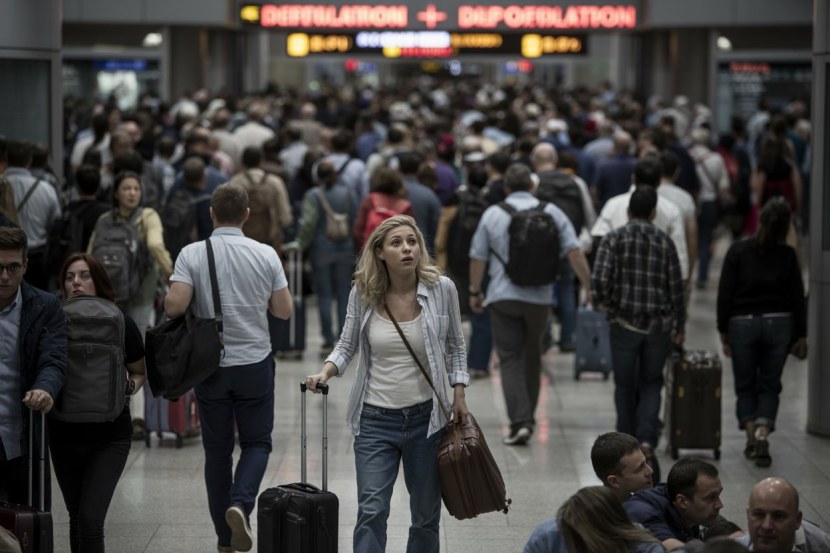
On January 25, 2026, major international hubs across Turkey, the UAE, and Saudi Arabia experienced widespread flight disruptions, leaving hundreds of passengers stranded. Airports in Istanbul, Dubai, Jeddah, and Riyadh recorded a combined 1,103 delays and 21 cancellations, turning routine transit flows into prolonged congestion. Because these airports serve as critical global connectors, the disruption quickly extended beyond the region.
Airlines under the greatest pressure
Carriers with dense schedules and hub-centric networks absorbed the bulk of the disruption. Turkish Airlines reported 176 delays and 3 cancellations at Istanbul Airport, making it the single largest contributor by volume. Saudia faced heavy strain across Jeddah and Riyadh, with a combined total of 157 delays and 9 cancellations. Emirates logged 116 delays and 4 cancellations at Dubai International, affecting numerous long-haul services, while FlyDubai and Flynas experienced widespread delays reflecting network-wide operational stress.
Airports where disruption peaked
Dubai International Airport emerged as the most affected hub, recording 409 delays and 7 cancellations. The airport’s role as a global transfer point amplified the knock-on effect across international routes. Jeddah and Riyadh together accounted for 465 delays and 11 cancellations, particularly impacting domestic and regional operations. Istanbul Airport added 229 delays and 3 cancellations, disrupting both European and intercontinental traffic.
Global spillover effects
The disruption wave did not remain confined to the Middle East. Delays and isolated cancellations appeared on routes linked to major U.S. gateways, including New York, Dallas, Boston, Washington, and San Francisco. Missed connections and rescheduled departures highlighted how operational instability at a small number of global hubs can ripple across continents within hours.
Passenger experience during the disruption
For travelers, the primary challenge was uncertainty rather than delay alone. When multiple hubs are simultaneously constrained, alternative seats become scarce and rebooking queues lengthen rapidly. Passengers on long-haul itineraries connecting Europe, Asia, and North America were particularly exposed, as a short delay in Dubai or Istanbul often translated into a complete itinerary breakdown.
Impact on tourism and business travel
Dubai, Istanbul, Jeddah, and Riyadh function as tourism magnets and business gateways as much as transport hubs. Large-scale delays immediately affect hotels, transfers, and meetings and events activity. For airlines and airports, such disruption days increase operational costs and heighten reputational risk, while regional economies experience a temporary slowdown in visitor and business flows.
Conclusion
The delay of 1,103 flights and cancellation of 21 more across Turkey, the UAE, and Saudi Arabia marked one of the most significant aviation disruption events in the region at the start of 2026. The episode underscored how quickly localized operational stress at major hubs can cascade through global air networks.
As reported by International Investment experts, recurring disruption events are accelerating a shift toward resilience-focused aviation strategies, where hub stability, real-time communication, and passenger re-accommodation capabilities increasingly determine how fast tourism and business travel recover after large-scale shocks.
Tags: aviation, Middle East, flight delays, cancellations, Dubai, Istanbul, Jeddah, Riyadh, Turkish Airlines, Emirates, Saudia