







 Turkey Is Losing Its Cheap-Holiday Advantage
 Development Is Rewriting Southeast Asia’s Historic Districts
 How Ukraine’s New-Build Housing Market Has Changed Over Four Years
 European Prime Rents Rise as Property Yields Turn Higher
 The Most Expensive Airlines in Europe in 2026
 Housing Prices in Italy Reach a Two-Year High
AI Boom Reheats San Francisco Housing
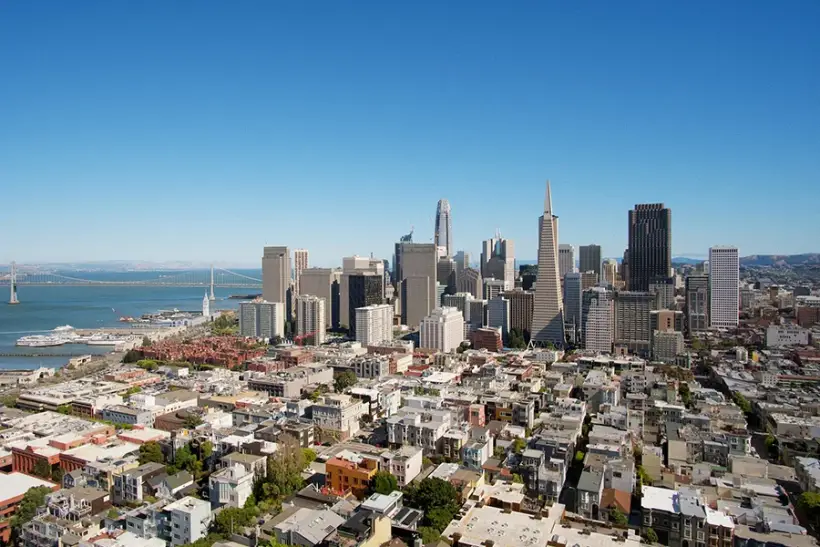
San Francisco housing market rebounds on AI demand
San Francisco’s housing market, once seen as one of the clearest post-pandemic examples of urban real estate weakness in the US tech economy, is now showing unmistakable signs of a sharp rebound. According to The Wall Street Journal, the city’s revival is being driven by the artificial intelligence boom, which is bringing capital, well-paid workers and renewed urgency back into the housing market. Demand is now recovering faster than supply, and competition for homes in prime neighborhoods is intensifying.
That stands in contrast to much of the broader US housing market, where elevated mortgage rates and already-high home prices continue to suppress activity. San Francisco is increasingly behaving like an exception. Redfin reported as early as late 2025 that pending home sales in San Francisco had jumped 17.1% year over year, the biggest increase among major US metros, while the typical home was going under contract in about 20 days, more than twice as fast as the national average.
San Francisco home prices are rising sharply again
The strongest sign of the turnaround is the renewed increase in single-family home prices. Data cited in the WSJ article and echoed in market reporting show that the median sale price for single-family homes in San Francisco rose to about $1.96 million, up 23% from a year earlier. In some transactions, buyers are once again paying hundreds of thousands of dollars above asking price, especially in neighborhoods such as Pacific Heights and Noe Valley, where supply is tight and affluent buyers remain highly active.
That matters because it marks a psychological reversal for the city. After a period shaped by remote work, population outflows and a broader cooling in tech-related real estate, San Francisco is once again seeing double-digit price growth in its strongest submarkets. Local market commentary suggests that the momentum is now being driven not only by legacy Big Tech wealth, but by a new wave of AI startups, venture capital money and highly liquid employees competing for limited housing stock.
San Francisco rents are climbing at one of the fastest rates in the US
The pressure is not limited to for-sale housing. The rental market is also tightening quickly. Zumper reports that the average apartment rent in San Francisco has reached $3,795 per month, up 14% year over year. That is one of the strongest annual increases among major US markets and suggests that the city’s rebound is broad-based rather than confined to a narrow luxury segment.
National rent trackers also show that San Francisco stands out for growth at a time when many large US metro areas are seeing flat or negative annual rent changes. For property investors, that strengthens the city’s appeal as an income-generating market, especially if rental supply continues to lag renewed demand from tech workers returning to the city.
Low inventory is turning AI demand into bidding wars
The AI effect is being amplified by a severe shortage of homes for sale. The WSJ article says inventory in San Francisco is down roughly 35% from a year earlier and about 50% from two years ago. Local reporting also confirms that active listings in January fell below 1,000, the lowest level since January 2020.
The reasons are structural as much as cyclical. Many homeowners remain unwilling to sell properties tied to much lower mortgage rates from earlier years, creating a classic lock-in effect. Others appear to be waiting for prices to rise even further as the AI sector expands and potential future IPOs generate additional wealth. Investor activity is adding another layer of demand: in San Francisco and San Mateo counties, investor purchases rose 24% year over year in late 2025, and investors accounted for around 25% of purchases, well above the national average.
The housing rebound reflects a wider AI-led city recovery
Housing is reacting to a broader shift in San Francisco’s economy. Earlier this month, local reporting showed that OpenAI had expanded its office footprint in the city to more than 1 million square feet after signing another sublease in Mission Bay. Other recent reports have highlighted near-full occupancy in selected high-quality office buildings as AI firms expand, even while the city’s wider office market remains under pressure.
That matters because San Francisco’s housing cycle has long been tightly linked to the trajectory of the tech economy. When the city attracts a fresh wave of employers, investors and highly paid workers, the housing market tends to tighten very quickly. What makes the current phase especially sensitive is that supply remains extremely constrained, while the AI boom is being treated by market participants as the beginning of a longer growth cycle rather than a short-lived burst.
Risks remain despite the strong rebound
Even with the current momentum, the market is not uniformly strong across every segment. Recent coverage notes that some condo submarkets, including parts of SoMa, are still not fully back to pre-pandemic or peak valuations. In addition, buyers are still navigating mortgage rates that have recently hovered around 6.3% in California, along with wider macroeconomic uncertainty.
Another risk is that rapid price appreciation could once again widen the gap between local incomes and real affordability. San Francisco is already one of the most expensive housing markets in the US, and a renewed AI-driven upcycle may deepen the divide by concentrating demand among a narrow group of high-income buyers and renters.
As experts at International Investment note, the rebound in San Francisco housing shows how quickly a new technology cycle can restore price pressure even after a prolonged slump. If the AI sector continues to expand in the city while inventory remains constrained, the market could enter a fresh overheating phase in 2026, with the strongest impact likely to be felt first in premium single-family homes and in rents.