










Albania Loses Fuel Spending Across Its Borders
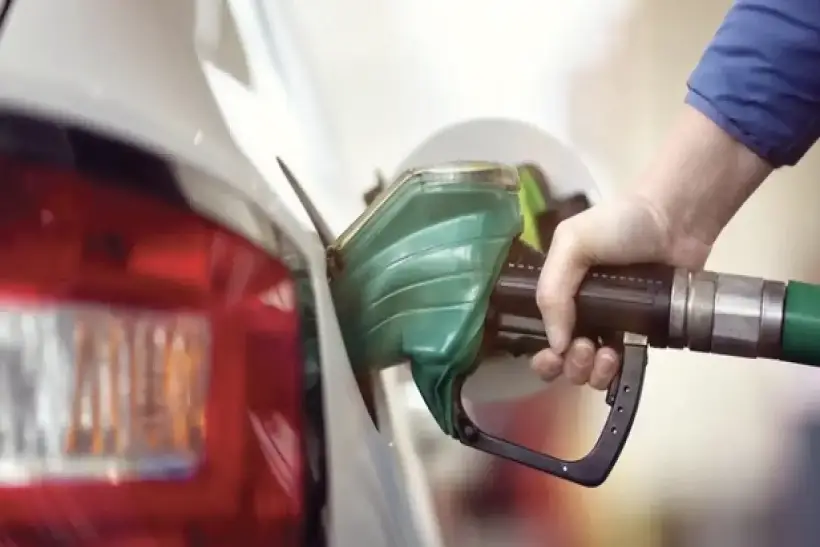
Albanians are increasingly buying fuel outside the country
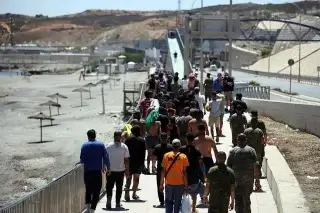
Albania is losing at least €1 million a day, according to local industry estimates, because residents of border areas and part of the transit flow are buying fuel in Montenegro, Kosovo and North Macedonia, where diesel is significantly cheaper. CNA, citing Monitor Magazine, reported that queues have grown at fuel stations in Tuz near the Montenegro-Albania border and that residents of northern Albania are increasingly crossing over to refuel and shop.
The diesel price gap has become too large to ignore
CNA said that on March 26 diesel in Montenegro was selling for about €1.57 per liter, while in Albania it was 214 lek, or about €2.2 at the day’s exchange rate. According to the article’s calculation, the equivalent of 2,000 lek buys 9.3 liters of diesel in Albania but about 13.1 liters in Montenegro, roughly 42% more. That makes cross-border trips economically worthwhile even after accounting for time and travel costs.
The losses go beyond fuel and hit domestic consumption
The article argues that the issue extends beyond refueling. Residents of northern Albania are also buying groceries and household goods abroad because the price gap affects food as well. CNA cited Eurostat data showing that Albania’s 2024 price level for food and non-alcoholic beverages was close to the European average, while North Macedonia and Montenegro were markedly cheaper. That supports the paper’s broader argument that Albania is losing not only fuel-tax revenue but also part of household spending that might otherwise remain in the domestic economy.
Albania’s fuel market is large, but some of the demand is leaking out
The CNA report says Albania’s annual fuel consumption is around 740,000 tons, or roughly 2,000 tons per day. That is broadly consistent with other Albanian reporting based on Finance Ministry data, which put 2025 fuel clearances at about 740,800 tons. CNA, citing the Association of Hydrocarbon Companies, estimates that Albanian consumers in border regions buy 300–500 tons of fuel per day abroad, while another 120–300 tons of potential demand is lost because foreign vehicles arrive already filled up or refuel immediately after leaving Albania.
The €1 million-a-day figure comes from cross-border leakage
The headline estimate of at least €1 million a day is derived by converting roughly 500 tons of fuel into liters and valuing them at about €1.5–€1.6 per liter in neighboring countries. On an annual basis, CNA says that would exceed €350 million spent outside the Albanian economy. The article itself makes clear that this is an industry-backed estimate rather than a full state measurement of the cross-border effect.
The main driver is Albania’s heavy tax burden on diesel
CNA identifies fuel taxation as the core reason for the price gap. The article says an Albanian consumer currently pays about €1.16 in taxes on every liter of diesel, or around 53% of the final retail price, compared with about €0.58 in North Macedonia, €0.55 in Montenegro and €0.67 in Kosovo. In practical terms, the publication argues that Albanian drivers pay roughly twice as much tax per liter as consumers in several neighboring markets.
The policy debate is whether lower taxes could preserve revenues
One of the most politically sensitive claims in the article is that the state might collect almost the same revenue even if taxes were cut, provided fuel consumption shifted back into Albania. CNA, citing sector calculations, says that if prices moved closer to regional levels, domestic fuel consumption could rise by 25%–30% and approach 1 million tons per year. It also presents a scenario in which removing the circulation tax, reducing diesel prices by about 30 lek per liter, would lift domestic purchases enough to offset much of the lost tax intake through higher volumes. That remains a modeled scenario, not an adopted reform.
The issue is bigger than one border station
Even if the €1 million-a-day figure remains an estimate rather than an audited national total, it points to a broader weakness in Albania’s economy: high domestic prices for fuel and some consumer goods are pushing spending across the border. For the budget, that means possible losses in excise and VAT collection. For local businesses, it means weaker demand. For the economy more broadly, it means household spending is leaking out of domestic circulation. CNA explicitly links the effect to pressure on domestic firms, weaker internal consumption and a reduced contribution of spending to GDP growth.
As International Investment experts report, the cross-border fuel story suggests Albania’s problem is no longer only that domestic prices are high, but that part of the country’s tax base and consumer demand is physically moving across its borders. If the price gap with Montenegro, Kosovo and North Macedonia persists, the pressure on Albania’s domestic fuel market and retail sector may become a structural rather than a temporary issue.
FAQ
Why are Albanians refueling in neighboring countries?
Because diesel in Montenegro, Kosovo and North Macedonia is much cheaper than in Albania, making even short border trips financially worthwhile.
How much money is Albania estimated to be losing?
CNA says at least €1 million per day and more than €350 million per year, but that is an estimate based on industry calculations, not a full official audit.
How much fuel does Albania consume each year?
The article cites around 740,000 tons annually, and other Albanian reporting based on Finance Ministry data has put 2025 fuel clearances at about 740,800 tons.
What is the main reason fuel is so expensive in Albania?
According to CNA and Monitor, one of the main reasons is the heavy tax burden on each liter of fuel, which is significantly higher than in neighboring countries.
Is this only about fuel?
No. The article also says border residents are buying food and other goods abroad, and Eurostat data do show higher food price levels in Albania than in some neighboring countries.