







read also
 Fines for Illegal Rentals in Spain Reach €800,000
 Australia’s Spring Auctions Rise but Remain Well Below 2025
 Number of Foreigners Holding Turkish Residence Permits Exceeds 1.27 Million
 Demand from Russian Tourists for Holidays in Georgia Rises by 20–25%
 Montenegro Property Buying Costs in 2026
 Four in Ten Companies Would Not Choose Slovakia
Analytics / Research / Ratings / Reviews / Migration / Investments / Iceland / Switzerland / Denmark / Ireland / Austria / Netherlands / Finland / Norway 03.01.2026
Country Safety Ranking in 2025: Global Safety Index
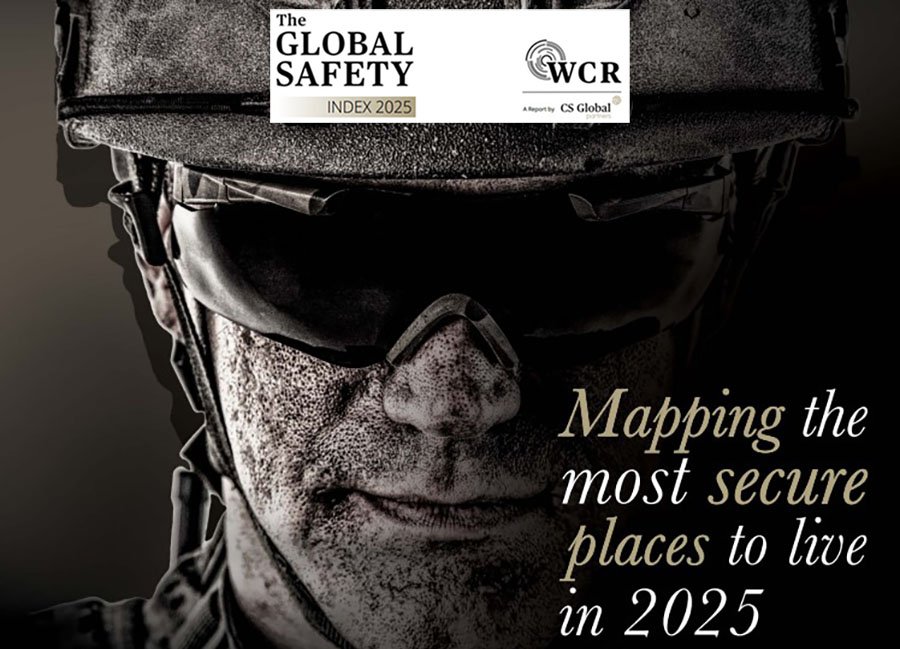
Consulting company CS Global Partners published the Global Safety Index as part of the World Citizenship Report. The study focuses, among other aspects, on the value of citizenship, particularly for high-net-worth individuals, and is based on data from 188 countries. Safety levels are assessed with regard to political stability, levels of violence, and the effectiveness of state institutions.
The Global Safety Index is calculated using international indicators converted to a unified scale from 0 to 100. The methodology incorporates data from the Global Peace Index and the World Bank’s Worldwide Governance Indicators. The final sample includes 166 countries for which comparable international security data are available.
TOP 10
The ranking is led by Iceland, which demonstrates the most balanced combination of political stability, extremely low levels of violence, and the reliable functioning of state institutions. The report highlights strong institutional resilience: effective governance, high public trust in authorities, and the absence of internal conflicts create a predictable and well-controlled environment.
Switzerland ranked second, standing out due to its neutrality and a stable legal system. The report also notes low levels of corruption and a high degree of public order, which support stability and trust in state institutions. Denmark placed third. Its position is underpinned by political stability and the effective operation of public authorities, with transparency of governance and a high level of public trust acting as key factors.
Ireland holds fourth place, demonstrating institutional resilience amid an open economy and active international engagement. The study emphasizes the stability of the political system and a low level of internal risks, allowing the country to maintain a high level of safety while being deeply integrated into global processes. Liechtenstein rounds out the top five. The jurisdiction’s strong position is linked to a compact and manageable model of governance, the absence of internal sources of instability, and a stable legal environment. The country’s small scale is combined with effective control and predictability, ensuring a high level of safety.
Austria, the Netherlands, Luxembourg, Finland, and Norway also made it into the TOP 10. These countries are characterized by stable political systems, a well-developed legal environment, and effective public administration. The combination of low levels of violence and high public trust allows them to consistently remain at the top of the safety ranking.

Major economies and other countries
Global Safety Index data show that there is no single model of safety among the world’s largest economies. Their positions in the ranking range from the upper part of the list to the very bottom, despite comparable economic and geopolitical weight.
Some developed countries are relatively close to the leaders but remain outside the top ten: Japan ranks 11th, Germany 15th, the United Kingdom 22nd, Italy 32nd, France 38th, and Canada 49th. The United States and the United Arab Emirates are positioned in the middle of the ranking, at 64th and 61st respectively. Other major economies are located significantly lower. India ranks 96th, Brazil 105th, China 112th, and Russia 161st, on par with the Central African Republic (CAR). Even within the group of the world’s largest economies, the spread of positions is considerable.
The distribution among other countries is also uneven and shows little correlation with population size, territory, or other formal indicators. Albania ranks 63rd, Montenegro 72nd, and Argentina 73rd. Indonesia holds 80th place, Thailand 84th, Georgia 87th, Armenia 91st, Serbia 93rd, and Kazakhstan 99th. These countries fall within the top 100 and demonstrate a relatively favorable security situation. Israel and the Maldives are ranked 114th, while Azerbaijan is 135th. Turkey occupies 140th place, Belarus 141st, and Ukraine 154th, which already places these countries in a zone of very low security.
The most dangerous countries
The lower part of the Global Safety Index is dominated by countries with the most vulnerable internal environments, where safety is undermined by armed conflict, political instability, and weak state institutions. The final positions in the ranking are occupied by states experiencing prolonged crises.
Venezuela closes the list in 166th place. Ahead of it are Yemen (165th) and Afghanistan (164th), where severe humanitarian and political challenges persist. Sudan, Syria, the Central African Republic, and Iraq also appear at the very bottom of the ranking, characterized by high levels of violence and limited control by state authorities.
Countries ranked between 147th and 156th include Pakistan, Mozambique, Ethiopia, the Republic of the Congo, Palestine, Burkina Faso, Iran, Ukraine, Libya, and Chad. These states are united by a combination of internal conflicts, social instability, and limited institutional resilience.

Safety and the global elite
For high-net-worth individuals, safety is increasingly becoming a key factor when choosing a country for residence, investment, and obtaining second citizenship. The Global Safety Index reflects growing interest in alternative jurisdictions amid armed conflicts, political instability, and internal risks in a number of countries.
Across regions, the concept of safety is interpreted differently. In situations of armed conflict and political instability, such as in Ukraine, priority is given to physical protection and immediate personal security. In countries with high crime rates, including South Africa and Nigeria, the focus shifts toward everyday safety and protection from violence.
In the United States, motivations differ and are linked to social polarization, rising violence, and internal political tensions. In South Africa and Nigeria, additional pressure comes from infrastructure deterioration, inflation, and corruption, which fuels interest in investment citizenship programs, primarily in the Caribbean.
Regional differences persist in a broader context as well. In Latin America and Africa, safety is more often associated with protection from crime, in Asia and the Middle East with political stability, while in Europe the emphasis is placed on predictable law enforcement and the protection of privacy.
A new understanding of citizenship value
Materials from the World Citizenship Report indicate that safety has ceased to be a secondary parameter and is increasingly viewed as one of the core elements of citizenship value. For global citizens, it is becoming part of strategic planning alongside capital preservation, mobility, and inheritance considerations.
Analysts at International Investment note that in an environment of growing competition, advantages accrue to countries capable of providing a stable and predictable environment. Such jurisdictions build trust among the most mobile and demanding investors, for whom safety is increasingly not a preference but a fundamental condition for decision-making.