







read also
 Vietnam Mortgage Surge Pushes Homes Out of Reach
 Lithuanian Apartment Prices Accelerate Across Major Cities
 London Flats Lose Value Ahead of Leasehold Reform
 Construction of the Batumi–Sarpi Highway Begins in Georgia
 Baltic Property Investment Accelerates in 2026
 Hong Kong and Singapore Renew Their Expat Rivalry
Interest Rate in Question: Bank of Israel Assesses Inflation, Currency Trends and Risks
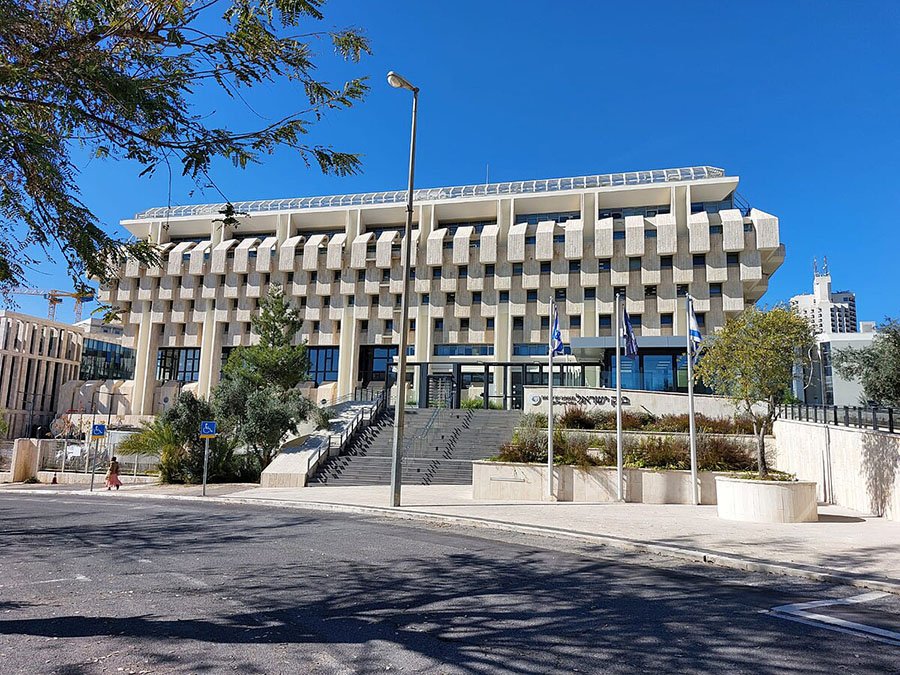
Photo: Wikimedia
The Bank of Israel intends to keep interest rates unchanged as part of its first monetary policy decision of 2026. The decision is shaped by declining inflation expectations and a stronger shekel, alongside persistent geopolitical and fiscal uncertainty, writes Bloomberg.
Most economists — 11 out of 12 surveyed — expect the Bank of Israel to maintain its base interest rate at 4.25%. Only one analyst allows for a 25-basis-point cut, while even supporters of a pause note that the decision is finely balanced amid conflicting macroeconomic signals. For markets, the key focus will be the 12-month interest-rate forecast, which is expected to indicate whether the regulator is open to faster monetary easing compared with previous projections.
Since the previous rate decision in late November, the shekel has strengthened by more than 2% against the US dollar and gained 14.4% over the course of 2025, reaching its strongest level in five years. The stronger currency has had a dampening effect on inflation and has become one of the reasons behind downward revisions to inflation forecasts for the year ahead.
Israel’s annual inflation rate stood at 2.4% in November and has remained within the regulator’s target range of 1% to 3% for four consecutive months. Forecasts for the coming year have been lowered to 1.7–1.9%, partly due to expected declines in air travel and car insurance costs.
Any signals regarding the impact of the stronger shekel on inflation or assessments of government fiscal policy will be closely watched by investors, notes Ronen Menachem, chief market economist at Mizrahi Tefahot, as this could increase volatility across equity, bond and foreign-exchange markets.
Victor Bahar, chief economist at Bank Hapoalim, believes that given current inflation expectations, the real interest rate remains high. In his view, this makes the current moment favorable for a rate cut. Analysts at Bank of America forecast that Israel’s economy will show resilient growth — around 4.2% in 2026 and approximately 4.0% in 2027. The bank’s experts also expect the key interest rate to decline from 4.25% to about 3.25% during 2026, provided that inflation continues to slow and the currency remains strong.
According to the OECD, Israel’s GDP growth will increase from 3.3% in 2025 to 4.9% in 2026. The organisation believes that the acceleration in economic activity will be supported by a recovery in the private sector following a period of heightened tension and a reduction in military spending. Inflation is expected to fall from 3.1% to 2.4% as supply constraints ease and cost-side conditions improve. The OECD also notes that private consumption, investment and exports will be the main drivers of faster economic growth.
At the same time, the regulator’s stance remains cautious. In November, the Bank of Israel cut its interest rate by 25 basis points for the first time in nearly two years, following 14 consecutive decisions to hold rates steady. At the time, Governor Amir Yaron indicated that further easing would be limited and gradual, allowing for two additional 25-basis-point cuts by mid-September 2026, implying a potential terminal rate of around 3.75%.
Geopolitical developments continue to have a significant impact on monetary policy decisions. The possibility of renewed Israeli strikes on Iran is being discussed amid signs of Iran rebuilding its missile capabilities, alongside the risk of intensified fighting in Lebanon as deadlines for Hezbollah’s disarmament approach. Despite the relative stability of the ceasefire in Gaza, uncertainty persists regarding the disarmament of Hamas.
Fiscal policy remains an additional source of risk. Prime Minister Benjamin Netanyahu’s cabinet has approved a draft budget and is awaiting its final passage in parliament. Failure to adopt the budget by the end of March would automatically trigger the government’s collapse. The target budget deficit is set at 3.9% of GDP, exceeding the 3.2% benchmark cited by the Finance Ministry and the Bank of Israel, amid continued high defense spending.
Analysts at International Investment note that the combination of slowing inflation, a strengthening national currency and persistent geopolitical and fiscal risks creates an exceptionally challenging decision-making environment for the Bank of Israel. Even with macroeconomic conditions that could support further policy easing, the regulator must factor in high uncertainty related to security, budget discipline and the resilience of domestic demand. Under these circumstances, analysts believe monetary policy will remain cautious and data-dependent, while any deviation from the baseline scenario could quickly alter the trajectory of interest rates.