







 Turkey Is Losing Its Cheap-Holiday Advantage
 Development Is Rewriting Southeast Asia’s Historic Districts
 How Ukraine’s New-Build Housing Market Has Changed Over Four Years
 European Prime Rents Rise as Property Yields Turn Higher
 The Most Expensive Airlines in Europe in 2026
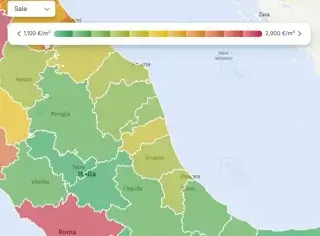 Housing Prices in Italy Reach a Two-Year High

Fitch Ratings has upgraded Iceland’s Long-Term Foreign-Currency Issuer Default Rating to A+ from A, assigning a Stable Outlook. Shortly thereafter, the agency withdrew all ratings of the Republic of Iceland for commercial reasons.
The upgrade reflects strengthened public finances and a projected downward trajectory in general government debt, supported by firm political commitment to fiscal prudence and a return toward balanced budgets.
Fiscal Consolidation and Deficit Reduction
According to Fitch, improving fiscal metrics and increased fiscal space were central to the rating decision. Prudent fiscal policy has resulted in a significant narrowing of the headline general government deficit. The agency expects the deficit to decline further in 2026 and 2027, supported by Iceland’s national stability rule, adopted revenue-enhancing measures, and broad political consensus to achieve a balanced budget by 2027.
This policy direction signals sustained commitment to responsible public finance management and long-term fiscal sustainability.
Declining Debt Ratio and Structural Adjustments
Fitch projects that the general government debt-to-GDP ratio will gradually decline in 2026–2027, following a marked reduction in debt after the settlement of liabilities related to the Housing Financing Fund and the full privatisation of Íslandsbanki. These developments have improved the sovereign balance sheet and reinforced investor confidence.
The reduction in public debt provides additional fiscal buffers, strengthening Iceland’s resilience to potential external shocks.
Strong Institutions and Economic Resilience
Iceland’s A+ rating with a Stable Outlook is underpinned by its high-income economy, strong governance standards, and robust institutions. Fitch highlights the country’s sound banking sector, strong private-sector balance sheets, and high ranking in the World Bank Governance Indicators, reflecting stable political transitions, effective rule of law, institutional strength, and low levels of corruption.
While the agency notes vulnerabilities stemming from the economy’s small size and exposure to sector-specific shocks, it also emphasizes that strong financial buffers and prudent policymaking enhance Iceland’s economic resilience.
Fitch clarified that the withdrawal of the ratings was undertaken for commercial reasons and does not indicate any deterioration in Iceland’s credit fundamentals.
As reported by experts at International Investment, the upgrade to A+ with a Stable Outlook reinforces Iceland’s improved fiscal trajectory and strengthens its standing in international capital markets, even as structural constraints linked to its small economic size remain in place.