







 Development Is Rewriting Southeast Asia’s Historic Districts
 How Ukraine’s New-Build Housing Market Has Changed Over Four Years
 European Prime Rents Rise as Property Yields Turn Higher
 The Most Expensive Airlines in Europe in 2026
 Housing Prices in Italy Reach a Two-Year High
 Travellers Increasingly Choose Cooler Scandinavia
Switzerland Weighs Immigration Tax Debate
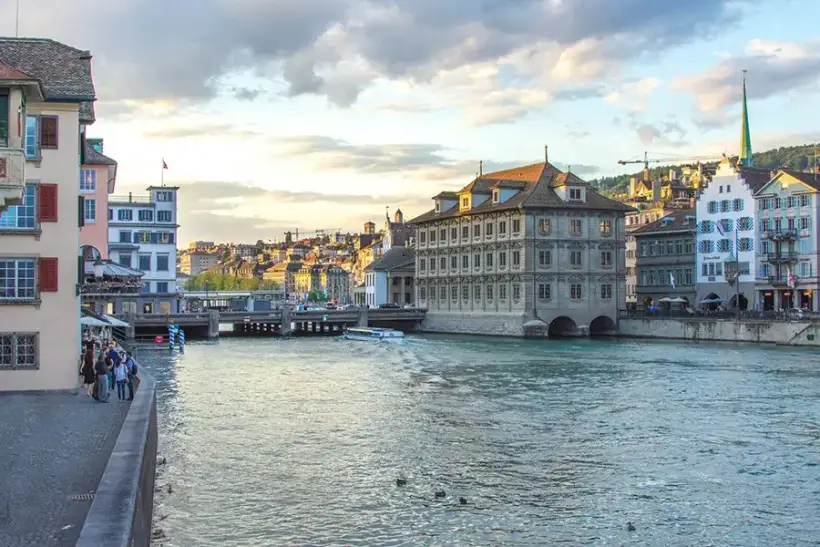
Switzerland’s immigration debate is moving beyond a conventional fight over quotas as lawmakers discuss a possible levy on migration from the European Union and the European Free Trade Association, even though the government has warned that such a charge would face major legal obstacles and could breach free-movement rules.
Immigration tax enters overcrowding debate
The idea of an immigration tax has returned to Swiss politics as the country argues over how fast it can grow without worsening pressure on housing, transport, schools, infrastructure and public services. Bloomberg has framed the broader debate around whether Switzerland is ready to cap its population at 10 million; voters are due to decide on the Swiss People’s Party initiative on June 14, 2026.
An immigration tax is not a standard visa fee. In the Swiss context, it refers to a possible charge on an employer, migrant or host entity for the entry and employment of foreign nationals. Supporters see it as a more flexible alternative to a hard population ceiling. Opponents argue that, for EU and European Free Trade Association citizens, such a charge would directly interfere with free movement.
Government finds legal barriers
The Federal Council approved a report on a possible immigration levy on May 6, 2026, and concluded that the measure would face substantial legal hurdles and had no proven macroeconomic benefit. The report examined three models, but for EU and EFTA citizens the government found that a levy would not be compatible with the Agreement on the Free Movement of Persons; in some versions, introducing it would require a constitutional amendment.
That sharply narrows the room for policy action. Switzerland can use quotas for third-country nationals, meaning people from outside the EU and EFTA, but its European labor-market relationship is built on a different principle. If a levy is seen as discrimination against EU citizens, Bern risks not only domestic legal disputes but also a new confrontation with Brussels.
Free movement anchors EU relations
The Agreement on the Free Movement of Persons removes restrictions on EU citizens who wish to live or work in Switzerland and is complemented by mutual recognition of professional qualifications, the right to buy property and coordination of social security systems. The State Secretariat for Migration says the agreement entered into force on June 1, 2002, and also applies to EFTA citizens.
That means the immigration-tax debate is not only about migration. It touches Switzerland’s access to the European labor market, company recruitment, universities, research programs and the broader architecture of bilateral agreements with the EU. For an economy that depends heavily on cross-border workers and specialists from neighboring countries, a tax on entry could quickly become a tax on growth.
Population nears political threshold
Around 9.1 million people lived in Switzerland at the end of 2025, including 2,414,408 foreign nationals; about two-thirds of the permanent foreign resident population came from EU or EFTA countries. Those figures explain why the migration debate so quickly becomes a debate about Switzerland’s European course.
The Federal Statistical Office reported that Switzerland’s population reached 9,051,029 on December 31, 2024, after rising 1.0% during the year. Natural change amounted to only 6,300 people, meaning demographic growth is driven largely by migration rather than births exceeding deaths.
Referendum raises pressure on Bern
The “No 10-million Switzerland” initiative, described by its authors as a sustainability initiative, will be put to voters on June 14, 2026. Associated Press reported that the proposal seeks to keep the permanent resident population below 10 million through 2050; if the population exceeds 9.5 million, authorities would have to adopt measures to restrict migration, potentially including tighter asylum and family-reunification rules.
That initiative is more rigid than an immigration tax. It sets a numerical ceiling rather than changing incentives. But its presence makes the tax proposal politically relevant: some opponents of a hard cap are looking for a tool that could demonstrate control over population growth without immediately rupturing European agreements.
Left and right dispute causes of migration
The Swiss debate is unusual because criticism of rapid population growth is not limited to the right. Watson cited Social Democratic National Council member Jacqueline Badran saying immigration had been “too much and too fast,” while arguing that the cause was not cultural conflict but Switzerland’s economic model: in her view, the country attracted capital, multinational companies and tax base for decades, and people followed the capital.
That differs from classic anti-immigration rhetoric. The right emphasizes infrastructure, social pressure, identity and population density. Some on the left criticize not migrants themselves but tax competition, corporate incentives, real estate markets and a growth model in which the country attracts companies faster than it builds housing, expands transport or reduces pressure on cities.
Economy relies on foreign labor
Federal Statistical Office data show that more than a quarter of people living in Switzerland are foreign nationals, and most are European. Among permanent foreign residents, the largest groups are citizens of Italy, Germany, Portugal and France, countries that are geographically and historically tied to the Swiss labor market.
For business, this is not an abstract statistic. Foreign workers are employed in healthcare, construction, hospitality, finance, science, manufacturing and services. Restricting free recruitment could raise company costs, worsen staff shortages and weaken the competitiveness of a high-cost economy where wages and rents are already among Europe’s highest.
Housing has become the political flashpoint
The immigration debate increasingly runs through housing. Fast population growth increases demand for apartments, especially in Zurich, Geneva, Basel, Lausanne and well-connected suburbs. When construction lags, population growth turns into rent pressure, housing competition and displacement of lower-income households.
That is why an immigration tax may appeal to some politicians. It appears to offer domestic compensation for external population inflows. But the unresolved question is whether the proceeds would actually create housing, school places or rail capacity quickly enough. If the charge is too low, it may not affect hiring decisions. If it is too high, it may function as a hidden restriction on free movement.
EU package limits room for unilateral action
In March 2026, the Federal Council adopted the package to stabilize and develop relations with the EU, known as Bilaterals III. It covers areas including electricity, research, health, food safety and free movement of persons; the Swiss government has said stable relations with the EU remain central to the country.
That makes it difficult to view an immigration tax separately from the wider European package. If Parliament or voters back measures that Brussels sees as a violation of free movement, the risk may extend beyond migration to research, market access and sectoral cooperation.
Tax looks like compromise but leaves core problem
Politically, an immigration tax sits between full free movement and a hard immigration quota. It does not close the border, but it tries to make population inflows more expensive. The government’s legal conclusions, however, show that this compromise may be technically difficult or nearly impossible for EU and EFTA citizens.
Even if Switzerland found a model compatible with its constitution and international obligations, the economic effect would remain uncertain. A small levy would not change company hiring decisions in a tight labor market. A large levy could become a disguised restriction on free movement and trigger EU pushback.
As reported by International Investment experts, the Swiss immigration-tax idea reflects public fatigue not only with migration, but with a growth model in which population, capital and housing costs rise faster than infrastructure. The critical risk for Switzerland is that trying to replace housing, tax and infrastructure policy with a migration tool may trigger conflict with the EU without solving expensive rents, crowded trains or school shortages. If Bern wants to reduce pressure, it will have to address not only who enters the country, but also why the economy continually requires new arrivals.
FAQ: Swiss immigration tax and referendum
What is an immigration tax in Switzerland?
An immigration tax would be a possible charge linked to the entry, residence or employment of foreign nationals. In the Swiss debate, it is discussed as a way to slow migration or compensate for pressure on infrastructure, but the government says it is legally problematic for EU and EFTA citizens.
Why could the tax breach EU agreements?
The Agreement on the Free Movement of Persons gives EU and EFTA citizens the right to live and work in Switzerland under defined conditions. An additional charge could be viewed as a restriction on that right.
When is the 10-million Switzerland referendum?
The vote is scheduled for June 14, 2026. The initiative seeks to keep Switzerland’s permanent resident population below 10 million through 2050 and trigger migration restrictions if the population exceeds 9.5 million.
How many people live in Switzerland now?
At the end of 2025, Switzerland had around 9.1 million residents. More than 2.4 million were foreign nationals, with a large share coming from EU and EFTA countries.
Why does Switzerland depend on immigration?
The Swiss economy needs foreign workers because of strong demand for labor, population aging and staffing needs in services, healthcare, construction, science, finance and manufacturing. Natural population growth is small, so migration is the main driver of demographic expansion.
Can an immigration tax solve Switzerland’s housing problem?
Not on its own. It may alter hiring incentives or generate public revenue, but housing affordability also depends on construction, land policy, rental regulation, tax incentives and infrastructure planning.