







 Development Is Rewriting Southeast Asia’s Historic Districts
 How Ukraine’s New-Build Housing Market Has Changed Over Four Years
 European Prime Rents Rise as Property Yields Turn Higher
 The Most Expensive Airlines in Europe in 2026
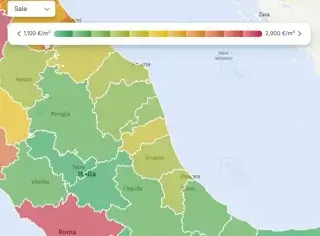 Housing Prices in Italy Reach a Two-Year High
 Travellers Increasingly Choose Cooler Scandinavia
Slovakia Loses Fiscal Cushion

Slovakia has been downgraded by S&P Global Ratings to A from A+ with a stable outlook, as elevated fiscal deficits, a rising debt burden, weaker growth and a difficult pre-election consolidation path undermine one of Central Europe’s formerly stronger sovereign credit stories.
Slovakia is downgraded on fiscal pressure
S&P Global Ratings lowered Slovakia’s long-term sovereign credit rating by one notch on April 24, 2026, to A from A+, while keeping the outlook stable. A sovereign credit rating measures a government’s capacity and willingness to meet debt obligations on time; a lower rating can raise the risk premium investors demand to hold a country’s bonds. The decision reflected the agency’s view that Slovakia’s fiscal deficit will remain elevated for longer than previously expected, keeping net government debt on an upward path.
The downgrade does not push Slovakia into speculative-grade territory. A remains an investment-grade rating, still considered suitable for many institutional investors. But for a euro-area country that has long benefited from industrial integration, European Union membership and access to common-currency financing, the move is a warning that fiscal credibility is becoming a more important constraint.
Growth slows as exports weaken
The rating action was driven partly by weaker economic prospects. The agency expects Slovakia’s economy to grow only 0.5% in 2026. Gross domestic product, or GDP, is the total value of goods and services produced by an economy over a given period. For a small, export-oriented country, such weak growth leaves limited room to raise budget revenue, finance social commitments and reduce the deficit at the same time.
Slovakia’s vulnerability is closely tied to its industrial structure. The economy is heavily exposed to external demand, especially through manufacturing and automotive supply chains. When Germany and other key trading partners slow, export orders, investment and employment come under pressure. Domestic demand is also constrained by fiscal consolidation, which weighs on household confidence and consumption.
Deficit remains above the EU benchmark
The European Commission said Slovakia’s general government deficit rose from 5.2% of GDP in 2023 to 5.3% in 2024, even though public spending declined as a share of output. It expected the deficit to ease to 4.9% in 2025 due to a consolidation package, but to remain high at about 5.1% in 2026 because many spending measures are permanent and no new full consolidation package had been announced.
For a euro-area member, that is a sensitive level. The European Union’s Maastricht reference value is a deficit of no more than 3% of GDP, even if countries can exceed it temporarily. Slovakia’s problem is not only the breach itself, but the persistence of spending. Social transfers, healthcare, defense and public wages are politically difficult to cut quickly.
Debt moves back above 60% of GDP
Slovakia’s Finance Ministry estimated in its 2026 draft budgetary plan that public debt would reach about 61.5% of GDP in 2025, reflecting a deficit of around 5% of GDP, weaker economic activity and rising interest expenditure. The document said the government still aimed to bring the deficit down to 3% of GDP by 2028, but that this would require additional measures worth about 1.5% of GDP in 2027.
Debt above 60% of GDP is not automatically a crisis for a developed euro-area economy. But for Slovakia, it is an important threshold. As debt rises, more of the budget is exposed to refinancing costs. Higher interest payments reduce the money available for infrastructure, education, defense and social programs unless taxes rise or other spending is cut.
Elections make discipline harder
The political calendar adds to the risk. Parliamentary elections are due in 2027, making tough consolidation measures harder to deliver. Governments are less likely to cut spending or raise taxes ahead of an election, especially when households are already facing higher prices and weaker consumption.
This is a typical problem for countries with rigid spending structures. It is easier to cut investment than pensions, wages or social transfers, but cutting investment damages future growth. Slovakia therefore risks improving near-term budget numbers in a way that weakens productivity, infrastructure and long-term economic potential.
Austerity already faces resistance
Fiscal measures have already become politically painful. Associated Press reported that in September 2025 thousands of Slovaks rallied in 16 cities against Prime Minister Robert Fico’s austerity measures and foreign-policy stance; debated measures included increases in some taxes and contributions, changes to social payments and a possible reduction in public holidays.
That illustrates the government’s narrow room for maneuver. If it cuts the deficit through taxes, households and businesses face pressure on income and consumption. If it delays consolidation, the risk of further rating action and a heavier debt burden increases. Either way, the economy receives less support than it did during the era of cheap money and post-pandemic recovery.
Automotive dependence becomes a vulnerability
Slovakia remains one of Europe’s most industrialized economies, with a high concentration of automotive production. That model has long been a strength, bringing foreign investment, exports, jobs and integration into German and European supply chains. But under weak external demand, the transition to electric vehicles, competition from China and trade uncertainty, reliance on one powerful sector becomes a credit risk.
The National Bank of Slovakia has said one-off factors such as automotive investment and EU funding could support the economy, but it also warned that public debt would exceed 60% of GDP and remain above that level during the projection period because persistently high deficits are unlikely to be offset by nominal GDP growth or cash reserves.
EU funds remain a key support
European Union funds remain a crucial investment source for Slovakia. They help finance infrastructure, digitalization, energy transition and economic modernization. But they cannot replace stable national budget revenue or solve the problem of permanent spending commitments. If EU funds are absorbed slowly or inefficiently, their contribution to growth weakens while the fiscal deficit remains high.
For investors, Slovakia still has important credit strengths: euro-area membership, access to European institutions, a competitive industrial base and integration into the single market. But the rating is no longer supported only by those structural advantages. It increasingly depends on whether the government can show a credible path to deficit reduction without undermining future growth.
Stable outlook does not remove risk
A stable outlook means the agency does not expect another immediate downgrade under its baseline scenario. It does not mean the fiscal problem has been solved. The A rating already incorporates weak growth, elevated deficits and rising debt. Further deterioration could follow if consolidation disappoints again, debt rises faster than expected or external shocks hit industry more severely.
An upgrade or positive momentum would require more convincing fiscal results. Slovakia would need to show a durable decline in the deficit, debt stabilization and stronger growth that is not driven only by temporary factors. That will be difficult to combine with social spending, defense commitments and pre-election politics.
As reported by International Investment experts, Slovakia’s downgrade is not a debt crisis, but it is a warning that markets’ tolerance for persistent Central European deficits is weakening. The critical issue is that consolidation looks politically expensive while growth is too weak to ease the debt burden on its own. If Bratislava cuts mainly investment rather than permanent spending, it may stabilize the rating only on paper while eroding long-term potential and raising the risk of further downgrades after the 2027 elections.
FAQ: Slovakia’s credit downgrade
Why did S&P downgrade Slovakia?
The rating was cut because of elevated fiscal deficits, a rising debt burden, weaker economic growth and doubts about the pace of fiscal consolidation. High social and defense spending before the 2027 election also added pressure.
What does an A rating mean for Slovakia?
An A rating means Slovakia remains an investment-grade borrower with a strong capacity to repay debt. But the downgrade from A+ indicates that credit risks have increased and fiscal policy is under closer scrutiny.
Can the downgrade raise borrowing costs?
Yes. A lower rating can increase the risk premium investors demand on Slovak government bonds, especially if markets expect further downgrades. The impact also depends on euro-area bond conditions and European Central Bank policy.
Why is Slovakia’s deficit hard to reduce?
The deficit is difficult to cut because a large share of spending is rigid, including social transfers, healthcare, defense and public-sector wages. Cutting those items is politically difficult, especially before an election.
Why are cuts to capital spending risky?
Capital spending funds infrastructure, schools, hospitals, transport and modernization. Cutting it can improve near-term budget numbers, but it can also weaken long-term growth and competitiveness.
What could improve Slovakia’s rating outlook?
A durable reduction in the deficit, debt stabilization, stronger GDP growth, efficient use of EU funds and reforms that reduce permanent spending without damaging investment would support the credit profile.