











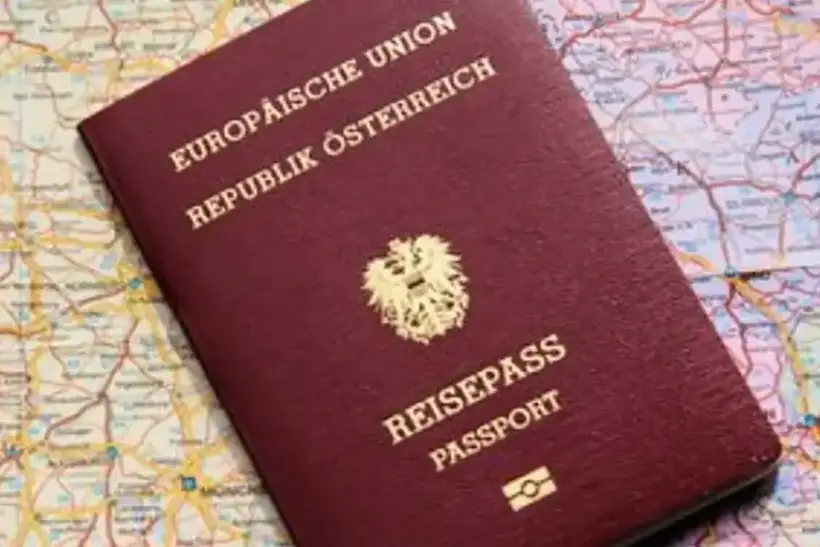
Austria granted citizenship to 6,641 people in the first quarter of 2026, a 21.2% increase from a year earlier. The rise was especially strong among people already living in the country, showing the accumulated effect of long-term residence, integration requirements and family-based applications rather than a simple loosening of the citizenship regime.
More than 6,600 people became Austrian citizens
From January to March 2026, Austria granted citizenship to 6,641 people, compared with 5,479 in the same period of 2025. Of the new citizens, 4,686 lived in Austria and 1,955 lived abroad. The domestic increase was particularly strong: the number of naturalised residents rose 42.4% year on year. Statistik Austria said the total increase was 1,162 people, or 21.2%.
VisaHQ linked the increase to long-term residents and family members of existing citizens, noting that faster conversion to citizenship can reduce administrative barriers for employers and expand the pool of workers with full European Union labour-market rights. The Austrian data, however, show a more complex picture: a large share of new citizens received passports through legal entitlement rather than discretionary policy easing.
Residents drove the increase
The key distinction is between naturalisations of Austrian residents and grants to people living abroad. In the first quarter of 2026, 70.6% of all new citizens lived in Austria, while naturalisations abroad fell 10.6%. That changes the structure of the headline number: the increase was driven not only by historical claims or descendants abroad, but by domestic applications from people who had lived in Austria for years.
Among residents naturalised in Austria, more than half had previously held citizenship of five countries: Syria, Türkiye, Afghanistan, Bosnia and Herzegovina, and Iran. Former Syrian citizens accounted for 1,110 people, or 23.7% of naturalised residents in the quarter. They were followed by Türkiye with 496, Afghanistan with 420, Bosnia and Herzegovina with 203 and Iran with 194.
Long residence became the main route
The largest category was citizenship granted on the basis of legal entitlement. It covered 4,699 people, or 70.8% of all naturalisations. Of these, 2,309 were naturalised after at least six years of residence in Austria and for reasons worthy of particular consideration, including proven German-language knowledge, sustainable integration, birth in Austria, citizenship of a European Economic Area country or asylum entitlement.
This group was also one of the fastest-growing. Naturalisations after at least six years of residence rose 40.8%. That detail matters because it points less to a sudden relaxation of rules than to more applicants reaching the statutory time threshold after earlier migration waves.
Family applications rose sharply
Another major factor was the extension of citizenship to spouses and children. Austrian statistics show that 1,578 people, or 23.8% of all new citizens, were naturalised through extension of conferral: 230 spouses and 1,348 children. The category increased by almost three quarters compared with the first quarter of 2025.
The demographic implications are important. Almost a third of new citizens, 2,173 people, were under 18, and 1,496 people, or 22.5%, had already been born in Austria. A substantial part of the increase therefore concerns not recent migration but second-generation residents and families already embedded in Austrian schools, communities and the labour market.
Descendants of Nazi victims remain a separate category
Austria’s naturalisation statistics also include citizenship granted to victims of political persecution under National Socialism and their descendants. In the first quarter of 2026, 1,945 people received citizenship under this legal title: 2 victims and 1,943 descendants. Almost all lived outside Austria, and the most common previous citizenships were Israel, the United States and the United Kingdom.
This category fell 10.6% from the first quarter of 2025. The overall increase in 2026 therefore cannot be explained by foreign historical applications; those declined, while domestic naturalisations accelerated.
Vienna was the main growth center
The regional picture was uneven. Seven federal provinces recorded more naturalisations than a year earlier, with the strongest relative increase in Styria, where the number nearly doubled to 580. Carinthia rose 86.8% to 198, Vienna 78.2% to 1,684, Vorarlberg 43.2% to 325, Salzburg 38.9% to 207 and Lower Austria 35.4% to 833.
Vienna remains the country’s largest naturalisation hub, consistent with its role as Austria’s main migration and economic center. Upper Austria fell 14.4% to 546 cases, while Burgenland declined 9.6% to 75. The differences show that growth depends not only on federal law but also on population structure, pending applications and administrative dynamics in individual provinces.
Austria still has a strict system
The increase in citizenship grants does not mean Austria has become one of Europe’s most liberal naturalisation systems. The official government portal lists several paths to citizenship: descent, citizenship for underage children, naturalisation after six years in specific cases, after ten years, and further options after 15 or 30 years of residence.
Austria’s 2025 integration statistics state that granting citizenship legally signifies the completion of a foreign citizen’s integration in Austria, and that naturalisation trends typically follow immigration movements with a lag of about ten years. The same report notes that Austria has one of the lowest naturalisation rates in Europe, with only Lithuania, Latvia, Czechia and Denmark lower in 2023.
The rise began before 2026
The first quarter of 2026 continued an existing trend from the previous year. In 2025, Austrian citizenship was granted to 25,095 people, 14.6% more than in 2024. Of these, 15,512 lived in Austria and 9,583 lived abroad. Naturalisations of residents rose 19%, while the provisional naturalisation rate reached 0.8%.
In 2025, almost half of naturalised residents had previously been citizens of Syria, Türkiye, Afghanistan, Bosnia and Herzegovina or Iran. One fifth of new citizens had been born in Austria, around a third were under 18, and more than three quarters of all naturalisations were based on legal entitlement.
Integration remains politically contested
The rise in naturalisations comes as Europe’s debate over migration, asylum and integration has become more restrictive. Austria’s integration monitoring shows that perceptions of coexistence have worsened among people born in Austria: 46% of respondents in 2025 assessed coexistence with migrants as “rather bad” or “very bad,” compared with 25% in 2022.
That makes citizenship statistics politically sensitive. On one side, naturalisation formalizes integration that has already taken place and grants full civic rights. On the other, rising passport numbers may increase pressure on the government from parties and voters demanding stricter language, income, loyalty and dual-citizenship rules.
The labour-market signal is practical
For employers, higher naturalisation numbers expand the group of workers who hold not only an Austrian passport but also full European Union citizenship rights. That can reduce restrictions on mobility, assignments, employment and administrative procedures across the bloc. The effect may be visible in health care, industry, construction, logistics and services, where workers with migration backgrounds remain important.
For the state, however, citizenship does not automatically solve integration challenges. A passport does not replace education quality, qualification recognition, access to housing, female labour-market participation or lower welfare dependency among vulnerable groups. The first-quarter data show the completion of a long path for many migrants, not a quick turn in migration policy.
Austria enters a new citizenship phase
Austria’s statistics show that the country is entering a period in which migration waves of the 2010s are increasingly reaching the citizenship stage. That is visible among former Syrian and Afghan citizens, children born or raised in Austria, and family-based naturalisations. For the state, this is not only a demographic fact but a test of whether long-term residence can become durable civic participation.
As International Investment experts report, the main risk is that the increase in naturalisations will be treated only as a political irritant, even though it largely reflects accumulated residence periods and compliance with formal requirements. If Austria tightens rules too sharply, it may leave many already integrated residents without political representation; if it does not enforce integration quality, citizenship may become a statistical success without sufficient social outcomes.
FAQ on naturalisation in Austria
How many people received Austrian citizenship in Q1 2026
From January to March 2026, Austria granted citizenship to 6,641 people. That was 21.2% more than in the same period of 2025.
Why did naturalisations increase
The main drivers were long-term residents reaching required residence periods, more grants based on legal entitlement, family-based naturalisations of spouses and children, and the delayed effect of earlier migration waves.
Which groups were most represented among residents
Among naturalised residents, the largest groups were former citizens of Syria, Türkiye, Afghanistan, Bosnia and Herzegovina, and Iran.
Does the rise mean Austria made citizenship easier
Not necessarily. Austria still has strict citizenship requirements. The increase largely reflects more people meeting existing conditions on residence, integration and family status.
Why were many new citizens children
Because citizenship can be extended to applicants’ children, and many children were born or raised in Austria. In the first quarter of 2026, almost one third of new citizens were under 18.
Why does the data matter for the economy
New citizens receive full European Union citizenship rights, including broader labour mobility and employment rights. That can reduce administrative barriers for employers, but integration through language, education and work remains essential.