







read also
 Vietnam Mortgage Surge Pushes Homes Out of Reach
 Lithuanian Apartment Prices Accelerate Across Major Cities
 London Flats Lose Value Ahead of Leasehold Reform
 Construction of the Batumi–Sarpi Highway Begins in Georgia
 Baltic Property Investment Accelerates in 2026
 Hong Kong and Singapore Renew Their Expat Rivalry
Business / Tourism & hospitality / Investments / United Kingdom / Tourism Britain / Real Estate Britain / Real Estate 11.12.2025
Literary boutique hotel The Kensington Hideaway will open in London
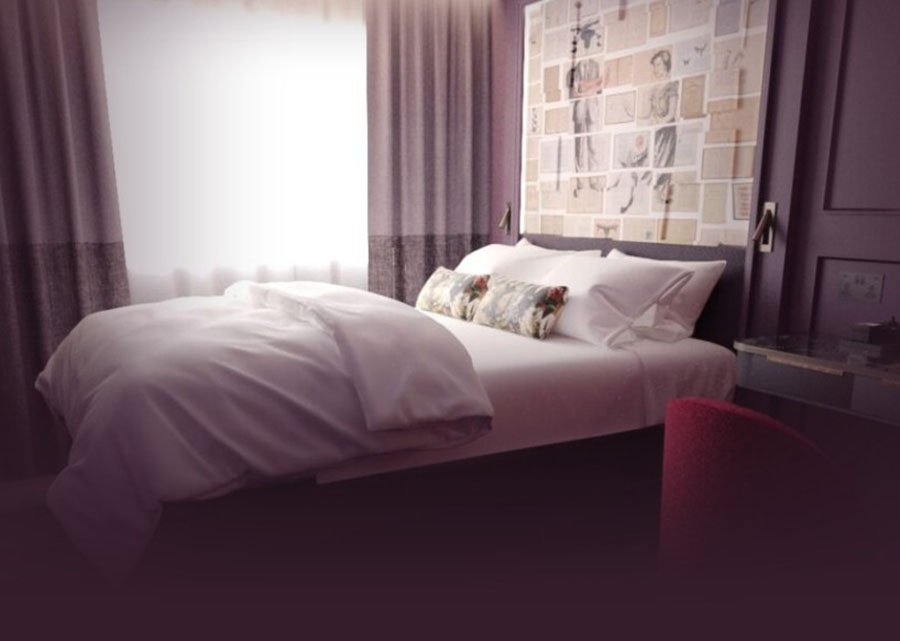
Photo: The Kensington Hideaway
London’s Kensington district is preparing to open a new boutique hotel: the renewed The Kensington Hideaway will begin operations in January 2026. The project is the result of major investment and a full reconception of the former Seraphine Kensington. The concept blends contemporary design, a literary theme, and a strong connection to the local area.
Literary concept and local identity
The updated Kensington Hideaway is designed as a literary space: it features 59 rooms, each category dedicated to William Makepeace Thackeray, Agatha Christie, T. S. Eliot and P. L. Travers. The thematic elements highlight the hotel’s connection to a neighbourhood where much of Britain’s cultural tradition was shaped. The interiors are done in a contemporary style with an emphasis on comfort and a distinct local character.
The hotel is located near Kensington Palace, the Royal Albert Hall, and the Natural History Museum. The format targets travellers who value atmosphere and proximity to key cultural landmarks. The property will include a 35-seat restaurant and bar aimed at both guests and local residents. The menu will feature dishes and cocktails inspired by literary figures whose names underpin the hotel’s concept.
The project is being developed by JMK Group, which has completely reimagined the hotel’s previous format. A soft opening is scheduled for mid-January 2026, with the full launch to follow later that month.
Unusual hotels in London and international examples
The Kensington Hideaway’s thematic approach fits into a broader trend. In London, a similar direction is being developed by The Mandrake in Fitzrovia — a small luxury hotel shaped around contemporary art aesthetics. Guest rooms and shared spaces feature original artworks, while the courtyard and Jurema bar create an atmosphere of urban retreat.
Literary and cultural hotel concepts are also gaining momentum outside the UK. One of the most prominent examples is New York’s Library Hotel, where each floor and room is designed according to the Dewey Decimal Classification — a library system that divides knowledge into ten thematic categories. Thousands of books are available on-site, and rooms are dedicated to philosophy, history, poetry, and other subjects.
In Germany, a distinctive conceptual approach is embodied by 25hours Hotel Bikini Berlin, which combines urban aesthetics with natural elements. Some rooms overlook the Berlin Zoo, while the shared spaces create a pronounced lifestyle environment with restaurants and social areas.
Boutique segment development trends
According to Hospitality Business Review Europe, boutique hotels are strengthening their market position thanks to a personalised approach, expressive design, and integration into the local environment. Guests increasingly seek unique experiences and a sense of connection with the city rather than standardised services. The gastronomic component plays an important role: the restaurants and bars of such hotels attract both travellers and local residents.
A separate direction involves cultural conceptualisation — projects built around local history, art, and creative traditions. These properties become part of urban routes and strengthen their appeal in competitive markets.
Investment context of the market
The hotel real estate segment remains one of Europe’s key investment areas. According to CBRE, more than 90% of professional investors intend to maintain or increase their allocations to hotels, noting sustained demand and competitive returns. In 2024, transaction volume reached €20 billion — 37% above the previous year. For 2025, activity is expected to rise by 5–10% due to improved financing conditions and stable tourism dynamics.
Strategies are shifting towards value-add — repositioning, reconstruction, and improved operational efficiency. Investors are increasingly interested in properties without an operator, while the leading segments are upper-upscale and luxury, which show stable performance even under elevated inflation.
Analysts at International Investment note that boutique hotels form a notable cultural and tourism niche, though their investment role remains limited. The bulk of capital and the highest returns concentrate in branded luxury and upper-upscale properties, which ensure consistent guest flow, predictable operational results, and capital protection in an inflationary environment. In 2025, investor interest is shifting precisely toward major premium chains, and this trend is expected to strengthen further in 2026.