







read also
 Vietnam Mortgage Surge Pushes Homes Out of Reach
 Lithuanian Apartment Prices Accelerate Across Major Cities
 London Flats Lose Value Ahead of Leasehold Reform
 Construction of the Batumi–Sarpi Highway Begins in Georgia
 Baltic Property Investment Accelerates in 2026
 Hong Kong and Singapore Renew Their Expat Rivalry
Uruguay Begins De-dollarization of Its Economy
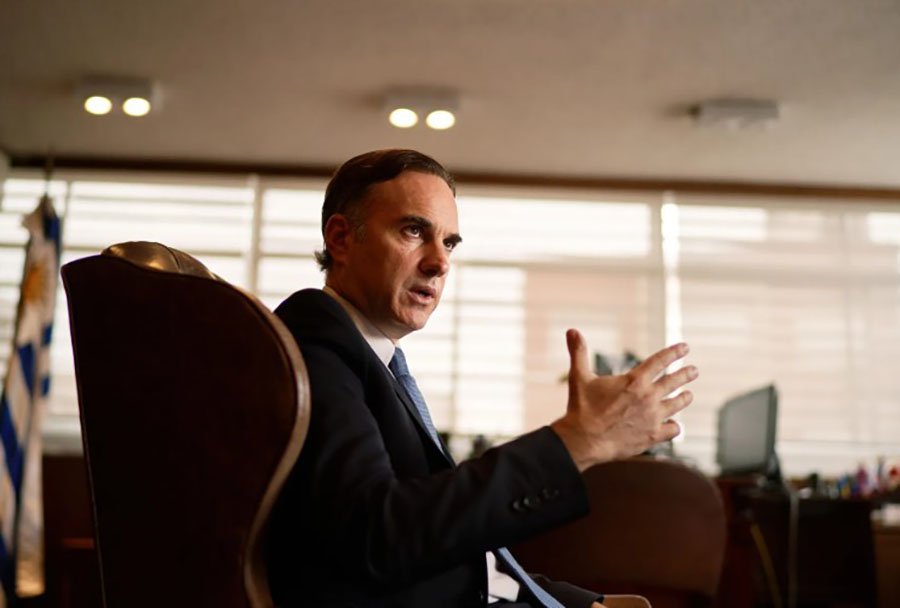
Photo: Bloomberg
Uruguay’s central bank plans to expand the use of the national peso and reduce dependence on the US dollar, reports Bloomberg. The regulator believes that reliance on foreign currency undermines household purchasing power. The first measures are expected to be launched in 2026.
Plans and expectations
Guillermo Tolosa, President of the Central Bank of Uruguay, intends to begin the campaign to reduce the economy’s dependence on the dollar by changing banking regulation. Initial steps include raising capital requirements for certain loans denominated in US dollars and eliminating reserve requirements for part of peso deposits. These measures are intended to change incentives for banks and encourage more active lending in the national currency.
Authorities are also discussing intervention in pricing practices. The government is considering requiring companies that set prices in foreign currencies to also list them in pesos. This step is aimed at gradually changing settlement habits in an economy where the dollar remains widely used not only for savings but also in everyday transactions.
The scale of the challenge remains significant. More than two-thirds of bank deposits in the country are held in US dollars, and cars and real estate are traditionally priced in the same currency. This model emerged in the second half of the 20th century amid high inflation and depreciation of the national currency and has persisted ever since.
Tolosa considers Uruguayans’ attachment to the dollar an outdated habit inherited from a period of economic instability. Speaking to business leaders, he compared investing in dollars to gambling, noting that exchange-rate volatility makes such savings unreliable in terms of preserving purchasing power, which he estimates has fallen by roughly half over the past two decades.
Inflation and currency volatility
Experts stress that regulatory measures alone may be insufficient. Aldo Lema, an economist and partner at Vixion Consultores, believes that changing saving behavior would require lowering the inflation target to 3% from the current 4.5% and maintaining it consistently for many years. He notes that Uruguay has moved toward low and stable inflation much more slowly than, for example, Peru.
Until recently, Uruguay did stand out in Latin America with average annual consumer price growth of 8.8% between 2001 and 2022. This dynamic was long tolerated thanks to collective agreements and contracts designed to shield parties from price swings and did not prevent the country from retaining an investment-grade rating or attracting billions of dollars in foreign direct investment, including projects in industry and resort real estate.
Tighter monetary policy has begun to deliver results. Inflation has remained within the central bank’s 3–6% target range for two and a half years and has hovered near the 4.5% target for six consecutive months. Alternatives to the dollar are also being discussed in the real sector. Developer Fabian Kopel believes the construction industry would benefit from switching to pricing in the national currency using the inflation-indexed UI unit — a benchmark linked to inflation and converted into pesos at the time of payment.
According to him, about 75% of construction costs are denominated in pesos, and the use of UI would help protect developers and buyers from inflation and currency swings that erode margins and push housing prices higher. Kopel cites low consumer awareness of the UI mechanism as the main obstacle. He estimates that a transition would only be possible if the instrument were made mandatory across the entire real estate market; his firm, Kopel Sanchez, has built around 1,600 housing units.
International context
The de-dollarization policy promoted by Uruguay’s President Yamandú Orsi and the central bank contrasts with Argentina’s course. There, President Javier Milei is advancing labor reforms that would allow wages to be paid in either US dollars or Argentine pesos. The most radical currency initiatives remain on hold, though the possibility of abandoning the national currency altogether, shutting down the central bank, and adopting the dollar has previously been discussed.
Uruguay’s effort to reduce the role of the dollar is unfolding against a backdrop of global change. According to the International Monetary Fund, the dollar’s share of central bank reserves has declined from about 71% in the early 2000s to nearly 59% last year. In Uruguay’s own reserves, the share of dollar assets fell to 84% in September from 90% in March, when Tolosa took office.
The IMF also notes that a high share of deposits and loans in foreign currency increases financial risks for emerging market economies and limits the effectiveness of monetary policy. In Latin America, sustained reductions in dollarization have been achieved only in a few countries, most notably Peru, where a prolonged period of low inflation and the development of financial instruments in the national currency played a key role.
Experience in other countries in the region shows that indexed units can serve as an alternative to direct dollar linkage. The most prominent example is Chile, where the UF unit is widely used in mortgage lending, real estate transactions, and long-term contracts, helping to reduce the impact of inflation and currency volatility without switching to a foreign currency.
Conclusion
Analysts at International Investment note that Uruguay’s course toward reducing dependence on the dollar is driven not only by ideology but also by changes in the macroeconomic environment. The success of this policy will depend on the authorities’ ability to entrench low inflation, expand instruments in the national currency, and gradually change long-established financial habits among households and businesses. These long-term factors, rather than regulatory measures alone, will be decisive for the de-dollarization process.
Whether a move away from the dollar is economically justified remains a subject of debate. In countries with a history of high inflation, the currency has traditionally protected savings and anchored trust, while an exit without lasting price stability risks becoming largely symbolic. Yet extensive use of the dollar also weakens monetary policy, holds back domestic financial markets and increases exposure to external shocks. Any such transition, therefore, can succeed only if underpinned by durable confidence in the local currency and a credible macroeconomic framework.