







 How Ukraine’s New-Build Housing Market Has Changed Over Four Years
 European Prime Rents Rise as Property Yields Turn Higher
 The Most Expensive Airlines in Europe in 2026
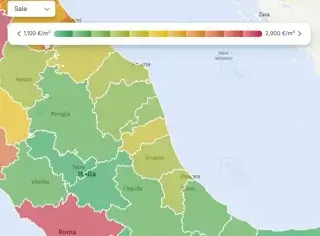 Housing Prices in Italy Reach a Two-Year High
 Travellers Increasingly Choose Cooler Scandinavia
 Serbia Property Sales Decline as Transaction Value Rises
Iran agrees to reopen the Strait of Hormuz under a two-week ceasefire with the US
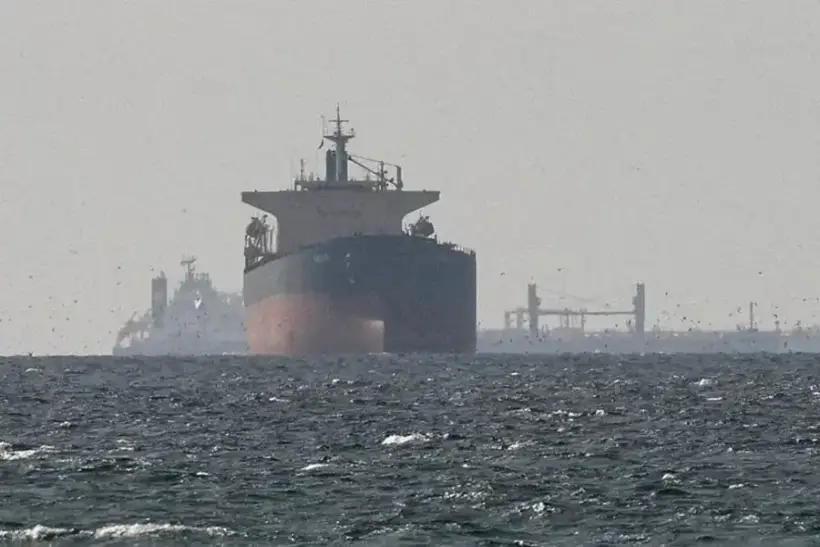
US Vice President J.D. Vance confirmed that Iran has agreed to reopen the strategically vital Strait of Hormuz as part of a two-week ceasefire. The agreement предусматривает an immediate cessation of hostilities and safe passage for vessels, Reuters reports. However, experts do not expect a mass movement of ships and assess the outlook with caution.
The US expects progress in relations with Iran
J.D. Vance said that US President Donald Trump is “impatiently” awaiting progress in relations with Iran and has instructed officials to pursue negotiations. He added that some Iranian officials are approaching the talks constructively, while others are “lying” about the ceasefire. He described the situation as a “fragile truce.” If Iran fails to negotiate in good faith, the US will return to using military and economic leverage.
Trump had previously threatened Iran with total destruction and described the preliminary two-week ceasefire agreement as a complete victory. He initially called Iran’s demands realistic, then fraudulent, but said the proposed plan could still serve as a basis for further work. Israel supported the US ceasefire but stressed that it does not apply to Lebanon. Authorities in other countries also responded positively.
Iran’s position: “Conditional de-escalation”
Iranian Foreign Minister Abbas Araghchi described the reopening of the Strait of Hormuz as a step toward conditional de-escalation. His statement emphasized that the decision resulted from diplomatic efforts by Pakistan and negotiations between Washington and regional actors. Iranian state media portrayed the move by the US as a “humiliating retreat” by President Trump, reflecting stark differences in the narratives of the two sides.
Araghchi thanked Pakistan’s Prime Minister Sharif and Field Marshal Munir for their “tireless efforts to end the war in the region,” noting that the pause became possible due to parallel proposals from both sides.
List of demands for a Middle East ceasefire
Abbas Araghchi stressed that all military actions against Iran must cease immediately, after which the country’s armed forces would scale down defensive operations. Under the agreement, control over the Strait of Hormuz — a key transport artery through which about one-fifth of global oil supplies pass — will be temporarily eased.
The minister уточнил that safe passage through the strait will be possible for two weeks, provided there is coordination with Iran’s armed forces and consideration of technical limitations. The plan also includes lifting all sanctions, withdrawing US troops from the Middle East, returning frozen assets, and maintaining Iran’s long-term control over the strait. The Persian-language version also mentioned the right to uranium enrichment.
It was announced that negotiations with the US will begin on April 10 in Islamabad, highlighting Pakistan’s potential role as a mediator in resolving the crisis.
Shipping in the Persian Gulf during the war
According to the UN, since the start of the war in late February, around 2,000 vessels and 20,000 seafarers have been stranded in the Persian Gulf and are unable to continue their journeys. Efforts are now underway to evacuate them. Among the sunken vessels are oil and gas tankers, bulk carriers, cargo ships, and six tourist cruise liners, The Guardian reports.
Most vessels remained anchored in the Gulf after attacks on more than 20 ships in the region, which resulted in several crew fatalities. Ships currently en route are using a new maritime route that emerged during the conflict, differing from standard commercial shipping lanes used previously.
Strait of Hormuz: prospects for resuming traffic
Analysts believe there will be no “mass exodus” of ships through the Strait of Hormuz despite the two-week conditional ceasefire between the US and Iran. On Wednesday, Tehran said it would ensure safe passage for vessels in coordination with its armed forces, but the coast guard warned that any ship attempting to transit without permission would be “attacked and destroyed.” The Fars agency later reported that tankers transiting the area had been halted due to a new wave of Israeli attacks on Lebanon, described as a “violation of the ceasefire.”
Richard Meade, editor-in-chief of Lloyd’s List Intelligence, said the agreement does not change the situation, as Iran still retains control. He added that shipowners are instructing some captains to conduct safety checks in preparation for a possible departure, but a large number of vessels are unlikely to leave the Persian Gulf until safety is assured.
Stephen Cotton, General Secretary of the International Transport Workers’ Federation (ITF), representing 1.2 million seafarers, also said that risks must be fully assessed. Analysts note that most vessels remain at anchor. Existing routes, including the northern corridor between Larak Island and the mainland, allow Iran to control and approve the passage of each vessel. As a result, a return to normal shipping volumes during the ceasefire is unlikely.