







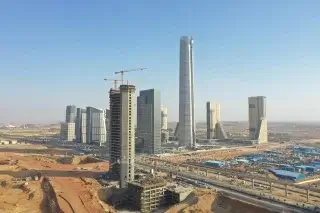
 Egypt Prepares New Law for Property Developers
 Young Japanese Buyers Turn to 50-Year Mortgages
 Argentina Narrows Tourism Gap as Arrivals Rise
 Seattle Luxury Housing Loses Its Former Momentum
 The World’s Strongest Passports for Travel, Living and Investment
 Russian Developers’ Debt Nearly Doubled in a Year
UAE leaves OPEC: what will change in the oil market
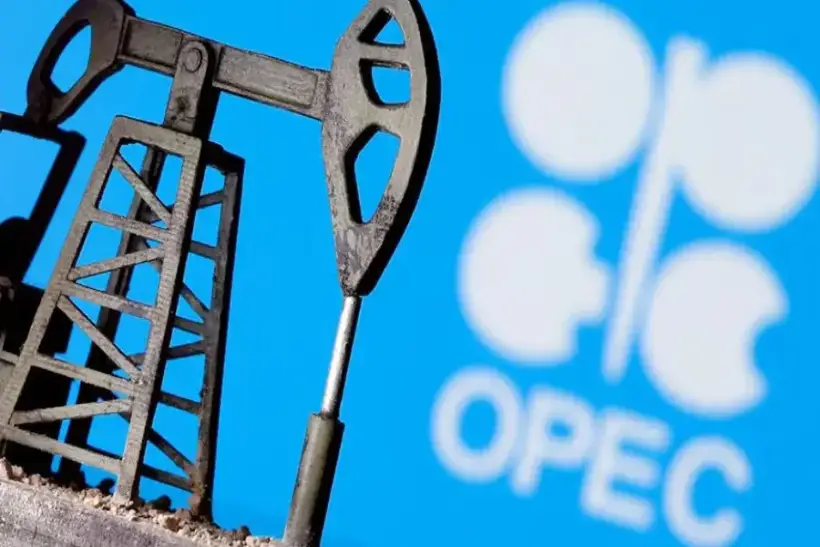
Reuters
The United Arab Emirates left the international oil producers’ group OPEC on May 1, Reuters reports. The decision comes amid a fuel crisis triggered by the war in the Middle East and the blockade of the Strait of Hormuz — a key route for global energy shipments. The move could deal a serious blow to the alliance and its de facto leader, Saudi Arabia.
UAE Energy Minister Suhail Mohamed Al Mazrouei said the decision was political and followed a careful review of the country’s energy strategies. He added that the world will need more resources, implying that the UAE will be able to meet that demand. The issue was not discussed with other countries.
History of OPEC and OPEC+
OPEC was founded in 1960 as an organization of oil-exporting countries aimed at coordinating production and aligning global oil policy. The founding members were Iran, Iraq, Kuwait, Saudi Arabia, and Venezuela. Over time, the group expanded with new members from different regions, strengthening its influence over global oil prices and supply volumes. The UAE joined in 1967, shortly after developing its oil industry.
In 2016, the OPEC+ format was created, bringing together OPEC members and major non-member producers, including Russia, Kazakhstan, Mexico, Oman, and others. The agreement aimed to coordinate output to stabilize the oil market amid fluctuations in demand and prices.
Over time, OPEC’s membership has changed several times: some countries suspended participation or left the organization, including Indonesia, Ecuador, Qatar, Angola, and Gabon. Some later returned. These shifts reflect how the structure depends on countries’ economic interests and energy strategies.
OPEC’s impact on oil pricing
The organization has a significant influence on global prices. In the 1970s, OPEC countries accounted for more than 50% of global oil production. In later decades, the share fluctuated between 30% and 40%, according to ABC News. In 2025, it reached nearly 50%, while in 2026 it fell from 48% in February to 44% in March.
Critics accuse OPEC of manipulating oil prices, but the organization rejects this. It describes its mission as coordinating policies and stabilizing markets to ensure regular supply to consumers, stable income for producers, and fair returns for investors in the oil sector.
The UAE’s exit from OPEC and OPEC+ could mark a turning point for global oil market regulation. In the short term, logistics remains the key factor, while in the longer term the question is whether the alliance can maintain its influence without one of its largest producers.
Why the UAE is leaving OPEC
Experts say the decision is driven by a desire to free the country from production quotas and internal constraints. Pepperstone senior strategist Michael Brown said the UAE has long felt restricted by OPEC’s output targets. Leaving the group would allow it to increase production more freely. A potential target of around 5 million barrels per day by 2027 has been discussed, compared to current output of about 3–3.5 million barrels per day, indicating significant growth potential.
Monica Malik, chief economist at ADCB, also believes the move opens the door for the UAE to increase its global market share once geopolitical conditions stabilize. Gary Ross of Black Gold Investors added that the UAE has effectively been ignoring quotas in recent years and following a near-maximum production policy. Real influence within OPEC has largely concentrated in Saudi Arabia, the only member with significant spare capacity, while Russia’s participation helped restrain output growth.
How the UAE exit could affect the oil market
Pepperstone strategist Michael Brown said the decision “changes absolutely nothing” in the near term, as supply constraints linked to the Strait of Hormuz remain the dominant market factor. However, he suggested that additional UAE supply could accelerate a return to pre-conflict price levels and help restore market balance.
Saxo Bank analyst Ole Hansen believes the market can absorb additional UAE volumes in the short to medium term due to low global inventories. In the longer term, however, the exit could weaken OPEC’s ability to manage the market through coordinated production cuts. If producers shift focus toward market share instead of quotas, the alliance’s influence may decline.
Business commentator David McHugh argues that global oil demand may peak in the coming years due to the transition to renewable energy. In this context, oil reserves in the ground today may be more valuable than in the future, making production restrictions potentially a source of lost profit and encouraging higher output now.
Conclusion
Analysts at International Investment note that the UAE’s exit from OPEC and OPEC+ appears less like an isolated political move and more like a shift in how major oil producers behave. Amid geopolitical tensions and supply disruptions, countries are increasingly prioritizing national production strategies over collective output management.
In the short term, price impacts may remain limited, as logistics and geopolitical risks dominate the market. Over time, however, increased UAE production could add downward pressure on oil prices.
In the long run, the decision may weaken OPEC’s institutional role in coordinating supply. If other producers follow a similar path and focus on market share rather than quotas, the global oil market could become more competitive, less predictable, and less shaped by traditional production controls.