







 Vietnam Mortgage Surge Pushes Homes Out of Reach
 Lithuanian Apartment Prices Accelerate Across Major Cities
 London Flats Lose Value Ahead of Leasehold Reform
 Construction of the Batumi–Sarpi Highway Begins in Georgia
 Baltic Property Investment Accelerates in 2026
 Hong Kong and Singapore Renew Their Expat Rivalry
Housing commissioning in Russia fell by 30% at the beginning of 2026
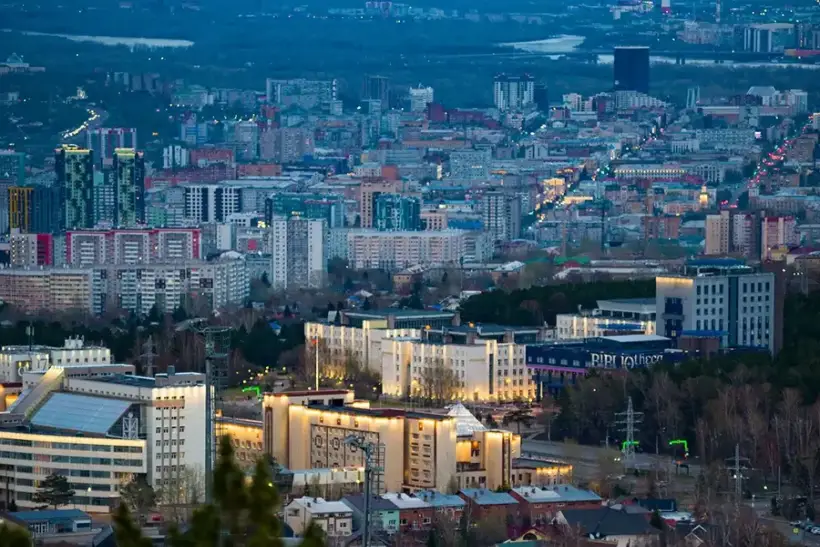
The construction sector in Russia has shifted into a noticeable decline after a period of relative stability. Housing commissioning volumes dropped by almost one third, with the downturn affecting all federal districts. In St. Petersburg, a fivefold decline was recorded. The systemic cooling of the market is driven by slowing demand, shifts in project timelines, and changes in developers’ operating conditions.
Decline in construction volumes across Russia’s federal districts
In the first quarter of 2026, 22.96 million square meters of housing were commissioned in Russia, including individual housing construction and multi-apartment buildings. This is 28.2% less than in the same period of 2025, according to RBC citing Rosstat data. In the previous year, volumes increased by 0.4%. At that time, positive dynamics were recorded in more than half of the federal districts, while a decline was observed in only three.
The sharpest contraction in January–March 2026 was recorded in the Southern Federal District — down 49.6% to 2.08 million sq. m. In the Siberian District — down 43.2% to 2.05 million sq. m. Above-average declines were also observed in the Northwestern and Central Districts: 35.4% (to 2.14 million sq. m) and 29.5% (to 6.43 million sq. m), respectively.
In other regions, the decline was less pronounced:
- Volga Federal District — 4.62 million sq. m (–13.9%)
- Ural Federal District — 2.45 million sq. m (–12.7%)
- North Caucasian Federal District — 2.01 million sq. m (–12.3%)
- Far Eastern Federal District — 1.11 million sq. m (–11.4%)
Construction dynamics in Russian regions
Analysts at CIAN noted the most significant declines in Krasnodar Krai (–65%), Chelyabinsk (–62%), Irkutsk (–56%), and Novosibirsk (–54%) regions. Moscow shows the opposite trend: housing commissioning increased by 5.3% compared to Q1 2025, reaching 1.33 million sq. m. Chief analyst Alexey Popov links this primarily to the renovation program. In Primorsky Krai, support came from the “Far Eastern Mortgage” program. In several regions, figures are partially supported by the registration of previously built individual homes.
At the same time, Moscow Region recorded a significant decline — down 44.1% to 2.3 million sq. m. The sharpest drop among major regions occurred in St. Petersburg, where housing commissioning fell by 83.8% to 113.9 thousand sq. m for the quarter. This represents more than a fivefold decrease year-on-year. The most significant changes were recorded in the multi-apartment housing segment — only 59,000 sq. m (–91%). Individual housing construction also declined, though less sharply — by 33% to 55,000 sq. m. According to Dom.RF, 56 thousand sq. m were commissioned in March (–52%).
Overall, in the Leningrad Region, volumes decreased by 13.3% in Q1 to 1.25 million sq. m. March, however, showed a slight increase of 2% to 513,000 sq. m. The market structure is also changing: multi-apartment housing grew by 69% (to 95,000 sq. m), while individual housing construction decreased by 17% to 1.15 million sq. m.
Reasons for the decline in housing commissioning in Russia
Experts note that the decline in Q1 2026 is largely linked to changes in the individual housing construction (IHC) segment, which has long been the main market driver. Since 2025, mandatory escrow accounts have been introduced, which many small contractors were unprepared for.
At the same time, conditions for family mortgages have tightened, reducing credit accessibility. Valeriy Tumin from Fam Properties noted that the average interest rate on home loans reached about 20.83%, effectively pushing a significant portion of demand out of the market.
A notable role was also played by households’ saving strategy, according to Deputy Minister of Construction and Housing and Utilities Nikita Stasishin. Instead of investing in private house construction, people preferred to place funds in bank deposits.
Outlook for the Russian real estate market
Alexey Popov from CIAN expects gradual improvement in indicators already in Q2 2026. One potential catalyst is the lifting of the moratorium on penalties for missing construction deadlines, which could encourage developers to complete and commission projects faster.
Most experts agree that a significant decline in construction prices is unlikely. Instead, only localized adjustments are expected in overvalued projects. The overall trend is likely to remain stable due to high costs and limited supply. Additional stabilization could come from a gradual reduction in the key interest rate and adaptation of the industry to escrow-based financing.
Analysts at International Investment note that Russia’s residential construction market is currently in a cooling phase, partly reflecting broader macroeconomic dynamics. Geopolitical uncertainty also contributes, increasing investor caution.
Returns are mainly concentrated in the ruble segment, with the highest activity in Moscow and Sochi. However, in dollar terms, performance looks significantly weaker, making the market more sensitive to currency and external economic factors. Overall, the market is gradually redistributing demand, adapting to new financial conditions, and seeking a new equilibrium.