











13 Airports in Southern Russia Out of Service After Drone Attack
Анастасия Романова / Абзац
Operations at 13 airports in southern Russia have been temporarily suspended after drones struck an aviation navigation branch administrative building. More than 80 flights have been cancelled, and around 14,000 passengers are waiting to depart, according to the Association of Tour Operators. Restrictions have also been introduced in Moscow and other cities across the country.
Where Flights Are Not Operating
The restrictions have affected airports in Astrakhan, Vladikavkaz, Volgograd, Gelendzhik, Grozny, Krasnodar, Makhachkala, Magas, Mineralnye Vody, Nalchik, Sochi, Stavropol, and Elista, RBC reports, citing the Ministry of Transport. The regional air traffic control center in Rostov-on-Don, which manages flight operations in southern Russia, has adjusted its work. Staff were not injured. Specialists are currently inspecting equipment and assessing its functionality.
The most difficult situation has developed in Sochi, where new restrictions have added to major disruptions in flight schedules over the past two days. Around 10 flights have been delayed at Chelyabinsk airport. Temporary restrictions are also in place in Ulyanovsk, Samara, Kazan, Nizhnekamsk, and several other cities.
Airlines are widely adjusting schedules. Aeroflot is rescheduling departures and cancelling some flights, while also diverting aircraft to alternate airports. Ural Airlines reported delays in flights to Sochi, Krasnodar, Gelendzhik, Vladikavkaz, Grozny, and Mineralnye Vody. Rossiya, Nordwind, and Pobeda are also modifying their flight programs.
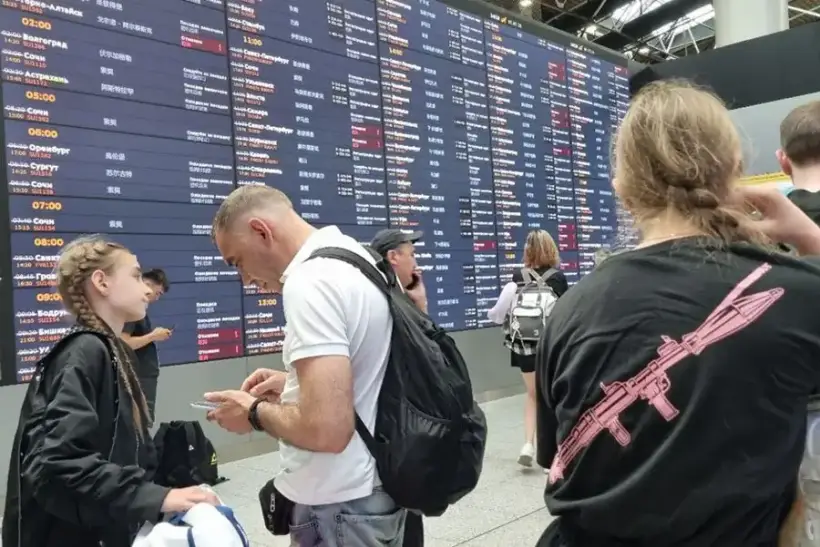
Some passengers in Moscow have been spending a second day at Vnukovo airport due to restrictions, MSK1 reports. Travelers are forced to sleep on the floor while waiting for departures.
Attacks on Regions and Moscow
On the morning of May 8, the Governor of Rostov Region, Yuri Slyusar, reported the consequences of a nighttime drone attack. Damage was recorded in Taganrog, Bataysk, Rostov-on-Don, and the Myasnikovsky district. No fatalities were reported. In Rostov’s Pervomaysky district, debris from a drone caused a fire in a four-story administrative building. In Chaltyr village, 20 private houses and three cars were damaged, with roof destruction and shattered windows reported in several homes. In the southeastern industrial zone of Myasnikovsky district, a fire broke out in warehouse facilities after a missile impact, causing one building to collapse.
In the city of Yelets in the Lipetsk region, a nine-year-old boy was injured by falling drone debris. In Perm, drones struck several industrial sites.
Russia’s Ministry of Defence stated that air defense forces intercepted and destroyed 264 Ukrainian fixed-wing drones overnight across 16 regions and two seas, including the Moscow region. Attacks on Moscow continued into the morning, with the number of drones shot down over the capital reaching 27.
200 Flights Delayed on May 5
Major disruptions in air traffic were also recorded on May 5. Around 200 flights were delayed at Moscow airports due to drone attacks. At Vnukovo and Sheremetyevo, more than 60 flights were rescheduled at each airport, while 21 were affected at Domodedovo. Some aircraft were diverted to alternate airports. Moscow Mayor Sergey Sobyanin reported that ten drones were shot down over the capital overnight.
Disruptions also affected other regions of Russia. Kazan and Chelyabinsk temporarily restricted aircraft arrivals due to drone activity. On May 5, a drone struck a residential building in Cheboksary. The Investigative Committee reported fatalities and injuries as a result of the attack.
Outlook for Tourism and Business Travel in Russia
Experts warn that with each hour of disruption, the number of delayed flights is likely to increase. Travelers are advised to closely monitor airline updates and flight statuses. Analysts at International Investment note that restrictions on airport operations and aviation disruptions are negatively affecting tourism and business travel. Travel predictability has declined, forcing tour operators and airlines to restructure routes, increase reserve capacity, and allow additional time for connections. In the business segment, this results in disrupted travel schedules and more complex regional connectivity.
Pressure is also increasing on major airport infrastructure and backup facilities. Prolonged restrictions raise the risk of congestion at key hubs, complicating flight management and slot allocation, which reduces overall system stability.
Future developments will depend on the duration of restrictions and the aviation system’s ability to redistribute traffic. If the current conditions persist, the market is expected to adapt through more flexible pricing, expanded insurance mechanisms, and more cautious travel planning. If stability returns, a partial rebound in deferred demand is likely, although short-term spikes in infrastructure load may continue.