







 Vietnam Mortgage Surge Pushes Homes Out of Reach
 Lithuanian Apartment Prices Accelerate Across Major Cities
 London Flats Lose Value Ahead of Leasehold Reform
 Construction of the Batumi–Sarpi Highway Begins in Georgia
 Baltic Property Investment Accelerates in 2026
 Hong Kong and Singapore Renew Their Expat Rivalry
Heathrow Loses Passengers Due to the Middle East War
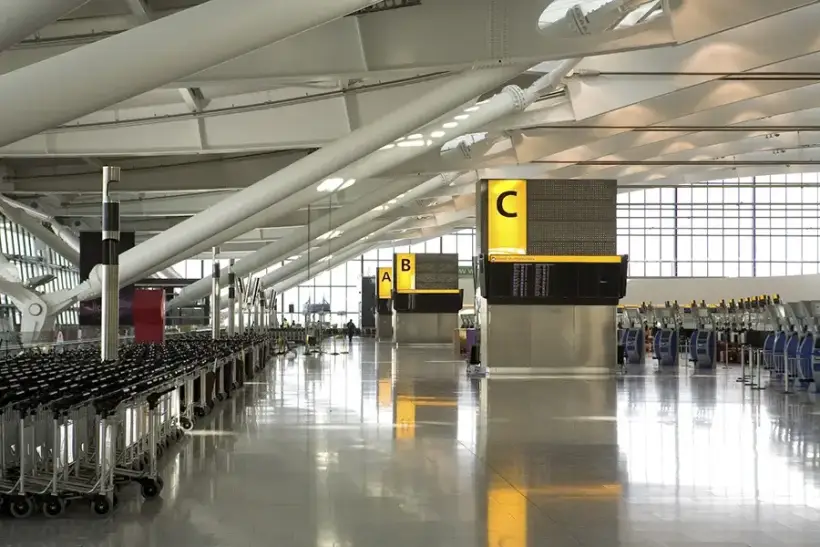
Passenger traffic at London’s Heathrow Airport has declined due to the war in the Middle East and disruptions to international air travel. At the same time, the airport is reporting an increase in transit passengers using London as an alternative transfer hub instead of airports in the Gulf region, The Guardian reports.
Declining Passenger Numbers and Route Redistribution
Around 6.7 million passengers travelled through Heathrow in April — 5% fewer than during the same month a year earlier and the sharpest decline since March 2025. The steepest drop was recorded on routes to and from the Middle East.
At the same time, the number of transfer passengers increased by 10%. Travellers heading to Asia and Oceania are increasingly choosing Heathrow as a transit hub, avoiding traditional Gulf transfer points such as Dubai and Doha.
Heathrow CEO Thomas Woldbye said that overall travel demand remains resilient despite external shocks. He stressed that current fuel supplies remain stable and that April was still the airport’s busiest month of the year so far.
At the same time, Heathrow management plans to review its passenger forecast for 2026 in the near future. The airport had previously projected annual passenger traffic at around 85 million, although changes in the international environment could alter those expectations.
Reasons Behind the Changes: War and Fuel Prices
Experts point to the war in the Middle East as the main reason behind the disruption of established flight routes. The conflict has led to flight cancellations and rescheduling, longer travel times, and revisions to airline route networks.
Another important factor is the sharp rise in aviation fuel prices. Tensions around the Strait of Hormuz, through which a significant share of global oil supplies passes, have heightened concerns about supply disruptions. This has already pushed up fuel costs and increased pressure on ticket prices.
According to the International Air Transport Association (IATA), jet fuel prices averaged around $181 per barrel in the week leading up to May 1 — nearly double last year’s level.
Major market players have already signalled the need to offset rising costs. In particular, International Airlines Group, the owner of British Airways, said it would attempt to recover most of the estimated €2 billion (£1.7 billion) increase in fuel expenses this year through revenue and cost management measures. Discussions are also intensifying across the industry over schedule flexibility and airlines’ ability to cancel flights without losing airport slots.
Restructuring of Global Route Networks
The disruption is affecting airlines worldwide. Lufthansa announced plans to cut around 20,000 flights and phase out some less efficient aircraft, a move expected to reduce fuel consumption by approximately 40,000 tonnes during the summer season. China Airlines and ANA are also adjusting route networks and reallocating long-haul capacity.
United Airlines plans to reduce flights by around 5% in the second and third quarters of 2026, while company executives warn of significant losses if fuel prices remain elevated. Delta Air Lines has reduced capacity by about 3.5%, KLM plans to cut flights through Schiphol Airport, and Air France-KLM has limited expansion on long-haul routes. Gulf carriers and Air China are also revising schedules and reducing flights on key routes.
According to Cirium, approximately 2 million passenger seats and around 12,000 flights have already been removed from May schedules. Global airline capacity is projected to fall from 132 million to 130 million seats this month. Eurocontrol data also shows that passenger traffic between Europe and the Middle East fell by 54% year-on-year during the week of April 6–12.