







 How Ukraine’s New-Build Housing Market Has Changed Over Four Years
 European Prime Rents Rise as Property Yields Turn Higher
 The Most Expensive Airlines in Europe in 2026
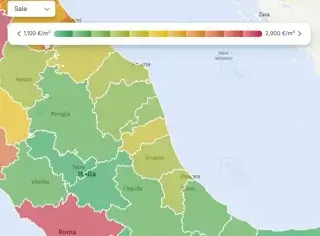 Housing Prices in Italy Reach a Two-Year High
 Travellers Increasingly Choose Cooler Scandinavia
 Serbia Property Sales Decline as Transaction Value Rises
Tourist housing in Spain fell by 10.7% year-on-year

The short-term tourist accommodation market in Spain is contracting. In May 2026, digital short-term rental platforms recorded a 10.7% decline compared to the same month in 2025, according to Idealista, citing data from Spain’s National Statistics Institute (Instituto Nacional de Estadística (INE)). The bulk of supply remains concentrated in the country’s largest cities and popular holiday regions.
Rental housing in Spain: overall dynamics
In May 2026, more than 341,000 listings of tourist accommodation were posted on major short-term rental platforms. This is 10.7% or 40,836 fewer properties than a year earlier.
Instituto Nacional de Estadística (INE) notes that this is one of the most significant annual declines since the beginning of experimental monitoring of the tourist housing market. Total supply stood at 1.71 million units. On average, each tourist property accommodates five people.
Regional contraction in Spain
A decline in the number of tourist rental properties was recorded across all major Spanish regions. Andalusia remains the largest market with 90,649 units, but it fell by 5,527 over the year. Catalonia ranks second with 51,300 units, down by 5,546.
The Valencian Community holds third place with 51,268 listings and shows the sharpest contraction, losing nearly 12,000 listings over the year.
The Canary Islands recorded 48,356 listings in May, down 2,330 year-on-year. The Balearic Islands saw a more pronounced drop, falling by 3,057 to 21,304 units.
Provincial breakdown
Among provinces, Málaga leads with 45,176 tourist rental listings, down by 5,527 units year-on-year. Alicante decreased by 3,887 to 32,148 units, while Las Palmas fell by 2,330 to 26,998.
The Balearic Islands recorded a decline to 21,304 (–3,057). Santa Cruz de Tenerife dropped by 2,330 to 21,358 units. Girona saw a reduction of 2,084 to 20,821 units.
Cities: leaders in tourist accommodation supply
At municipal level, Madrid has the highest number of short-term rental units at 10,836. Despite the overall market contraction, the capital remains the country’s largest concentration point for short-term rentals.
It is followed by Málaga (8,288) and Barcelona (8,231), which stand out among major urban centres. Marbella has 6,987 units, Seville 6,937, and Valencia 5,393. Key tourist destinations also include Mijas (4,465), La Oliva (3,979), and Arona (3,967).
Other listed municipalities include Torrevieja (3,887), San Bartolomé de Tirajana (3,851), Adeje (3,782), Benalmádena (3,532), Estepona (3,362), and Granada (3,098).
Rental prices in Spain
In several cities, tourist accommodation represents a significant share of total housing supply within their respective provinces. Madrid accounts for 81% of all units, Seville 82%, Barcelona 52%, Valencia 45%, and Granada 39%. At the same time, the market is also experiencing a cooling in rental rates.
In May, the average rental price in Spain reached €15.1 per sq. m, rising just 0.4% month-on-month and 4% year-on-year. The most expensive cities are Madrid (€23.4) and Barcelona (€22.5). At provincial level, these same locations lead at €21.4 and €18.8 respectively, followed by the Balearic Islands at €20.1.
The most affordable markets are concentrated inland: Jaén (€7), Ciudad Real (€7.2), Extremadura (€7.6), Ourense (€7.9), Zamora (€8.1), and Albacete (€8.4).
At regional level, price differences remain similar. The market is still heated but increasingly uneven: expensive coastal and metropolitan areas continue to maintain high rental levels, while inland regions remain several times cheaper.
What this means for investors
Analysts at International Investment note that strict regulatory measures in Spain’s rental market are beginning to show results. The reduction in tourist accommodation intensifies supply shortages, shifting the market balance toward properties that are already operating or have stronger occupancy and location advantages.
Overall, Spanish authorities are pursuing policies aimed at reducing short-term rentals in favour of hotel accommodation. Barcelona is the clearest example, with plans to almost fully eliminate this segment by 2028. Similar restrictions are being introduced in other regions following widespread local protests over housing affordability and the impact of tourism and investment.
Squatters (okupas) also continue to affect the market, including cases where properties are occupied under the guise of tenants.
In this environment, investment strategy in the rental segment is becoming more conservative. Legal protection of assets, transaction transparency, and selection of regions with predictable regulatory frameworks are becoming increasingly important.