







 Turkey Is Losing Its Cheap-Holiday Advantage
 Development Is Rewriting Southeast Asia’s Historic Districts
 How Ukraine’s New-Build Housing Market Has Changed Over Four Years
 European Prime Rents Rise as Property Yields Turn Higher
 The Most Expensive Airlines in Europe in 2026
 Housing Prices in Italy Reach a Two-Year High
Rental Growth in Spain Slows to Lowest Level Since 2022
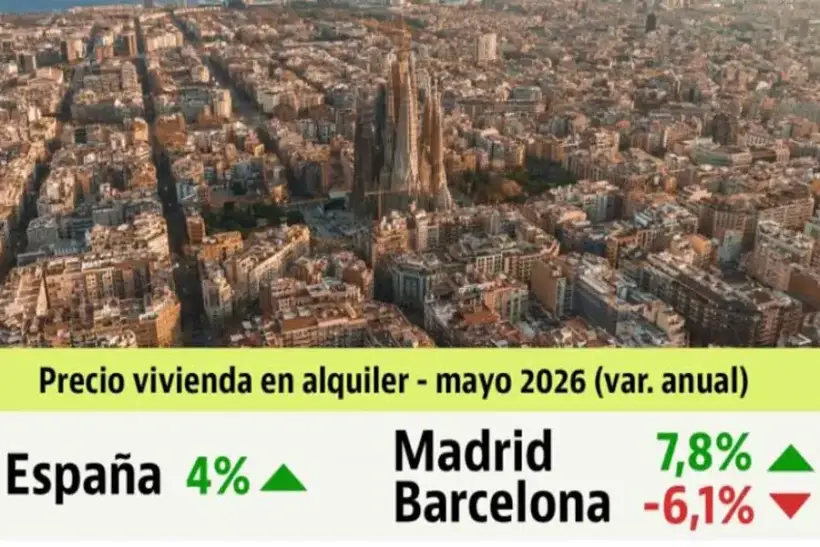
The rental housing market in Spain shows signs of cooling after several years of rapid growth. Annual rent increases have slowed to their lowest pace in four years. In Barcelona and several other locations, rental prices have declined, according to Idealista.
Record Rental Prices in Spain Amid Slower Growth
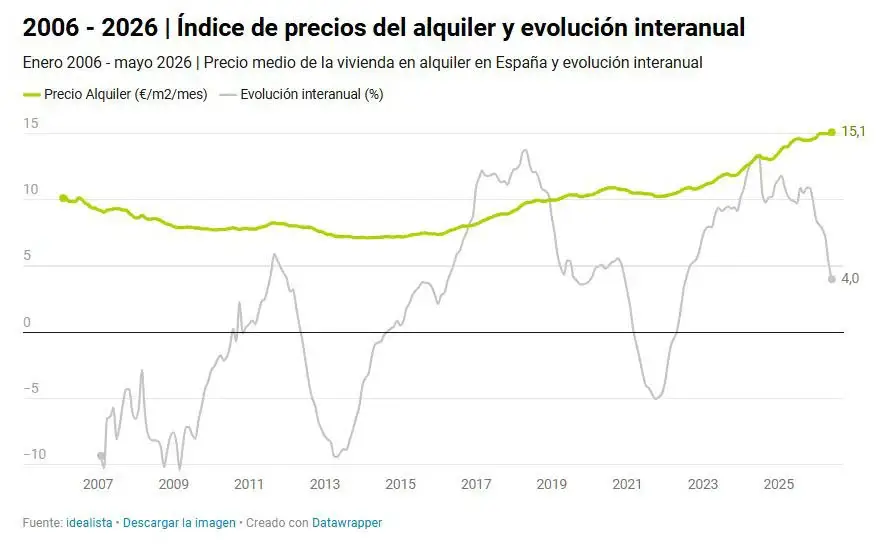
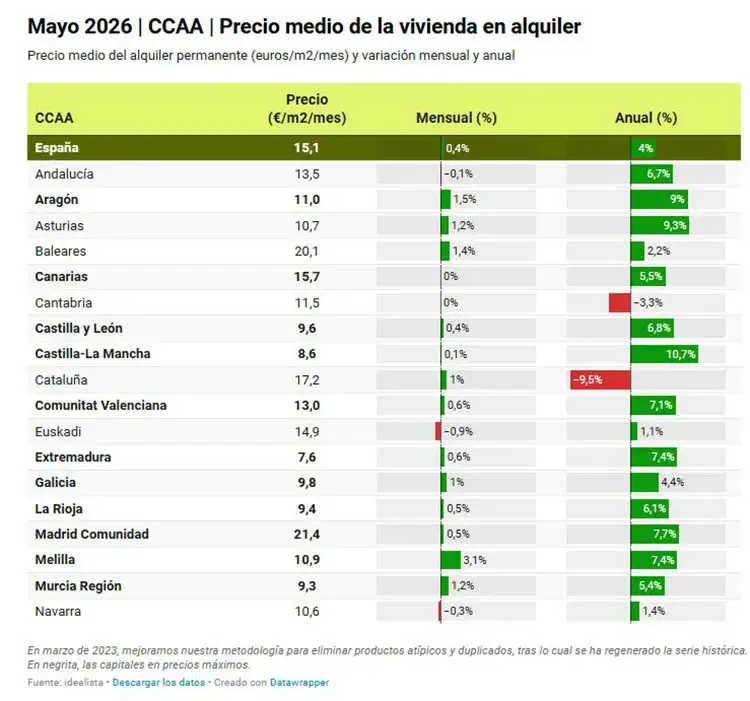
In May, the average rental price in Spain reached €15.1 per sq. m. Over the past month, prices rose by 0.4%, and over three months by 0.3%. Rents continue to hit record highs, but annual growth slowed to 4%, the lowest level since mid-2022.
The study is based on listed rental prices published on the Idealista platform. The company uses the median value of all active listings after removing duplicates, outliers, and non-market-priced offers.
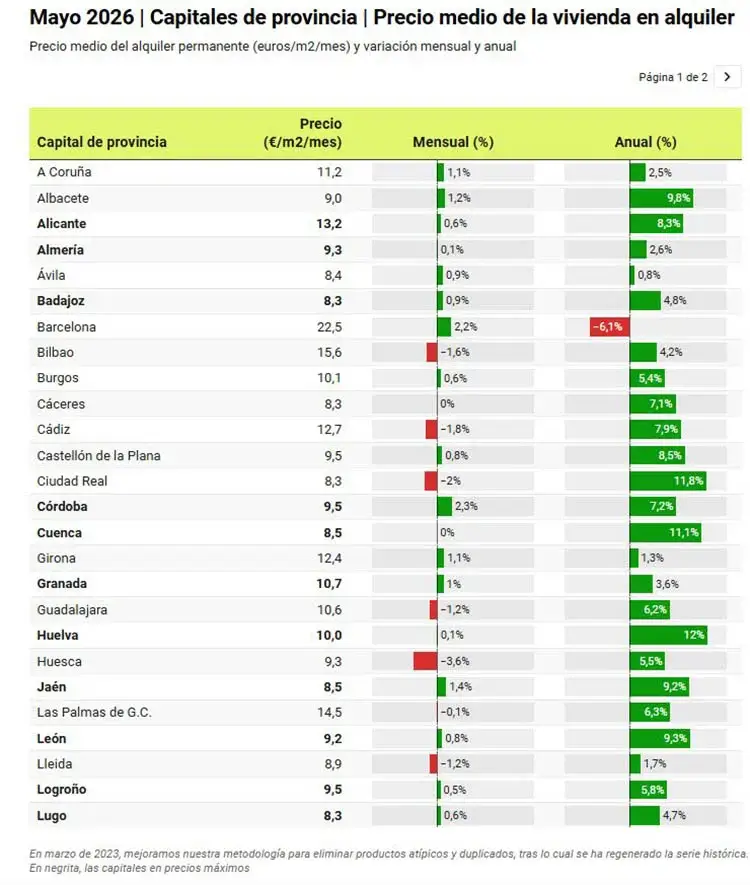
Rental Housing in Provincial Capitals of Spain
Rental Prices Fall in Barcelona
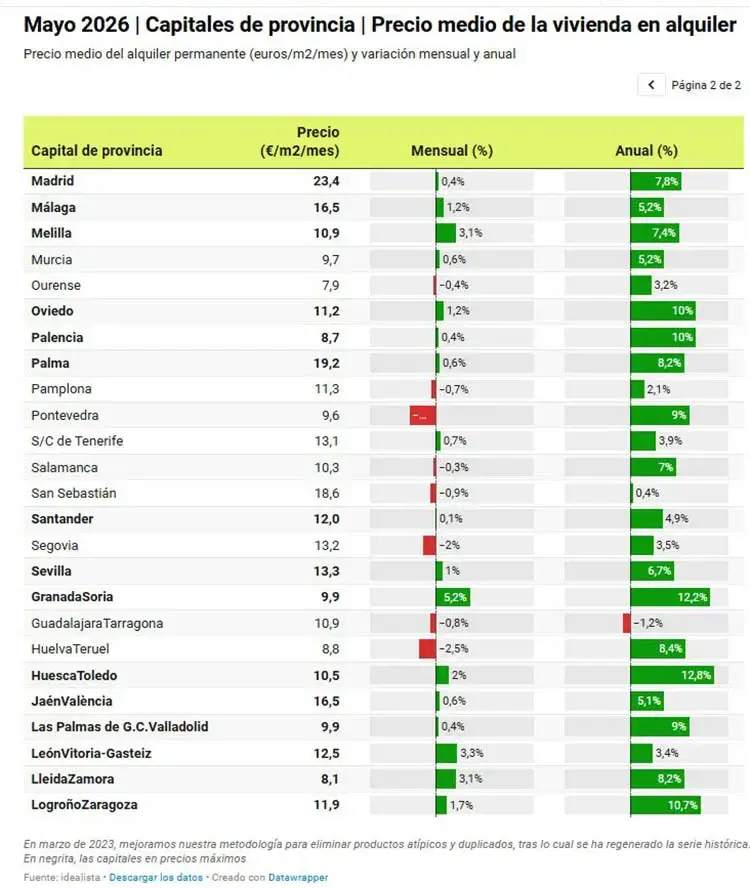
Nearly all provincial capitals in Spain recorded higher prices compared to May of the previous year. The strongest increases were seen in Toledo (+12.8%), Soria (+12.2%), and Huelva (+12%). Significant growth was also recorded in Ciudad Real (+11.8%) and Cuenca (+11.1%). Zaragoza (+10.7%), Palencia, and Oviedo (+10%).
In Alicante, rents increased by 8.3%, while Palma de Mallorca showed a similar rise (+8.2%). In Madrid, rents rose by 7.8%, in Seville by 6.7%. Prices also increased in Málaga (+5.2%), Valencia (+5.1%), and Bilbao (+4.2%).
The smallest increases were recorded in San Sebastián (+0.4%), Ávila (+0.8%), and Girona (+1.3%). At the same time, rents declined in Barcelona by 6.1% and in Tarragona by 1.2%.
Most Expensive Rental Market: Madrid
Madrid remains the most expensive city in Spain for tenants. The average rent reached €23.4 per sq. m per month. Barcelona ranks second at €22.5. It is followed by Palma de Mallorca (€19.2), San Sebastián (€18.6), Málaga and Valencia (both €16.5), and Bilbao (€15.6). The lowest rental prices among provincial capitals are in Ourense (€7.9) and Zamora (€8.1).
Rental Housing in Spanish Provinces
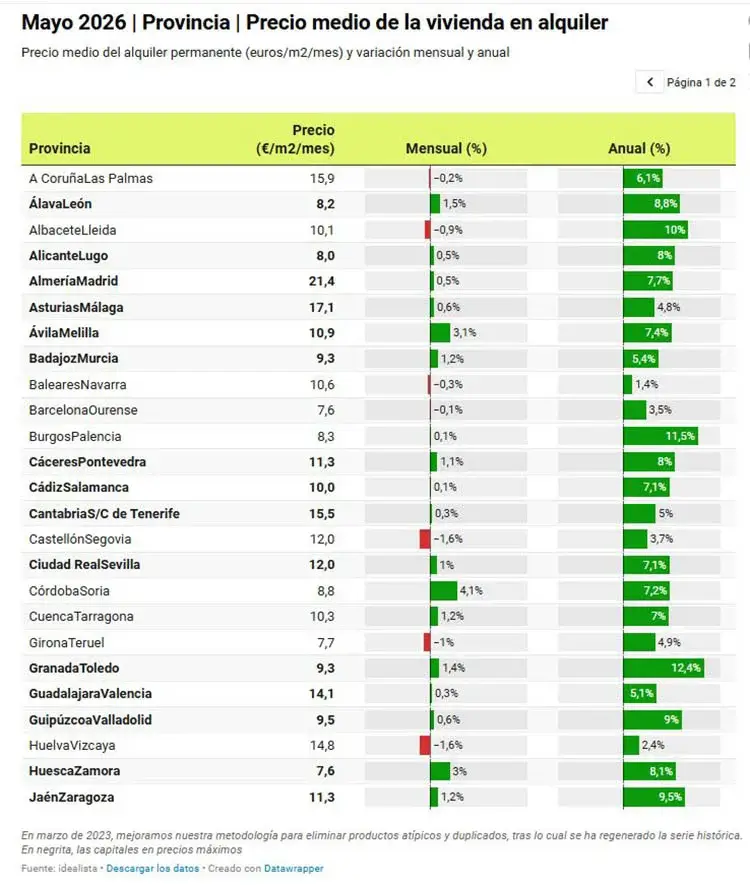
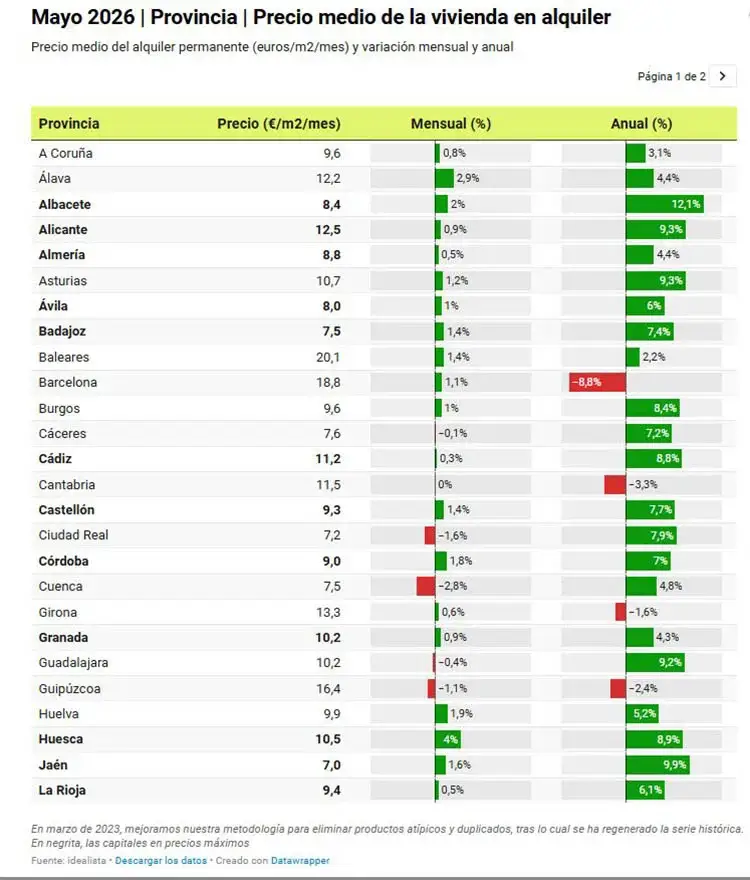
Over the past year, rents increased in 46 of 50 Spanish provinces. Toledo led the growth with a rise of 12.4% to €9.3 per sq. m. It was followed by Albacete (+12.1%) at €8.4, Palencia (+11.5%) at €8.3, Lleida (+10%) at €10.1, and Jaén (+9.9%) at €7.
Strong increases were also seen in León (+9.3%) at €8.2, Alicante (+9.3%) at €12.5, and Guadalajara (+9.2%) at €10.2.
In Madrid, rents rose by 7.7% to €21.4 per sq. m, the highest level among provinces. Ciudad Real remains the most affordable province, with rents at €7.2 per sq. m after a 7.9% increase. In Seville, prices rose by 7.1% to €12.0, in Valencia by 5.1% to €14.1, in Málaga by 4.8% to €17.1, and in Bilbao by 4.2% to €14.8.
On the Balearic Islands, rents increased more modestly by 2.2%, although the level remains close to Madrid at €20.1. At the same time, prices fell in Barcelona (–8.8% to €18.8), Cantabria (–3.3% to €11.5), Gipuzkoa (–2.4% to €16.4), and Girona (–1.6% to €13.3).
Rental Housing in Autonomous Communities
Nearly all autonomous communities in Spain recorded rental growth. The only exceptions were Catalonia (–9.5%) and Cantabria (–3.3%).
The strongest growth was in Castilla-La Mancha (+10.7% to €8.6 per sq. m), followed by Asturias (+9.3% to €10.7), Aragon (+9% to €11.0), the Madrid region (+7.7% to €21.4), Extremadura (+7.4% to €7.6), and the Valencian Community (+7.1% to €13.0).
More moderate increases were seen in Castile and León (+6.8% to €9.6), Andalusia (+6.7% to €13.5), La Rioja (+6.1% to €9.4), the Canary Islands (+5.5% to €15.7), Murcia (+5.4% to €9.3), and Galicia (+4.4% to €9.8). Below the national average were the Balearic Islands (+2.2% to €20.1), Navarre (+1.4% to €10.6), and the Basque Country (+1.1% to €14.9).
In terms of prices, Madrid remains the most expensive region at €21.4 per sq. m, followed by the Balearic Islands (€20.1) and Catalonia (€17.2). Then come the Canary Islands (€15.7) and the Basque Country (€14.9). The lowest values are in Extremadura (€7.6) and Castile-La Mancha (€8.6).
What This Means for Investors
Analysts at International Investment note that slower rental growth in Spain signals a shift toward a more stable market phase. Rental yields remain supported in most regions due to overall price increases and steady demand.
At the same time, differences between markets are widening. Major and high-priced areas, including Madrid and the Balearic Islands, have high entry costs with relatively stable rental yields. Mid-priced provinces show a more balanced relationship between purchase prices and rents, while some regions with negative dynamics indicate signs of demand slowdown.
Regulatory measures are also affecting the market. Several locations have introduced restrictions on short-term rentals and rent caps. In Barcelona, a full ban on short-term rentals is planned over the coming years. At the same time, stricter requirements for property owners are increasing operating costs and making property management more complex.
Another key risk factor is the issue of “okupas,” where eviction procedures can take months or even years, increasing legal and financial risks for property owners.