







 Vietnam Mortgage Surge Pushes Homes Out of Reach
 Lithuanian Apartment Prices Accelerate Across Major Cities
 London Flats Lose Value Ahead of Leasehold Reform
 Construction of the Batumi–Sarpi Highway Begins in Georgia
 Baltic Property Investment Accelerates in 2026
 Hong Kong and Singapore Renew Their Expat Rivalry
North Egypt’s North Coast increases its contribution to the country’s economy
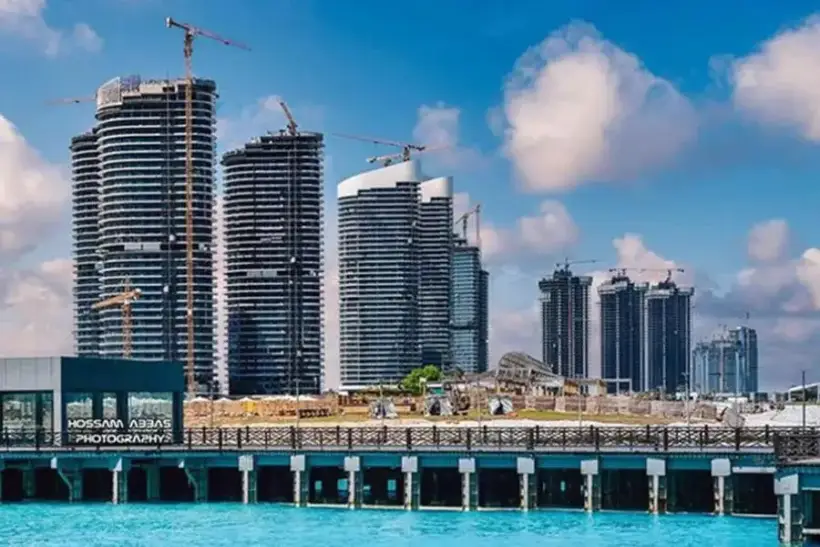
Activity on Egypt’s North Coast has been rising. Over the past two years, the region accounted for 36% of all real estate transactions in the country, totaling EGP 1.2 trillion ($24 billion). Hotel occupancy rates and investment volumes in new projects are also increasing, according to Ahram Online. Analysts expect further growth in key indicators.
Egypt’s real estate market: new trends
Price dynamics
Egypt’s North Coast remains one of the most active segments of residential and resort real estate. Mohamed Rashad, a member of the executive board of the Egyptian Sustainable Cities Council, noted that property in the area is increasingly used as a store of value and competes with traditional currencies, including the US dollar and gold.
Over the past year, prices in many premium developments increased by 25–50%, while some first-line coastal properties rose by more than 60%. Activity in the resale market has also increased. The premium over developer prices for units nearing completion typically ranges from 15–35%, and reaches 40–70% for the most in-demand projects.
New projects and investment
Chairman and Managing Director of Al Ahly Sabbour Developments, Ahmed Sabbour, said the company has been active in the region since 2008, starting with the Amwaj project in Sidi Abdel Rahman. He noted that the area’s development has changed demand patterns and expanded the functional scope of projects.
The company has allocated EGP 13 billion to construction on the North Coast. More than 4,500 units are currently under development. In 2026, around 1,000 units are expected to be delivered, including approximately 600 units in the YOUD project in Ras El-Hekma. Sabbour also noted that developers are increasingly required to account for rising construction costs when pricing units.
Construction in Egypt: scale
Egypt’s construction sector combines several functions. It supports new housing supply, the relocation of administrative centers, job creation, and growth in related industries ranging from cement and steel production to logistics and transport.
According to Mordor Intelligence, Egypt’s construction market is projected to reach $54.87 billion in 2026 and grow to $80.54 billion by 2031. The International Monetary Fund noted in April 2026 that the country has built stronger financial buffers to absorb external shocks compared to previous years.
At the same time, construction expansion continues in a context where Egypt’s economic stability remains dependent on structural reforms, currency stability, and external financing.
Hotels and tourism in Egypt
In summer 2025, visitor numbers to the North Coast reached 19 million, while market participants expect higher figures in 2026. Analysts anticipate that hotel occupancy on the North Coast will remain high in the 2026 summer season, potentially exceeding 95% from late June to early October.
Growth is driven by rising domestic tourism and an increasing flow of visitors from Arab countries. Higher occupancy rates are also recorded in other resort destinations, including Egypt’s Red Sea coast — Hurghada, Marsa Alam, El Gouna, Sahl Hasheesh, Makadi Bay, Soma Bay, Safaga, and El Quseir.
According to industry representatives, hotel occupancy increased by 10–15% year-on-year in June. The main contributors to international tourist inflows are visitors from Russia and Germany.
Spending by tourists on the North Coast is also higher compared to other domestic destinations, supported by a broader range of services and new accommodation and infrastructure projects.
Conclusion
Analysts at International Investment note that the development of the North Coast is linked to projects in New Alamein and Ras El-Hekma, capital inflows from Gulf countries, and state investment in roads, airports, and infrastructure. Additional pressure comes from limited supply, inflation, and the weakening purchasing power of the national currency.
At the same time, speculative activity in the real estate market is increasing, significantly affecting demand statistics and often distorting the actual market picture. Further segmentation of the market is possible, with a shift toward more moderate dynamics if pressure from commodities and currency markets eases.
Investors should take into account structural constraints in the Egyptian economy, including dependence on external financing, currency fluctuations, and inflationary pressure. These factors directly affect construction costs, access to imported materials, and financing conditions for development projects.