







 Covivio Hotels Revenue Grows 4.7% as European Markets Split
 Lithuanian Apartment Prices Accelerate Across Major Cities
 Georgia's Tourism Revenue Hits Record High
 Norway's Sovereign Fund Commits €1.5bn to European Warehouses
 Market Rout of October 2026: Can Branded Hotels Protect Capital?
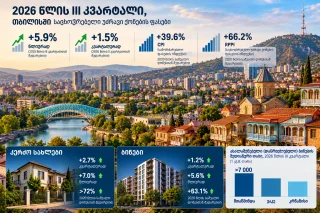 Residential Property Prices in Tbilisi Rise by 5.9% Year-on-Year
Thailand’s LTR Visas Generated $1.28 Billion
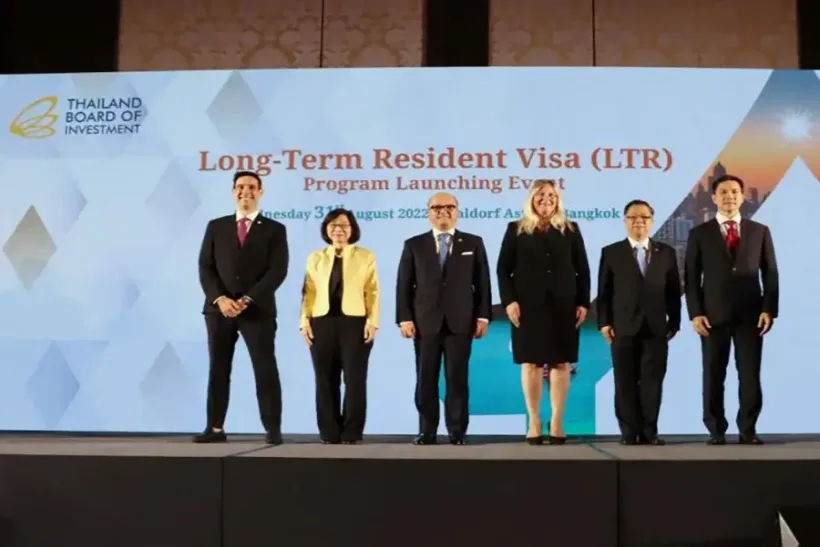
Thailand has valued the first four years of its Long-Term Resident Visa programme at THB43 billion, or about $1.28 billion. Authorities approved 12,010 applicants over the period. The estimate includes visa fees, domestic spending, direct investment and tax revenue from highly skilled professionals. Wealthy pensioners form the largest group, while the programme increasingly links migration policy with housing, healthcare, services and investment.
Thailand measures the value of long-term residents
On Oct 5, 2026, an official Thailand Board of Investment release reported 12,010 LTR approvals since the programme was launched in September 2022. BOI estimated the total economic value at about THB43 billion, or $1.28 billion, equivalent to more than THB3.6 million, or $107,000, per approved applicant.
The estimate is broader than visa-fee revenue. It covers spending by LTR holders in Thailand, direct investment and tax receipts from highly skilled professionals. BOI specifically points to expenditure on housing, tourism, healthcare, food, transport and other services.
The published figures contain a one-person discrepancy. BOI’s headline total is 12,010, while the five category figures in the same release add up to 12,011. The Nation reports 12,011. International Investment therefore uses BOI’s stated headline total of 12,010.
Wealthy pensioners are the largest group
Wealthy Pensioners account for 4,561 approvals. Dependants account for 3,891, Highly-Skilled Professionals for 1,779, Work-from-Thailand Professionals for 1,043 and Wealthy Global Citizens for 737.
The United States is the largest source market with more than 2,400 approvals, followed by Japan with more than 1,300 and the United Kingdom with more than 1,000. Among Highly-Skilled and Work-from-Thailand professionals, 54% hold executive positions and another 36% are in professional roles.
Wealthy pensioners represent almost 38% of the headline total. Their spending profile differs from short-stay tourism because long residence creates recurring demand for rented or owned housing, private healthcare, insurance, banking and everyday services.
Property is built into LTR eligibility
Current LTR criteria allow Thai property to count towards the investment requirement for two wealthy categories.
Wealthy Global Citizens must hold at least $1 million in total assets and invest at least $500,000 in Thailand. Eligible investments include qualifying Thai government bonds, direct investment in companies and Thai property held in the applicant’s own name.
Wealthy Pensioners must be at least 50 years old and generally show at least $80,000 in annual passive income. Applicants with passive income between $40,000 and $80,000 can qualify with at least $250,000 in eligible Thai investments, including property. The qualifying investment must already have been made before the application and must be maintained as required by the programme.
Thailand relaxed several LTR conditions in 2025. It removed the minimum annual-income requirement for Wealthy Global Citizens while retaining the asset and investment tests, lowered the employer-revenue threshold for remote professionals, removed minimum work-experience requirements and expanded dependent eligibility to parents and legal dependants.
LTR does not change land-ownership rules
The long-term visa does not grant additional property rights. Foreign nationals may directly own units in registered condominiums as long as aggregate foreign ownership does not exceed 49% of the total unit area in the building.
Direct land ownership remains a narrow exception rather than the normal route. Thailand’s government information service describes a special mechanism under which a foreigner may seek permission to acquire up to one rai, or 1,600 square metres, for residential purposes after investing at least THB40 million, maintaining the investment for at least five years and obtaining approval from the Interior Minister.
Legal exposure is greater for villas with land in resort markets. International Investment has previously examined foreign condominium demand and tighter scrutiny of villa transactions, including checks on companies using nominee Thai shareholders and on the source and effective control of capital.
Foreign condo demand remains important but is not rising automatically
The LTR programme’s link with housing does not mean it has driven a broad property-market expansion. More recent transfer data show weaker foreign activity.
In the first quarter of 2026, foreign buyers completed transfers of 3,241 condominium units, down 17.3% year on year. Their combined value fell 17.9% to THB13.464 billion. Foreigners still accounted for 13.6% of condominium transfers by unit count and 23.9% by value.
This sets an important limit on the LTR story. The programme can support affluent demand in specific locations, particularly Bangkok and resort markets, but around 12,000 approvals over four years are too few to determine the direction of Thailand’s national housing market.
Bangkok skyline with condominiums, hotels and office towers. Photo: srihariyv, Wikimedia Commons, CC BY-SA 4.0.

The visa covers ten years in two stages
LTR is issued as a ten-year visa, but permission to stay is effectively divided into two stages. After issuance, holders receive permission to stay for up to five years with multiple entry. Eligibility is checked again before the second five-year period.
The issuance fee in Thailand is THB50,000 per person for the ten-year visa. Fees charged through an embassy, consulate or e-Visa channel may differ because of exchange rates and local charges.
LTR holders report to immigration once a year instead of every 90 days. Eligible holders working for Thai entities can obtain a digital work permit. Highly-Skilled Professionals can qualify for a 17% personal-income-tax rate on employment income when the required conditions are met. Work-from-Thailand Professionals are defined as remote workers for overseas employers and do not receive a digital work permit for employment with a Thai company.
Remote-worker criteria remain selective
Work-from-Thailand Professionals normally need average personal income of at least $80,000 a year over the previous two years. A $40,000 threshold can apply to applicants with additional qualifications, such as a master’s degree, intellectual-property ownership or qualifying Series A funding.
The employer must be a listed company or a private company operating for at least three years with combined revenue of at least $50 million over the previous three years. Certain wholly owned subsidiaries can also qualify under the current rules.
LTR therefore remains a selective programme built around high income, capital, professional qualifications and established employers rather than a mass-market remote-work visa.
Thailand is measuring economic contribution, not just visa volume
The THB43 billion figure is an estimate of economic value, not a measure of foreign direct investment alone. BOI combines several channels, including domestic expenditure, visa fees, direct investment and some tax revenue, so the total should not be compared directly with property investment volumes without qualification.
The methodology is still significant. It measures affluent long-term residents through multi-year consumption inside Thailand rather than simply by arrivals. Housing is one recurring expense alongside healthcare, transport and other services.
As International Investment experts report, the LTR results demonstrate the economic value of affluent long-term residents but also the programme’s limited scale. An estimated $1.28 billion over four years is substantial for about 12,000 approvals, yet it does not imply an automatic rise in property prices or offset weakness across every housing segment. For real estate, the effect is concentrated in liquid condominium projects and quality long-term rentals in internationally oriented locations. Investors still need to examine the foreign quota, ownership structure, land status, entry price and realistic rental demand project by project.
FAQ: LTR Visa Thailand 2026
Who is eligible for Thailand’s LTR Visa?
The programme has four principal categories: Wealthy Global Citizens, Wealthy Pensioners, Work-from-Thailand Professionals and Highly-Skilled Professionals. A separate dependent category is available for eligible family members.
How long is Thailand’s LTR Visa valid?
The visa is designed for ten years. The first permission to stay is granted for up to five years, with eligibility checked again before the second five-year period.
What are the requirements for Wealthy Pensioners?
Applicants must be at least 50 years old. The standard route requires at least $80,000 in annual passive income. Those with between $40,000 and $80,000 can qualify with at least $250,000 in eligible Thai investments.
What are the requirements for Wealthy Global Citizens?
Applicants must hold at least $1 million in assets and invest at least $500,000 in Thailand. Eligible investments include qualifying government bonds, direct investment in companies and permitted property.
What are the requirements for Work-from-Thailand Professionals?
The standard personal-income threshold is $80,000 a year averaged over the previous two years. A $40,000 threshold can apply with additional qualifications. The overseas employer must also meet BOI requirements for operating history and revenue.
Does an LTR Visa allow foreigners to buy property in Thailand?
The visa does not create special land-ownership rights. Foreign nationals can own condominium units within the statutory foreign quota, which is capped at 49% of the total unit area in a registered condominium. Land ownership remains much more restricted.
Can property count towards LTR investment requirements?
Yes. Eligible Thai property can count towards the required investment for Wealthy Global Citizens and for Wealthy Pensioners using the investment route, provided the property is lawfully held in the applicant’s own name.
Is the LTR Visa the same as permanent residence?
No. LTR is a long-term immigration visa with a ten-year framework and a renewed eligibility check after the first five-year stay period. It is not indefinite permanent-residence status.