







 Covivio Hotels Revenue Grows 4.7% as European Markets Split
 Lithuanian Apartment Prices Accelerate Across Major Cities
 Georgia's Tourism Revenue Hits Record High
 Norway's Sovereign Fund Commits €1.5bn to European Warehouses
 Market Rout of October 2026: Can Branded Hotels Protect Capital?
 Residential Property Prices in Tbilisi Rise by 5.9% Year-on-Year
Gulf Hotel Deals Stall as Valuations Reset
Unsplash
Hotel real estate remains a priority for global capital, but the Gulf shows why investment appetite does not automatically produce transactions. Owners are largely avoiding deep discounts while buyers recalculate occupancy, room rates, cash flow and geopolitical risk. The result is a valuation gap rather than a distressed-sales cycle: sellers remain anchored to earlier pricing, while buyers require higher returns for the risk they now see.
Capital is back in hotels, but not in every deal
A previous analysis of the broader return of capital to hospitality real estate showed that hotel investment had recovered from the 2023 low, with most surveyed European investors planning to maintain or increase hotel allocations in 2026.
The Gulf presents a more complicated picture. Skift reported that disclosed regional hotel investment reached at least $883 million in 2025 but stands at only about $300 million so far in 2026. Virtually all of this year’s disclosed volume comes from one transaction — AHS Properties’ AED1.1 billion acquisition of Shangri-La Dubai. The terms had been agreed before the sharp deterioration in regional conditions and the deal closed unchanged.
Only five disclosed hotel transactions worth about $1.45 billion were recorded between November 2024 and September 2026, with roughly 80% of the value concentrated in Dubai. With so few transactions, a single acquisition can materially distort annual volume and cannot serve as a broad pricing benchmark for the region.
The problem is pricing, not a sell-off
Hotel owners have not entered a cycle in which they must dispose of assets quickly to service debt. Properties marketed before the regional conflict are remaining unsold primarily because buyers and sellers disagree on value.
Buyers are rebuilding forecasts that previously assumed stronger occupancy and tourism flows. Sellers are gradually factoring in a longer recovery period but are generally unwilling to accept a large discount when their balance sheets allow them to wait.
An HVS survey of owners, developers and hotel investors representing about 160,000 branded rooms across the Gulf Cooperation Council supports that view. A combined 83% of respondents described their investment outlook as positive or neutral, with 17% negative. The conflict made 43% more cautious, yet holding existing assets remained the most common strategy. Sell intentions were extremely limited, while 41% still intended to build or acquire hospitality assets.
Hotel cash flow is driving the reset
The building itself is only part of a hotel’s value. Investors are buying future cash flow generated by occupancy, average daily rate, operating expenses, margins, brand positioning and management quality.
In the same survey, 76% of respondents reported a moderate or significant negative impact on revenue per available room, or RevPAR, which combines occupancy and room-rate performance. Nearly half reported RevPAR declines of more than 20%.
Asset-value estimates moved less dramatically. Most respondents either reported declines of less than 10% or said transaction visibility remained too weak to establish a reliable correction. That gap between operating performance and owners’ pricing expectations is one reason liquidity has slowed.
If a hotel produces less profit, buyers need either a lower acquisition price or convincing evidence that earnings will recover quickly. Many assets cannot yet provide either.
Dubai is recovering guests faster than valuations
Dubai’s operating data have improved materially from the spring lows. Figures from the Dubai Department of Economy and Tourism reported by Emirati Times show hotel occupancy at 66% in August 2026, up from 36% in March and equivalent to about 89% of the August 2025 level. Dubai welcomed 6.97 million international visitors in the first eight months of the year, while room inventory approached 149,000.
Higher occupancy does not automatically restore hotel values. Investors also need to know the rate at which rooms are being sold, operating costs and the resulting profit. After a severe demand shock, hotels can refill rooms faster than they rebuild pricing power.
For luxury and resort assets in particular, several quarters of stable earnings matter more for valuation than a single improvement in occupancy.
Shangri-La Dubai is not a conventional hotel benchmark
The AED1.1 billion Shangri-La Dubai purchase looks like evidence of strong demand for prime hospitality assets, but the transaction requires context.
Gulf News reports that the 42-storey Sheikh Zayed Road property includes apartments and offices alongside the hotel. AHS Properties is evaluating several renovation and repositioning options. The asset had previously sold for AED700.2 million in 2020, making the latest transaction roughly 57% higher.
The acquisition therefore reflects the scarcity of a large Sheikh Zayed Road site, its mixed-use components and redevelopment potential. It should not be treated as a direct valuation benchmark for a standalone operating hotel elsewhere in Dubai or the Gulf.
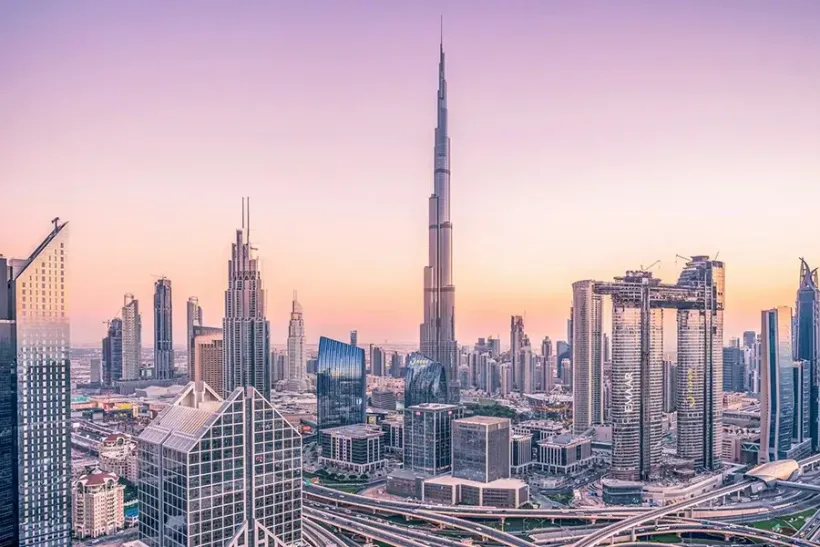
Dubai remains the Gulf’s largest centre for disclosed hotel transactions, but investors are applying stricter tests to income and demand resilience. Photo: Condé Nast Traveller Middle East.
Buyers are concentrating on visible income
Demand for Gulf hotel assets has not disappeared. It is concentrating in markets and properties where the source of future occupancy is easier to underwrite.
Riyadh, Makkah, Madinah, Dubai, Abu Dhabi and Ras Al Khaimah remain among the markets drawing acquisition interest. More exposed assets are those heavily reliant on long-haul international arrivals, airline connectivity, corporate travel, meetings, incentives, conferences and exhibitions.
Saudi religious destinations benefit from pilgrimage and domestic demand. Dubai and resort emirates depend more heavily on international aviation and traveller confidence. The same regional risk therefore affects cash flow differently from one market to another.
Hotel development is still setting records
Slower transactions in operating assets have not stopped development.
Lodging Econometrics data published by TravelDailyNews show that the wider Middle East hotel construction pipeline — a broader geography than the Gulf alone — reached a record 724 projects and 178,003 rooms in the second quarter of 2026. Project count rose 11% year on year and room count 10%.
Saudi Arabia leads with 387 projects and 105,648 rooms. The UAE has 103 projects and 24,985 rooms. Dubai alone has 60 projects and 13,828 rooms in the pipeline.
That contrast explains why weak transaction liquidity should not be read automatically as a hotel-sector downturn. Developers and governments invest against tourism demand several years ahead, while buyers of operating hotels price the next few quarters of earnings. These are different investment decisions.
Repricing does not require a price collapse
Liquidity can return without a wave of distressed sales.
One path is that hotel earnings and room rates continue to recover, making earlier valuations economically credible again. Another is that owners gradually reduce price expectations until buyers’ required returns and sellers’ valuations converge. Some assets may also change hands through joint ventures, partial stakes or acquisitions tied to renovation commitments.
The market currently looks more like a waiting period than a forced-sale cycle. Highly leveraged assets may face greater pressure, but the available industry evidence does not point to a systemic wave of distressed hotels.
As International Investment experts report, the main risk for Gulf hotel investment today is not the disappearance of long-term tourism demand but paying the wrong entry price. A strong brand and a Dubai address cannot compensate for weak earnings, excessive leverage or dependence on one international demand source. If rates and margins recover, part of the current valuation gap can close without a material fall in asset prices. If recovery takes longer, sellers will have to accept lower values. Investors therefore need to focus on guest mix, cash flow and financing at the individual-property level rather than relying on headline tourism growth or a record construction pipeline.
FAQ: Gulf hotel investment in 2026
Why have Gulf hotel deals slowed?
Buyers and sellers are using different assumptions after weaker hotel earnings and higher geopolitical uncertainty. Most owners are not under immediate pressure to sell, so they can wait for better visibility.
Is the UAE seeing a distressed hotel sell-off?
There is no evidence of a broad distressed-sales cycle. Industry surveys show holding assets remains the dominant strategy and sell intentions are limited.
How much disclosed Gulf hotel investment has been recorded in 2026?
Disclosed volume stands at about $300 million so far, almost entirely represented by the AED1.1 billion Shangri-La Dubai transaction. This is disclosed transaction volume, not a complete measure of every private deal.
Why are hotel assets being repriced?
The value of an operating hotel depends on expected cash flow. Weaker occupancy, room rates or margins reduce the income an investor can underwrite, while higher risk raises the return a buyer requires.
Is Dubai’s hotel market recovering?
Operating performance is improving. August 2026 occupancy reached 66% after 36% in March. That does not mean room rates, profitability and asset values have fully returned to previous levels.
Which Gulf hotel markets still attract investors?
Acquisition interest remains visible in Dubai, Abu Dhabi, Ras Al Khaimah, Riyadh, Makkah and Madinah, particularly for assets with diversified and resilient demand.
Has hotel construction stopped?
No. The wider Middle East pipeline reached a record 724 projects and 178,003 rooms in the second quarter of 2026. Development activity is a long-term indicator and can remain strong even when transaction liquidity is weak.
What does hotel repricing mean?
It is a recalculation of asset value using updated revenue, profit, financing and risk assumptions. Repricing does not automatically mean insolvency or a distressed sale.