







 Lithuanian Apartment Prices Accelerate Across Major Cities
 Georgia's Tourism Revenue Hits Record High
 Norway's Sovereign Fund Commits €1.5bn to European Warehouses
 Market Rout of October 2026: Can Branded Hotels Protect Capital?
 Residential Property Prices in Tbilisi Rise by 5.9% Year-on-Year
 Ras Al Khaimah Hotels Reposition Ahead of Wynn Opening
Europe Logistics 2026: Capital Targets Prime Warehouses
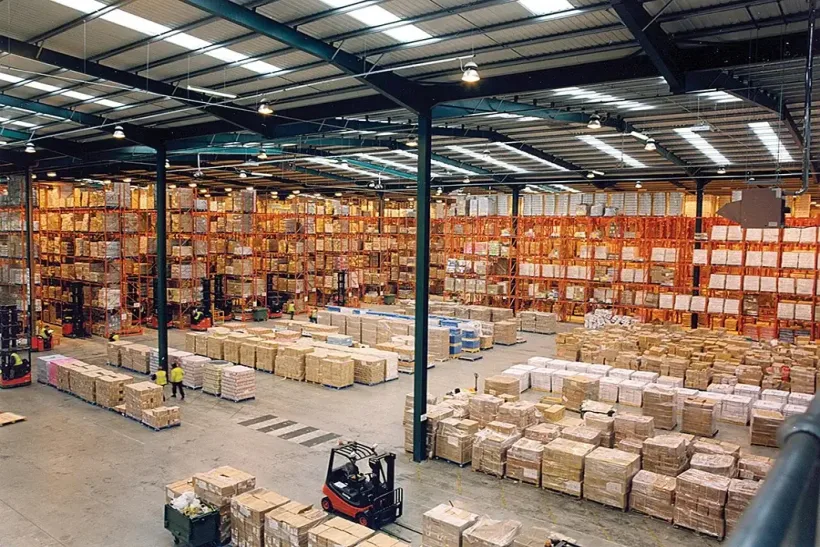
Axisadman, Wikimedia Commons, CC BY-SA 3.0
Europe’s logistics property market has proved more resilient than many expected in 2026. Leasing reached 14.01 million sq m in the first half, up 20.5% year on year. But that growth does not signal a return to a market in which almost any modern warehouse benefited from broad scarcity.
Savills’ autumn European Real Estate Logistics Census points to a more selective cycle. Among 628 respondents, 38% of occupiers said business conditions were better than a year ago, 41% expected improvement over the next 12 months and only 8% expected deterioration. At the same time, 47% expect to increase their warehouse footprint over the next one to three years while 54% plan to vacate at least one building. Companies are expanding and shrinking at the same time as they close weaker sites and move operations into more productive facilities.
Prime now means more than location
Transport access still matters, but it is no longer sufficient. Labour availability, power capacity, clear height, yard depth, adaptability and automation readiness increasingly determine whether a warehouse is operationally relevant.
More than three quarters of Savills respondents require clear heights of at least 12 metres. Some 42% target 12–15 metres and another 33% require 15–20 metres. Taller buildings support denser racking and automated systems, allowing occupiers to increase throughput without expanding the site at the same rate.
Two warehouses beside the same motorway can therefore have very different investment value. One may support a next-generation distribution operation while the other requires expensive upgrades. Prime is increasingly a description of operational capability rather than location alone.
Power capacity is becoming part of asset value
Nearly 89% of occupiers expect power requirements to rise over the next three years, while 26% already report insufficient capacity in their existing portfolios. More than half plan to increase investment in AI and 42% intend to invest more in warehouse automation.
This links technology directly to property. Robotics, automated storage, charging infrastructure, sorting systems and digital control all require reliable power and suitable layouts.
Developers face the same constraint. Some 77% identify power availability as a barrier to new projects, 73% cite planning and permitting timescales and 62% point to construction costs. Sites with secured capacity can therefore gain an advantage before construction begins.
A warehouse with inadequate power cannot always compensate with lower rent. If connection upgrades are expensive or unavailable, the potential occupier pool narrows and obsolescence risk rises.
Automation is changing the economics of space
Occupiers increasingly assess warehouse productivity rather than floor area alone. Higher racking, automated storage and denser configurations can process more goods without a proportional increase in site size.
That makes the building part of an occupier’s operating system. Moving into a weaker warehouse can increase operating costs by more than the rent saving.
The result is a widening gap between modern and secondary stock. An older building may remain physically sound but lose relevance because of power, height, yard configuration or limited automation potential.
Secondary assets weaken before prices fall
Savills’ Q2 data show the split clearly. Weighted logistics availability across EMEA fell to 6.7%, but conditions vary sharply: Dublin stood at 2.8%, Madrid at 9% and Budapest at 14.8%.
Higher availability does not necessarily mean occupiers have a large choice of suitable modern warehouses. Much of the vacant stock is older and less aligned with current requirements for power, automation and operational efficiency.
Savills’ rental index rose just 0.6% year on year and fell 0.3% quarter on quarter. Prime assets retain stronger pricing power, while weaker buildings face longer void periods, larger incentives and higher upgrade costs.
For investors, the discount on secondary stock may therefore appear first through lost income and capex rather than an immediate drop in transaction value.
Capital is concentrating in the best assets
The investment market remains more cautious than leasing. European industrial and logistics investment reached €18.7 billion in H1 2026 and remained about 10% below the long-term average.
Only 34% of surveyed investors expect transaction volumes to rise over the next 12 months, down from 57% a year earlier. The share expecting a decline increased from 7% to 29%.
Conviction in top-quality assets has moved in the opposite direction. Prime logistics is now targeted by 81% of investors, up from 73%. Rental growth is an important acquisition consideration for 78%.
This is a different returns market. Investors are not assuming broad yield compression. Some 57% expect prime logistics yields to settle between 4.5% and 5.0%, while the next largest group expects 5.0–6.0%. Asset-level income quality is becoming more important to returns.
Poland is strengthening its European logistics position
Central Europe shows how broad growth can coexist with strict asset selection. Savills recorded H1 take-up growth of 56.9% in Poland, 13% in the Czech Republic and 23.3% in Germany, while Romania fell 41.5%.
Poland is already large enough to compete well beyond CEE. CBRE put the country’s modern warehouse and logistics stock at 38 million sq m at the end of June, up 5.5% year on year. More than 1.23 million sq m was delivered in H1 and another 1.30 million sq m remained under construction.
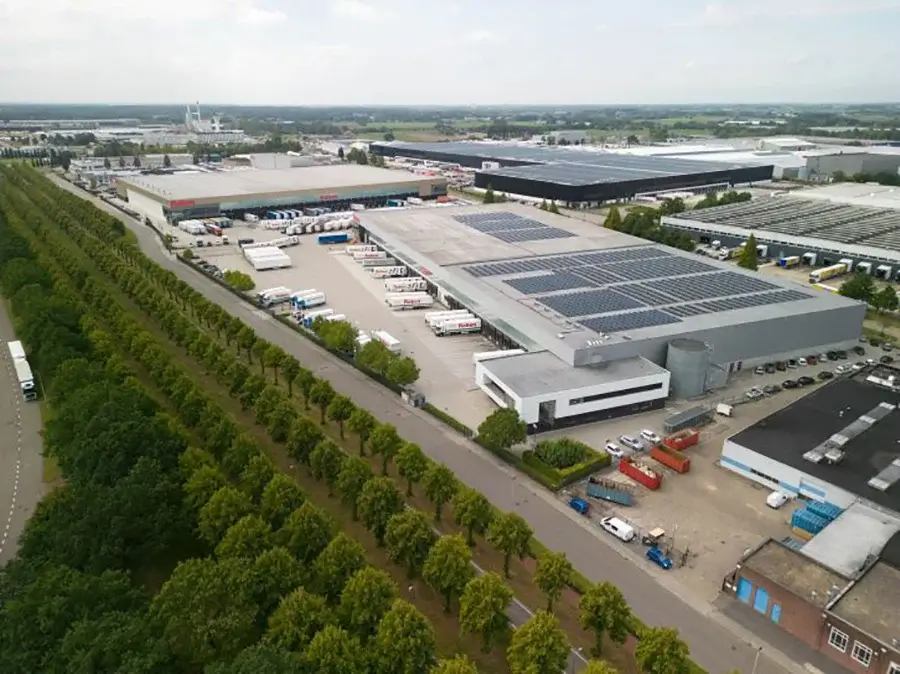
A Raben logistics centre in Poland. Market scale is increasing, but demand is becoming more concentrated in modern stock. Photo: Kasia kawa12, Wikimedia Commons, CC BY-SA 4.0.

Poland combines domestic consumption, e-commerce, manufacturing, automotive activity and a strategic position between Germany and the eastern part of the EU. But scale does not remove asset-level risk. Modern warehouses with sufficient power and adaptable specifications have a stronger chance of securing longer leases and maintaining liquidity.
A similar split is already visible in Central European offices. International Investment’s analysis of investors returning to CEE offices found that capital is concentrating in modern assets with limited competing supply rather than moving back into the whole market uniformly.
The Czech market is growing while supply expands
The Czech market has returned to leasing growth, but new supply matters. Cushman & Wakefield put modern industrial and logistics stock at 13.73 million sq m in Q2, with vacancy at 5.5%, equivalent to roughly 751,000 sq m.
Around 1.15 million sq m remained under construction. Manufacturing companies accounted for 42% of quarterly leasing activity, making power and technical specification especially important.
Prime headline rents remained stable at around €7.50 per sq m per month in Prague and €6.50 in Brno. Higher availability in some regional markets creates more competition for secondary buildings.
Poland and the Czech Republic therefore support the CEE logistics investment case, but not a buy-anything thesis. The difference between a modern powered building and ageing stock without a viable upgrade route is becoming more important than the regional label.
Occupiers will keep reshaping portfolios
One of the strongest signals from the autumn Census is the combination of expansion and exits. Some 47% expect to increase their footprint while 54% plan to vacate at least one building.
Another 47% are targeting new buildings and the same share is considering build-to-suit space, compared with just 19% considering second-hand stock.
That explains why strong leasing activity does not translate into an equivalent increase in occupied space. A company can open one large automated distribution centre while closing several older warehouses.
CBRE sees the same pattern: take-up across Europe’s top 10 logistics markets rose 15% in H1, while net absorption remained much more subdued. Occupiers are primarily relocating into better-quality space rather than simply adding more floor area.
European logistics is becoming an asset-by-asset market
Earlier in the cycle, choosing the right sector was often enough. Investors then had to choose the right country and city. In 2026, selection has moved another level down to the individual building.
European logistics still benefits from structural demand. Companies are strengthening supply chains, nearshoring selected production, carrying more inventory inside Europe and investing in automation.
Those trends do not support every warehouse equally. Capital is moving toward buildings with power, clear height, yard space, labour access, transport connectivity and adaptable layouts.
For prime assets, that supports rent and liquidity. For secondary stock, technological obsolescence is becoming a separate investment risk.
FAQ: European logistics property in 2026
Is European warehouse demand falling?
No. H1 leasing reached 14.01 million sq m, up 20.5% year on year. Occupiers are, however, taking longer to make decisions and becoming more selective about buildings.
What makes a logistics asset prime in 2026?
Location alone is no longer enough. Power capacity, clear height, labour access, yard functionality, transport, adaptability and automation readiness increasingly define prime.
Why are secondary warehouses becoming riskier?
Older buildings may not meet requirements for power, height and automation. That can lead to longer vacancies, larger incentives and higher refurbishment costs.
What is happening in Poland logistics?
H1 take-up rose 56.9%. Modern stock reached 38 million sq m and the development pipeline remains active, but asset quality and secured power are becoming more important than market growth alone.
What is happening in Czech logistics?
Modern stock reached 13.73 million sq m in Q2 and vacancy rose to 5.5%. Manufacturing represents a large share of demand, increasing the importance of technical specification and power.