







 Turkey Is Losing Its Cheap-Holiday Advantage
 Development Is Rewriting Southeast Asia’s Historic Districts
 How Ukraine’s New-Build Housing Market Has Changed Over Four Years
 European Prime Rents Rise as Property Yields Turn Higher
 The Most Expensive Airlines in Europe in 2026
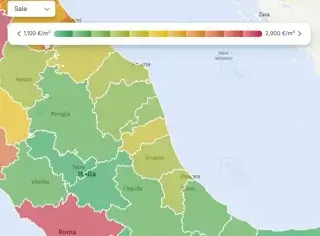 Housing Prices in Italy Reach a Two-Year High
China Home Prices Extend Multi-Year Decline

Price Drops Spread Across City Tiers
China’s housing prices continued to fall in January 2026 amid ongoing weakness in real estate investment and home sales. According to data released by the National Bureau of Statistics, both new and second-hand home prices declined in most large and medium-sized cities.
New home prices fell 2.1% year-on-year in tier-one cities including Beijing, Shanghai, Guangzhou and Shenzhen. In 31 major tier-two cities, prices declined 2.9%, while in 35 tier-three cities the drop reached 3.9%.
Shanghai stood out as the only tier-one city to record growth, with new home prices rising 4.2% compared with January 2025.
Second-Hand Market Shows Sharper Declines
The secondary market experienced even steeper declines. Second-hand home prices fell 7.6% year-on-year in tier-one cities, 6.2% in tier-two cities, and 6.1% in tier-three cities.
This suggests that resale properties are facing stronger price pressure, reflecting increased supply and weaker buyer sentiment.
Property Investment Continues to Contract
The price downturn coincides with a sustained contraction in real estate investment. Official figures show property investment fell 9.6% in 2023, 10.6% in 2024, and 17.2% in 2025.
China’s new home prices have been declining since April 2022. Post-pandemic weakness and mounting debt problems among developers have weighed heavily on the sector, contributing to a growing inventory of unsold housing.
Policy Support Yet to Reverse the Trend
Chinese authorities have attempted to revive the housing market by lowering mortgage interest rates and minimum down payment requirements. Local governments introduced tax cuts, deregulation measures, and subsidized sales initiatives.
However, these policy steps have not yet resulted in a broad-based recovery. The downward trend in prices remains intact, and investment momentum continues to weaken.
The continued decline across nearly all city tiers highlights the structural nature of China’s property downturn. Weak demand, high inventory levels, and shrinking investment point to a prolonged adjustment rather than a temporary correction.
As International Investment experts note, China’s housing market appears to be undergoing a deep structural recalibration. Sustainable stabilization will depend on restoring buyer confidence, absorbing excess supply, and strengthening macroeconomic fundamentals, factors that remain uncertain in the near term.