







 Turkey Is Losing Its Cheap-Holiday Advantage
 Development Is Rewriting Southeast Asia’s Historic Districts
 How Ukraine’s New-Build Housing Market Has Changed Over Four Years
 European Prime Rents Rise as Property Yields Turn Higher
 The Most Expensive Airlines in Europe in 2026
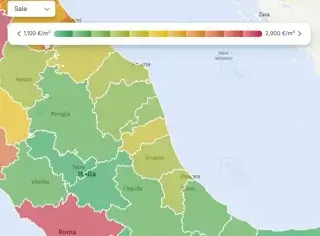 Housing Prices in Italy Reach a Two-Year High
Cyprus Sees Surge in Sub-€350k Home Auctions

Auctions rise after the moratorium ended
Cyprus is recording a clear increase in auction sales of primary residences valued up to €350,000, a segment that largely reflects owner-occupied family housing rather than investment stock. Central Bank figures submitted to Cyprus’ parliament on a quarterly basis indicate growing pressure on borrowers with non-performing mortgage loans following the lifting of the protective moratorium in early 2024.
In the third quarter of 2025, 98 primary residences were sold at auction. Of these, 93 properties had a market value below €350,000, while only five exceeded that threshold. The count has more than doubled compared with the same period in 2024, when sales were reported in single digits, signalling a trend that is moving upward even if overall volumes remain modest.
A notable feature of this market is that many sub-€350,000 assets ultimately end up being acquired by the mortgage lender after an initial auction fails, although some properties still transfer to third parties. In practical terms, this translates into a growing number of households losing their main home.
More than 800 homes now at risk
The Central Bank report for July to September 2025 indicated that more than 800 primary residences were already in the auction process, with the majority again falling under the €350,000 valuation range. Within a single quarter, hundreds of owners received foreclosure notifications at different stages, and first-auction dates were set for 174 properties valued up to €350,000, effectively placing those cases in the final phase of the procedure.
How the foreclosure process works
Under the current legal framework, the process typically begins after arrears exceed 120 days, followed by a sequence of formal notices granting limited time to settle the debt. From the first notification to the auction, the timeline is commonly around four to six months, though it can be extended by court objections or restructuring attempts. Even so, the data show that a rising share of cases is reaching the sale stage.
Political disputes and proposed protection measures
Foreclosures of mid-priced primary residences have returned to the centre of the political agenda, with lawmakers and civic groups calling for additional protection mechanisms for middle-income households. Proposals discussed in the public domain include freezing foreclosures on primary residences valued up to €350,000 until the end of 2026 and expanding review tools in related dispute processes.
With parliamentary elections approaching, debate has intensified over whether temporary suspensions, faster restructuring pathways, or stronger borrower safeguards should be prioritised, and what form a workable institutional mechanism should take.
Rising pressure on the middle class
The growing number of auctions in the sub-€350,000 owner-occupied segment points to a broader affordability and debt-servicing challenge. Higher interest-rate conditions over recent years, increasing living costs, and the lingering effects of past economic shocks have amplified household stress. If the trend continues, the impact may extend beyond social consequences and add pressure to the financial system, as foreclosures of primary residences become less of an exception and more of a visible market feature.
As International Investment experts note, the upward shift in auctions for primary homes below €350,000 is an early warning signal for the mass market, and it increases the likelihood of policy intervention in 2026, making it critical for borrowers and investors alike to monitor restructuring rules, enforcement practices, and any new protection framework emerging from parliament.